
 Download the App
Knitting vs Crochet: Which Is Easier for Beginners?
28 Aug, 2026
Knitting and crochet both turn yarn into fabric. Crochet uses one hook and is usually easier to start, while knitting uses two needles and suits stretchy garments like sweaters and socks. Crochet tends to suit blankets, bags, amigurumi and quick projects. Neither craft is better overall, and the right choice depends on what you want to make and which motion feels more comfortable in your hands.
This guide compares the two crafts on speed, yarn use, cost, project types and difficulty. It also shows where the commonly repeated claims are less certain than they sound.
Not Sure Which Size to Start With?
 Download Yarnzy
Knitting vs Crochet at a Glance
If you only read one section, read this one. Whether you are weighing crochet or knit, this table covers the main differences.
| Knitting | Crochet | |
|---|---|---|
| Tool | Two needles | One hook |
| Live stitches at once | An entire row | Just one |
| Learning curve | Slower to feel natural | Faster to get comfortable |
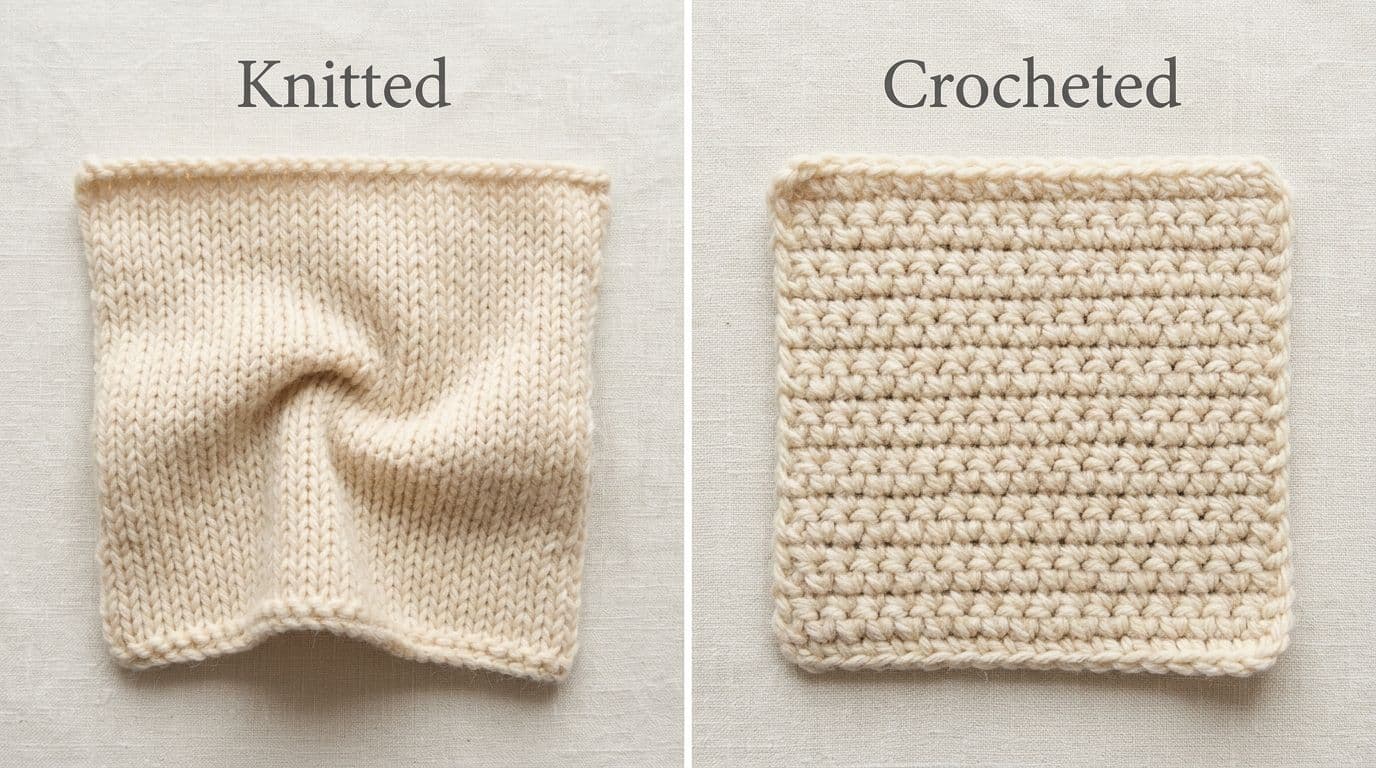
| Fabric feel | Stretchy, drapey | Sturdy, structured |
| Fixing mistakes | Can mean unraveling several rows | Usually a quick, single-stitch fix |
| Best for | Sweaters, socks, anything that needs to stretch | Amigurumi, blankets, anything that needs to hold shape |
| Typical speed | Slower per square inch | Generally faster per square inch |
Knit vs crochet isn’t really a competition. It’s a tool question. Once you know what you want to make, the choice mostly makes itself.
What Is Knitting?
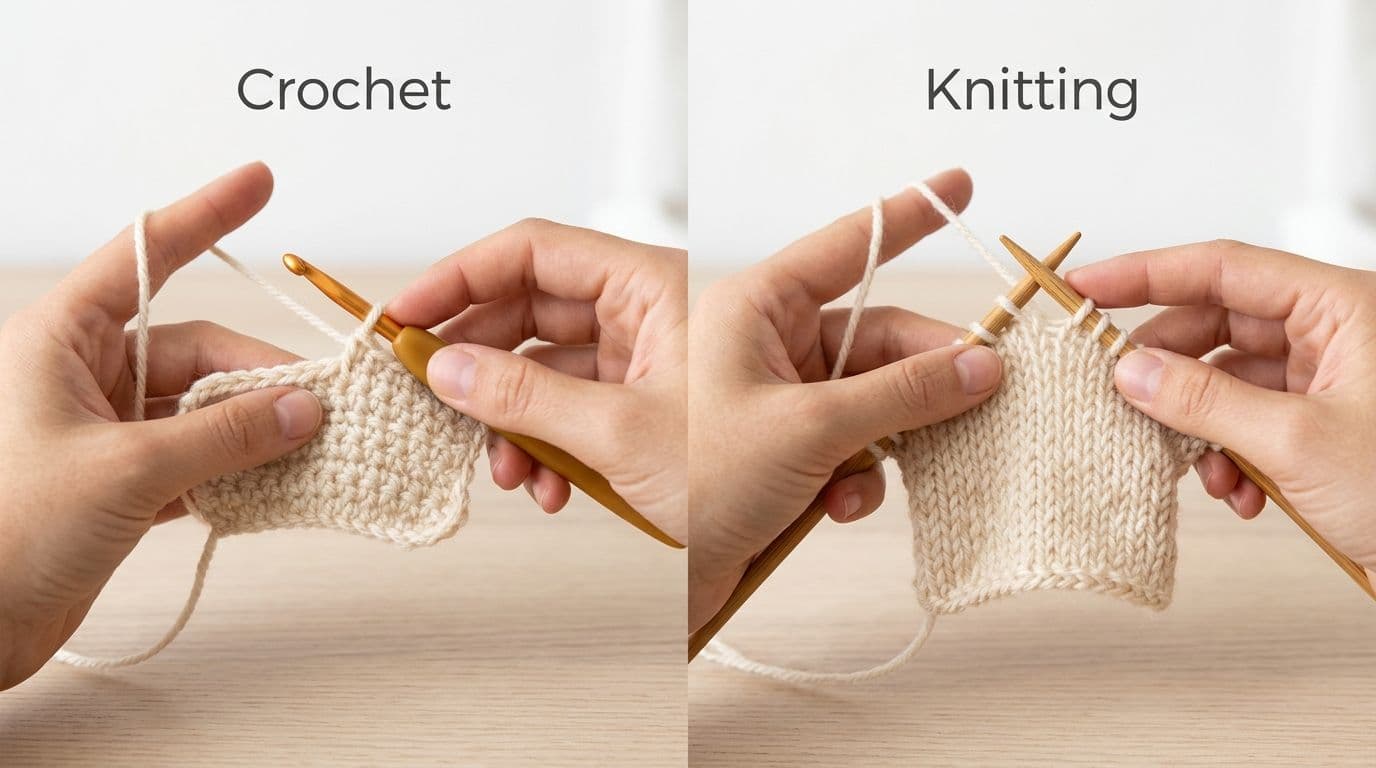
Knitting builds fabric by looping yarn through a row of live stitches held on a needle. As you work across, each loop moves onto a second needle. Every stitch in the row stays live, which means it can still unravel, until the next row locks it in place.
That is the core mechanic of knitting. It also explains why a dropped stitch can matter more here than in crochet, because you are managing a whole row of loops at once.
Tools You Need for Knitting
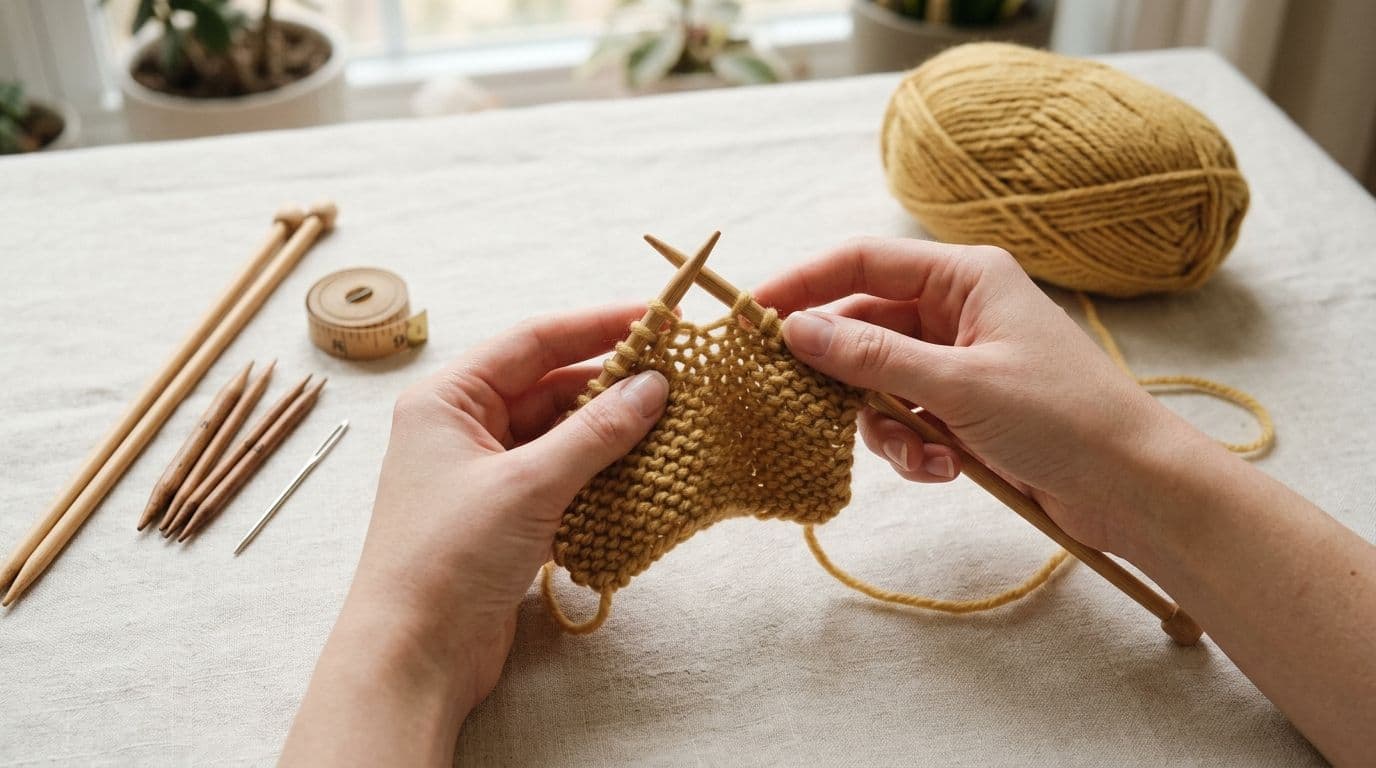
At minimum, you need a pair of knitting needles sized to your yarn, plus the yarn itself. Needles come in different materials (bamboo, metal, plastic) and styles (straight, circular, double-pointed). The size you need is tied to your yarn’s weight. If you’re not sure where to start, the Hook & Needle Chart will match you to a needle size for the yarn you have.
What Knitted Fabric Looks and Feels Like
Knitted fabric has real give. It stretches, drapes and moves with the body, which suits anything fitted, such as sweaters, socks and hats. The knit stitch and purl stitch, combined in different ways, create the smooth “V” texture of stockinette or the ridged texture of garter stitch. Either way, the fabric has a softness and flow that is hard to copy with a hook.
What Is Crochet?
Crochet builds fabric one stitch at a time. A single hook pulls loops of yarn through each other in sequence. You only ever hold one live loop on the hook, because everything else is already locked into the fabric behind it. That one difference explains most of the other differences between the two crafts.
Tools You Need for Crochet
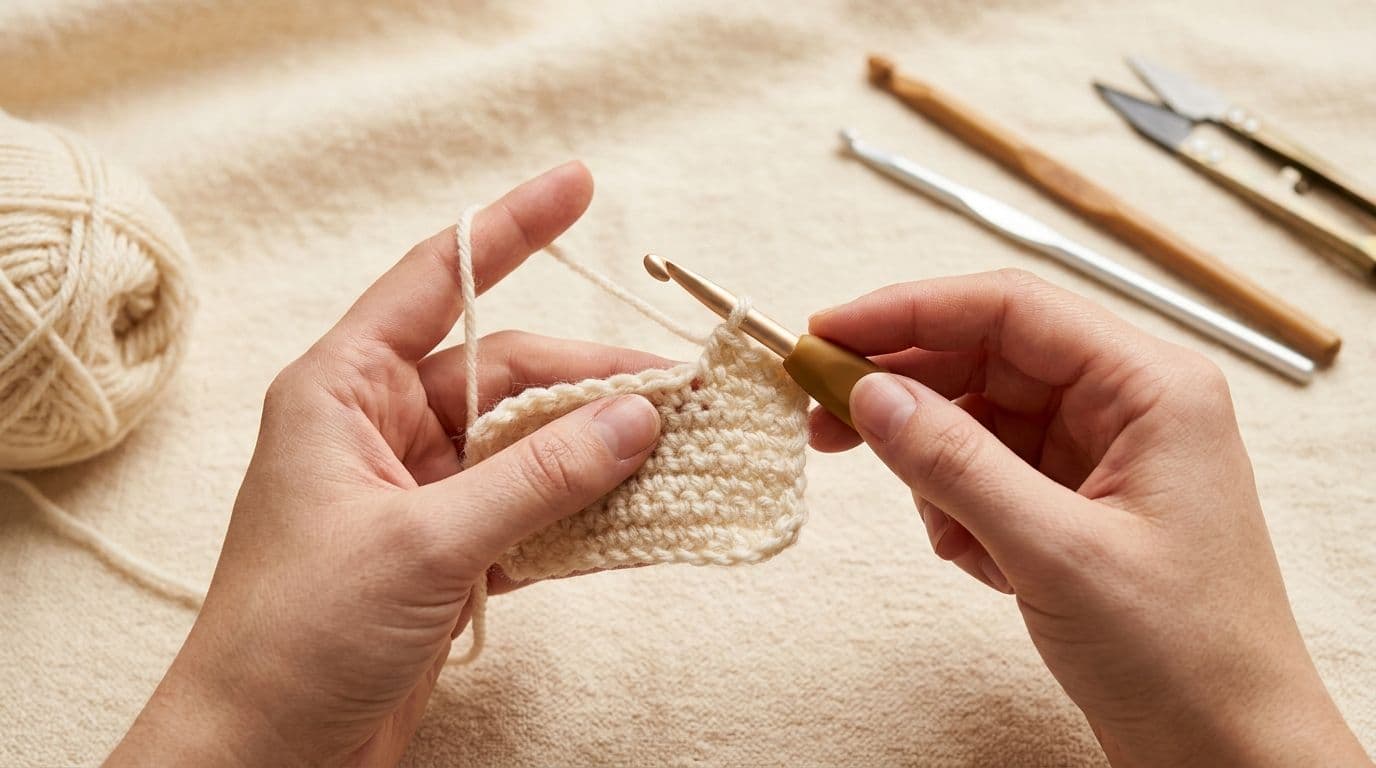
At minimum, you need one crochet hook sized to your yarn, plus the yarn. There is no second needle and no extra hardware. Hook sizes are matched to yarn weight just like needle sizes, so the same Hook & Needle Chart works for finding your starting hook.
What Crocheted Fabric Looks and Feels Like
Crocheted fabric is thicker and more structured than knitted fabric, stitch for stitch. It holds its shape without sagging, which is why crochet is common for amigurumi and baskets, where the fabric needs to stand up on its own. Individual stitches are also more visible, which gives crochet a bolder, more textured look.
Speed, Yarn Use, and Fabric Texture
Searches like knitted or crocheted and knitting vs crocheting difference usually come down to three questions: which is faster, which uses more yarn, and how the fabric feels. Fabric feel is covered above, so here is speed and yarn use, plus two practical differences that matter to beginners.
Speed: Which Craft Is Faster?
Knitting vs crochet speed is a common question, and crochet is usually quicker per stitch. A single crochet stitch is one motion with one hook, while a knit stitch involves two needles and moving a loop from one to the other. So is knitting faster than crochet? Generally not per square inch, though practiced knitters can work very quickly.
Which is faster knitting or crochet also depends on the stitch. A tall double crochet covers more height than a single crochet. In a small controlled test by Craftematics, crochet was faster per square inch than knit garter and stockinette stitch. The author notes the sample is too small to be conclusive, so treat it as a useful starting point, not a final answer.
Is crochet quicker than knitting for your project? Which is faster, crochet or knitting for you personally? Is it faster to knit or crochet a scarf? Work a small swatch in each craft and time yourself.
Yarn Usage: Does Crochet Really Use More Yarn?
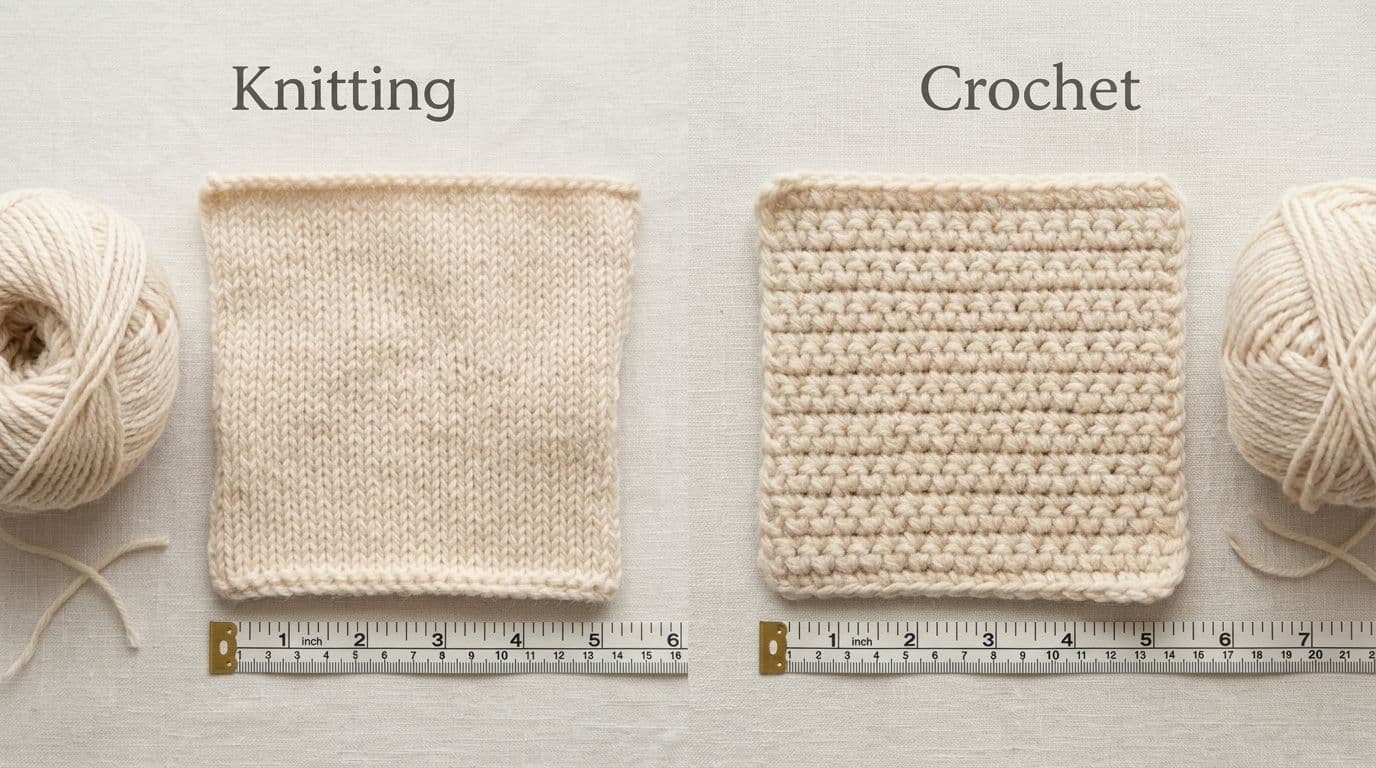
A common claim says crochet uses about 30% more yarn than knitting. A small controlled test by Craftematics found the yarn weights were nearly the same, though the author said more data is needed. Another popular beginner guide says knitting uses 25–30% less yarn. Sources disagree.
The real answer depends on the stitch pattern. A dense stitch like double crochet uses more yarn than an open lace pattern, in either craft. For a number based on your own project, the Yarn Calculator is a better guide than a general percentage.

Stop Guessing How Much Yarn You Need Enter your gauge and pattern to get a yardage estimate for your own project, not a rule of thumb.
Ease of Learning for Beginners
This is where most people decide between the two crafts, and crochet tends to feel easier for a mechanical reason. Managing one live stitch at a time is less to track than managing a full row of live stitches balanced across two needles. Knitting’s early hurdles are casting on, keeping tension even across a row and not dropping stitches. These take many beginners longer to feel automatic.
That does not make knitting harder in any permanent sense. Plenty of people find it clicks quickly. It just tends to have a slower first few hours.

New to Crochet Patterns? Patterns use shorthand that looks confusing at first. This beginner guide walks through how to read them one line at a time.
Fixing Mistakes
Unraveling your work, often called frogging, works differently in each craft. In crochet, pulling out a wrong stitch is usually a single-stitch fix. You undo your last loop and try again. In knitting, a mistake several rows back can mean unraveling multiple rows. You then have to carefully put every live stitch back on the needle without dropping one. Neither is impossible, but crochet mistakes tend to be smaller and faster to recover from.
Which Is Easier: Knitting or Crochet?
For most true beginners, crochet is easier to start. If you are asking is knitting or crochet easier to learn, the usual reason is the one-tool, one-live-stitch setup, plus mistakes that are quick to unpick. Most people feel like they’re making an actual object in their first sitting.
“Easier” depends on your goal, though. Knitting can feel easier to keep going once it clicks. The repetitive rhythm of a long knit row is relaxing for many people, and speed picks up once your hands know the motion.
So which is easier, knitting or crocheting? It depends on whether you mean easier to pick up in an afternoon or easier to settle into for a long project after the first week.
If you have hand mobility concerns such as arthritis, some crocheters find the single-hook motion less repetitive than knitting’s two-handed needle transfer. This varies from person to person, and it’s not a substitute for medical advice if pain is a factor.
Best Projects for Knitting vs Crochet
Neither craft is better overall. They suit different finished objects.
Best for Sweaters and Garments
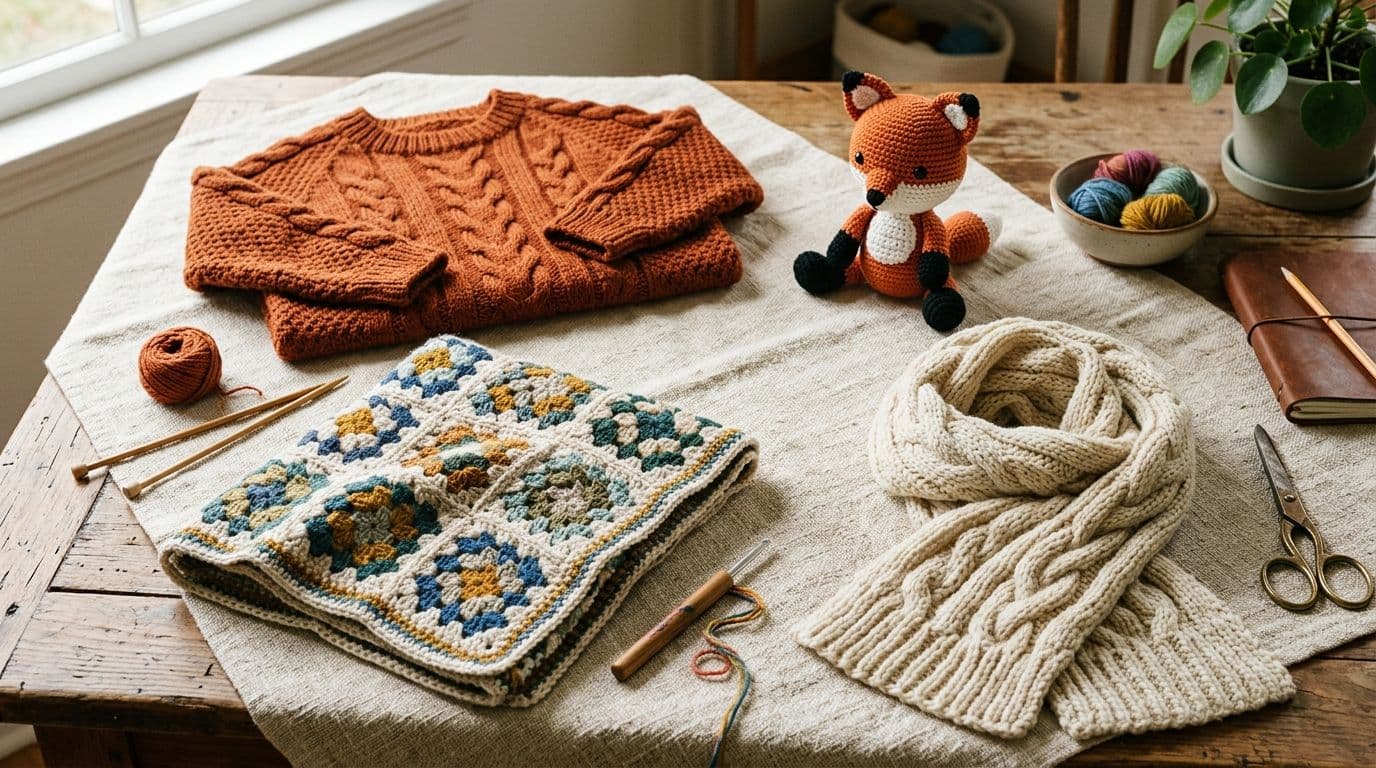
In the crochet vs knit sweater comparison, knitting has the advantage. The natural stretch and drape of knit fabric makes a sweater comfortable to wear and move in. Crocheted sweaters exist and can look great, but they tend to be heavier and stiffer than a knit version in the same yarn.
Best for Blankets
The crochet vs knit blanket question is close to a toss-up, because both crafts make excellent blankets with different construction. Crochet’s classic approach is the granny square, where small motifs are joined into a larger piece. Knitting’s rough equivalent is the mitered square. If you want to try granny squares, the Granny Square Generator can help you plan your layout and colors.
Best for Scarves and Accessories
Knitting vs crochet scarf is more a matter of preference than technique. Crochet scarves tend to work up faster, given the speed difference above. Knit scarves have a softer drape that crochet doesn’t quite match.
Best for Toys and Amigurumi
Crochet suits amigurumi, the small stuffed toys and figures. They depend on crochet’s structured, dense fabric to hold their shape once stuffed. Knitted stuffed toys exist, but they usually need extra reinforcement that crochet provides naturally.
Cost Comparison: Which Is Cheaper?
If you’re wondering which is cheaper to do, crochet has the lower starting cost, since one hook is cheaper than a pair of needles. A hook and one ball of yarn is a complete starter kit. Knitting costs only a little more to start, but it can add up if a project later needs circular or double-pointed needles, or several needle sizes.
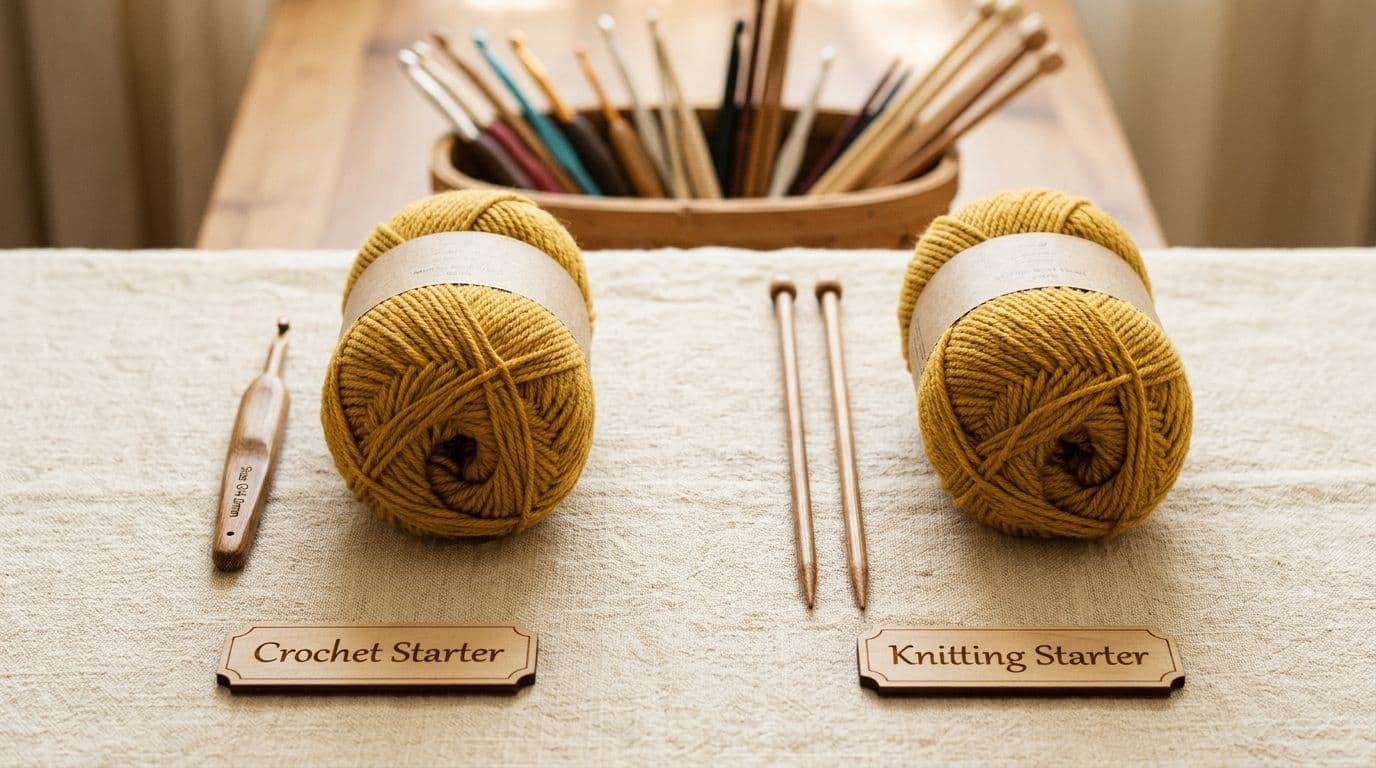
Yarn cost is roughly the same for both crafts on a given project. Fiber choice (wool, acrylic or cotton) affects the price far more than which craft you use. For help choosing, see our guide to the best yarn for beginners, which covers where to spend and where to save.
Can You Do Both? Combining Knitting and Crochet
Yes, and many experienced makers use both. Knitting and crochet can be combined in one project, with each craft doing the job it suits. Tunisian crochet is a hybrid technique. It uses a longer hook that holds several live loops at once, borrowing knitting’s multiple-live-stitch idea with a crochet tool.
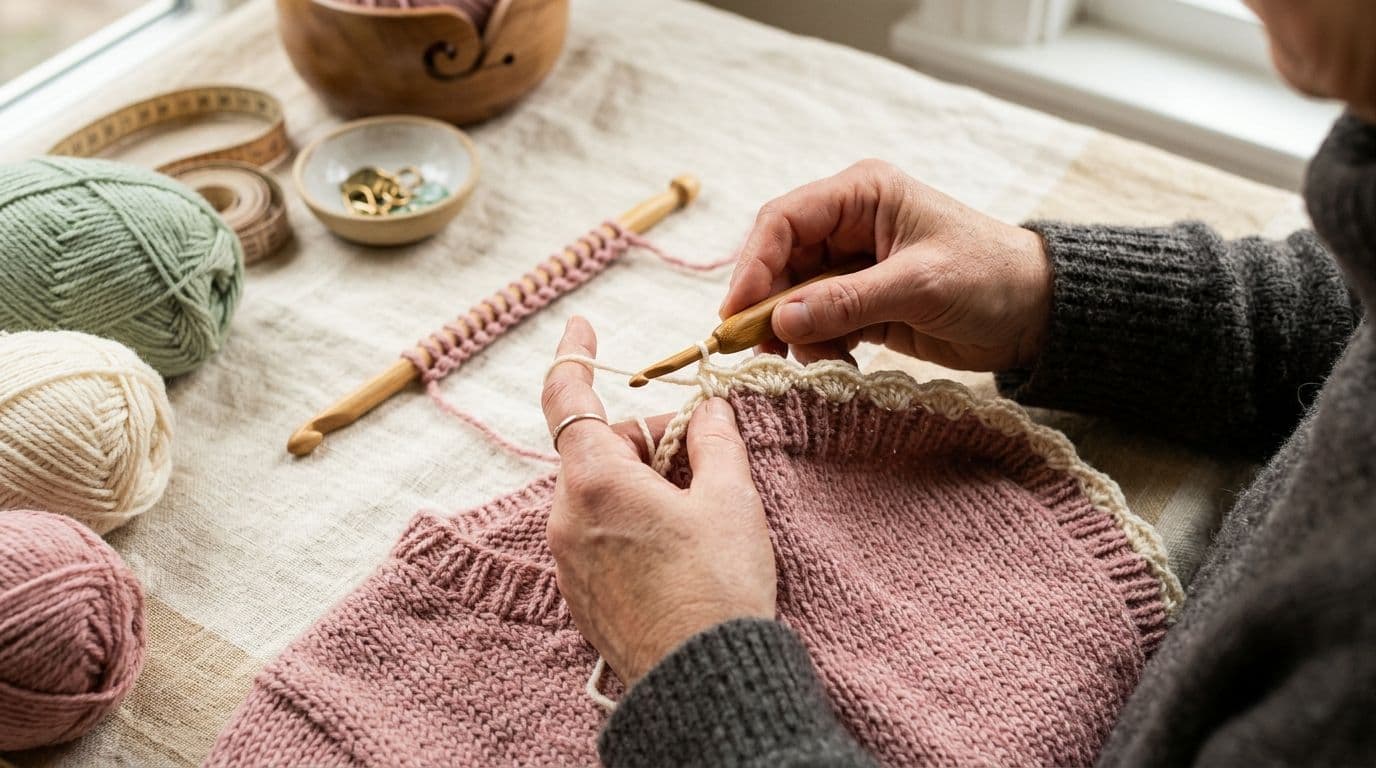
Crocheted edging is a common finish for knit garments. A knit panel can also be joined into a crocheted blanket with mattress stitch. Colorwork such as Fair Isle and intarsia is knitting-specific, but a maker who can knit and crochet can borrow the look and adapt it. Once you know both, the question stops being which craft and becomes which tool fits each part of the project.
Watch a Beginner Lesson
A good way to learn either craft is to watch the hands move. Here is one lesson for each.
Crochet (Yarnzy): Crochet Stitches for Beginners (Chain, Single & Double Crochet). Covers the three core stitches behind most crochet projects. Find it on the Yarnzy YouTube channel.
Knitting (KnittingHelp): How to Knit: A Complete Introduction for Beginners, Part 1. A 45-minute step-by-step tutorial covering the long-tail cast-on, the knit stitch in English and Continental styles, and the purl stitch. See KnittingHelp’s beginner video.
Try a First Project
Once you’ve watched a lesson, a simple first project will show you which craft clicks. Here is one pattern for each.
Crochet (Yarnzy): How to Crochet a Pumpkin: Free Patterns for Fall & Halloween Decor. A beginner-friendly crochet project with five style variations, plus leaves, stems and simple troubleshooting.
Knitting (Ysolda Teague): Ysolda Teague’s free Garter Stitch Scarf. A free beginner scarf that uses only the knit stitch, with a step-by-step video. It covers the first skills: casting on, the knit stitch and binding off.
Quick tip: Before you start, check your dimensions with the Stitch Calculator and your skein count with the Yarn Calculator.
So, Which Should You Learn First?
Use the project you want to make as your guide.
• Wearable and stretchy (a sweater, socks, a fitted hat): start with knitting, since stretch and drape are what the craft is built around. The scarf pattern above is a gentle first step.
• Structured and quick (amigurumi, a basket, a granny square blanket): start with crochet. The pumpkin pattern above is a good first project.
• No specific project in mind: start with crochet. The lower tool cost, faster early progress and easier mistake-fixing make it a gentle way into yarn crafts. Many crocheters pick up knitting later, once they are comfortable with yarn and gauge.
Whichever you pick, you can always try the other later. Choosing between knit or crochet doesn’t lock you in.
Tools to Keep Your Projects Organized
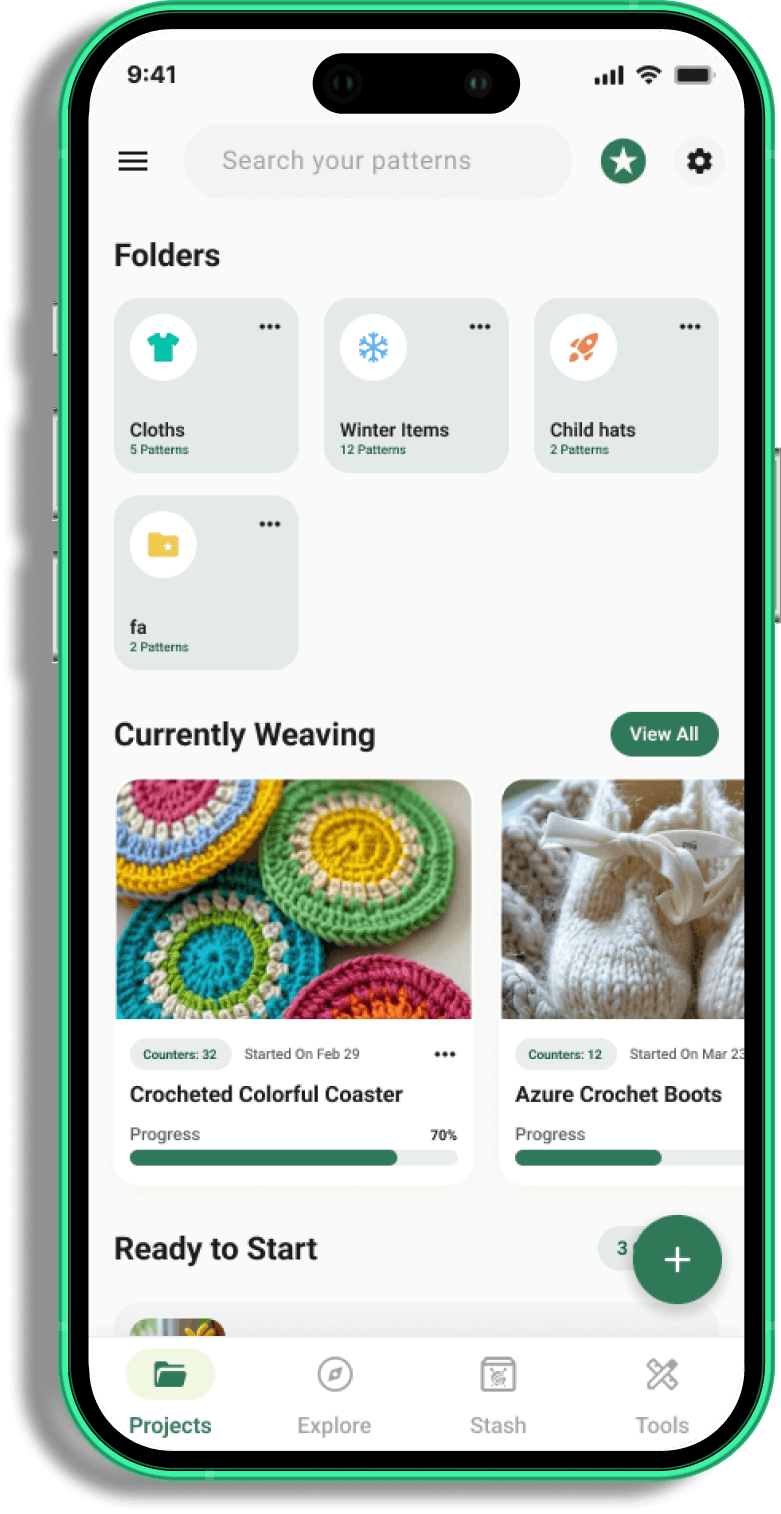
Once you start your first project, the Yarnzy app can help you keep track of it. It includes:
• A timer and row counter
• Pattern import from anywhere
• Stash management
It is free to start on iOS, Android and web. Download it from the App Store or Google Play. For finding more patterns, Ravelry is a pattern database where makers share project notes.
Conclusion
Crochet is usually faster and more forgiving to start, while knitting gives a fabric that drapes and stretches. Pick based on the object you want to make, not on which craft wins on paper. Start your first project with the Yarnzy app, free to start on iOS, Android and web.
Frequently Asked Questions
Crochet is generally considered easier for most beginners to pick up quickly, since you're only ever managing one live stitch at a time instead of an entire row balanced across two needles. Knitting isn't harder in any permanent sense, it just tends to take a bit longer before the motion feels automatic.
Share this page
 X / Twitter
 Facebook
 Reddit
Related articles
Bernat Yarn Substitutes: What to Use Instead of Blanket, Maker, Pipsqueak & Bundle Up

How to Crochet a Pumpkin: Free Patterns for Fall & Halloween Decor
How to Read Crochet Patterns: A Beginner's Guide

Yarnzy: #1 Crochet & Knitting App
Track knitting and crochet projects with a timer & row counter, Import Patterns from Anywhere, Manage Stash & more all in one place.


Free to start · iOS, Android & Web
Scan to Download the App

Start your next project with confidence