
 Download the App
How to Choose the Best Yarn for Beginners
19 Jun, 2026
The best yarn for beginners is a smooth, light-colored, worsted-weight (#4) yarn made from acrylic or a wool blend. These yarns make stitches easier to see, reduce splitting, and are forgiving when practicing basic crochet or knitting techniques. Avoid dark, fuzzy, or novelty yarns because they hide stitches and make fixing mistakes more difficult. Before buying yarn, check the fiber type, weight, texture, and care instructions on the label to ensure it matches your project. Choosing beginner-friendly yarn helps you build confidence, improve stitch consistency, and enjoy a smoother learning experience from your very first project.
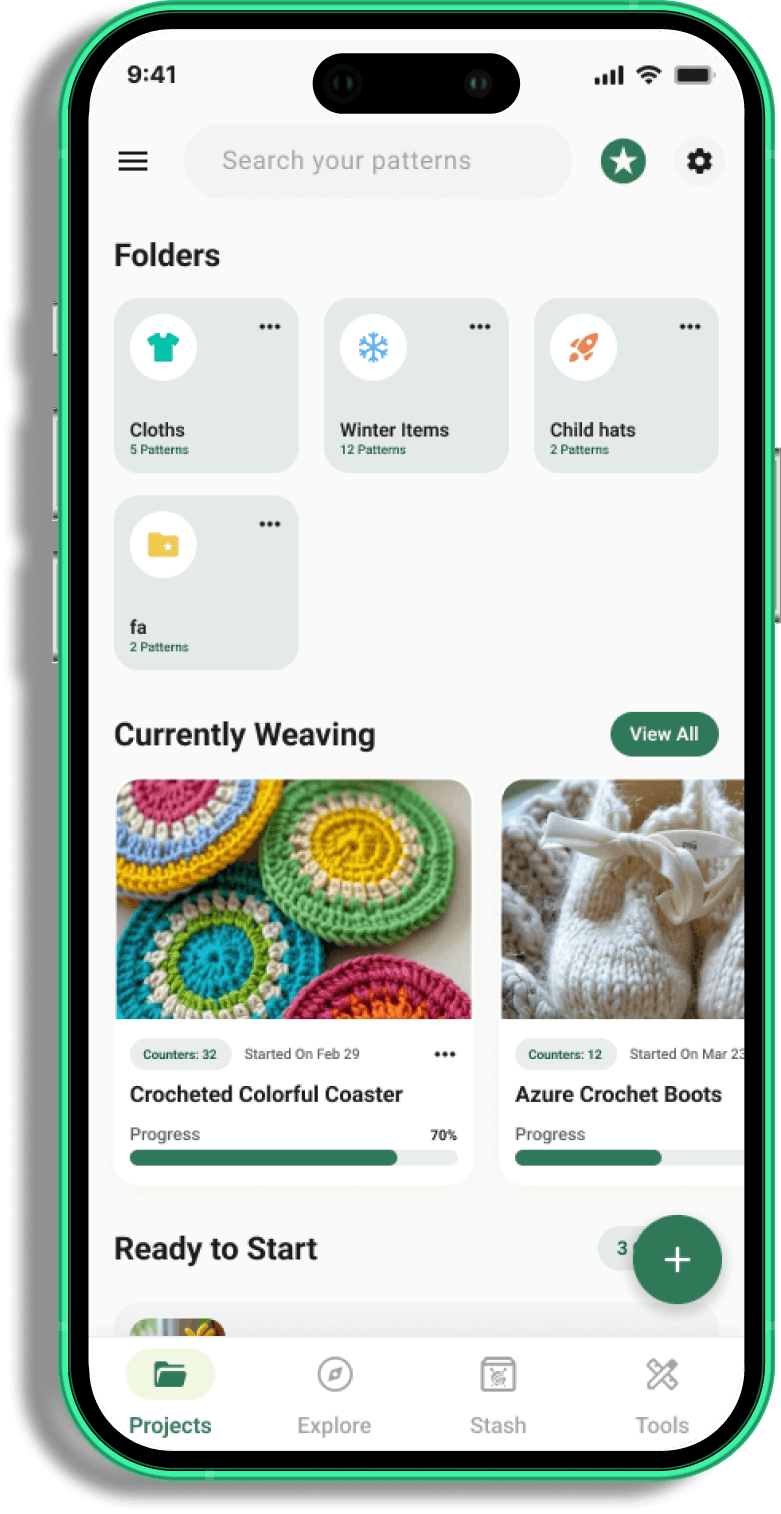
Not sure what's already sitting in your craft bag?
 Download Yarnzy
What Makes a Yarn "Beginner-Friendly"?
Before you even walk into a store or browse online, understand this: the best yarn for beginners isn't the prettiest or the most expensive. It's the one that forgives mistakes.
Here's what you need:
• Light color (so you can see every stitch)
• Smooth texture (so it doesn't split when your tension is uneven)
• Medium weight (not too thick, not too thin)
• Forgiving fiber (something that survives being pulled out and redone multiple times)
That's genuinely it. Everything else is brand loyalty, luxury feel, trendy colors that's personal preference. We'll get to the specific recommendations in a minute, but first, let's talk about what's actually happening when you pick up yarn.
The 4 Things to Check Before You Buy Yarn
1. Fiber Type: Wool vs. Acrylic vs. Cotton (And Why It Matters)
This is where the real decision happens.
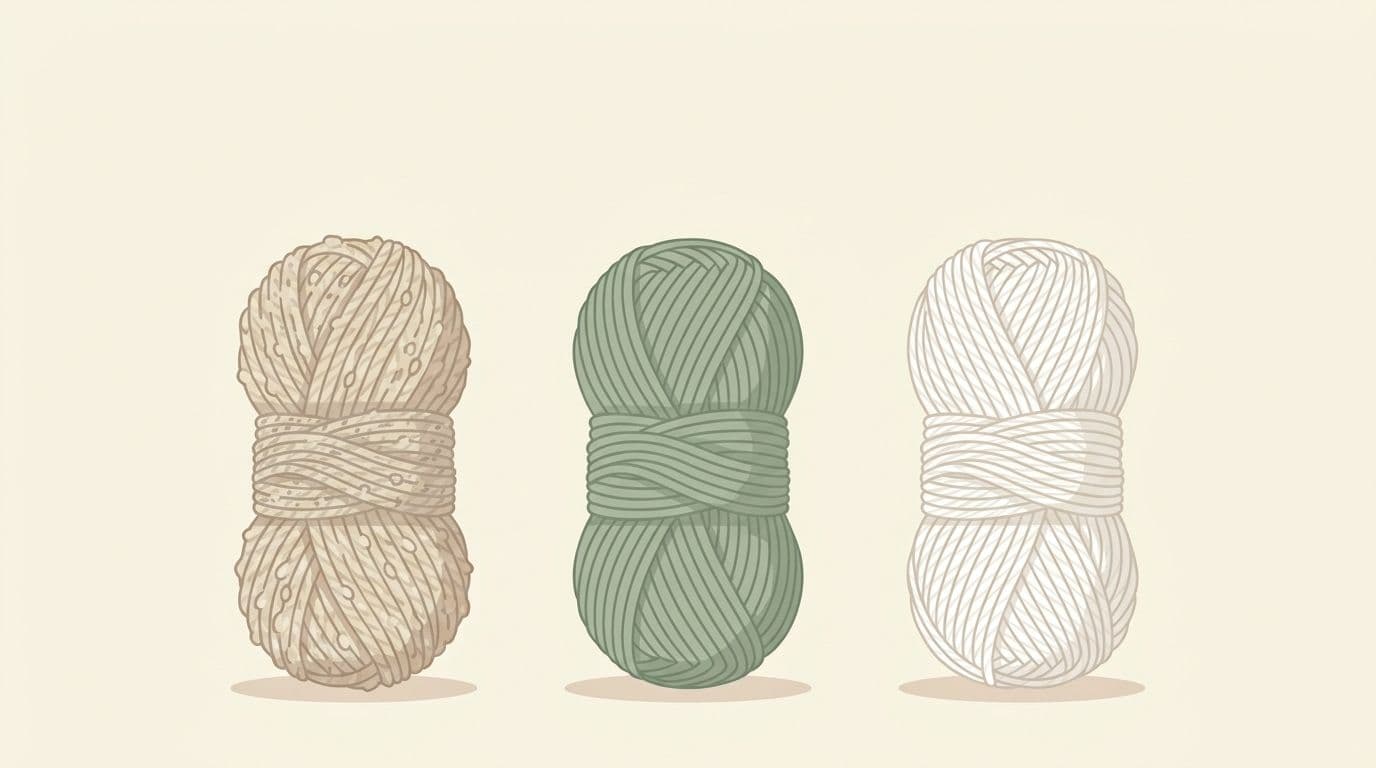
Acrylic is what you see everywhere: chain stores, craft shops, online. It's synthetic, dirt-cheap (usually $3-8 per skein), and comes in literally every color imaginable. Machine washable. Never feels. Doesn't itch.
But here's the honest part: it can feel a bit stiff. Some acrylics are actually squeaky on your hook. It doesn't give much, your tension has to be pretty consistent, or your stitches look uneven. For beginners learning to crochet or crochet tips for beginners, this lack of forgiveness is a real problem.
Wool is different. Real wool, especially something labeled "superwash," has natural stretch built in. Your hands can be shaky, your tension can be inconsistent, and the yarn bounces back and hides it. This is why wool is a good beginner yarn for knitting, you're literally learning tension control, and wool makes that easier.
The catch? Wool costs more ($6-15 per skein). It needs hand washing in cold water. Some people are allergic or have sensory issues with it.
Cotton splits the difference: you can see stitches beautifully, it's sturdy, and it's affordable ($4-10 per skein). But it has zero stretch. If your tension is off, cotton shows it. And cotton splits easier under a sharp hook or needle when you're still figuring out how hard to pull.
What to buy: If you're learning to crochet, grab a wool-acrylic blend or smooth acrylic. If you're learning to knit, wool or wool-blend is genuinely easier, the stretch saves you. If you want cotton, make it your second or third project.
Save 100% novelty yarns (mohair, bouclé, eyelash yarn) for later. Yes, they look cool on the shelf. In your hands while learning? They're a nightmare.
2. Yarn Weights Explained: Why Worsted Weight is Your Sweet Spot
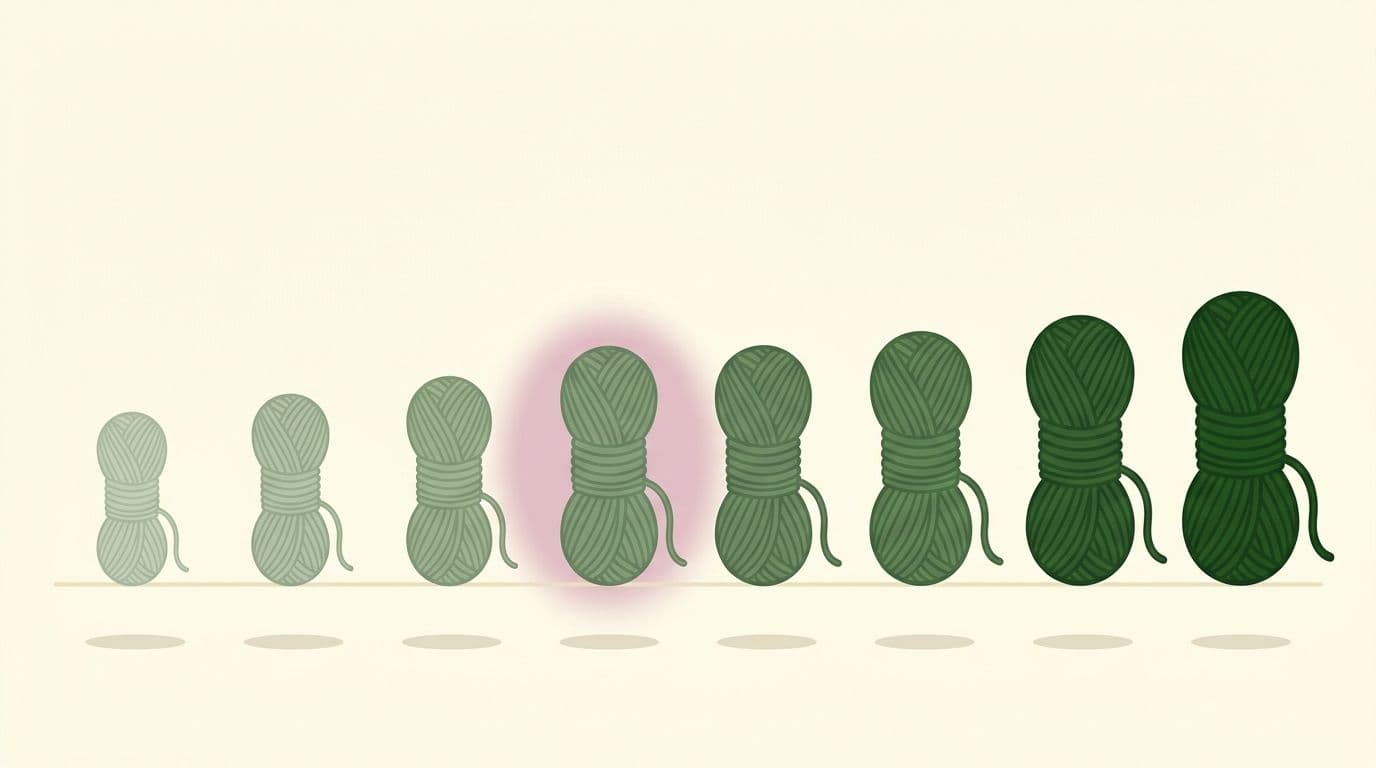
Yarn weight just means thickness. That's all.
Every skein gets labeled with a number: 0 is lace (super thin), 7 is jumbo (huge). For learning, you want weight 4, which is called "worsted weight" or sometimes "medium."
Here's why: worsted weight is thick enough that you can actually see your stitches. When you make a mistake, you will spot it immediately. You're not squinting at tiny stitches, trying to count rows on yarn you can barely see.
But it's not so thick that your hands cramp. You can work for 30 minutes without your wrists hurting. You're not wrestling with a huge hook or needles.
What about chunky yarn for beginners?
Everyone wants it because bulky projects finish fast. And yeah, if you make a sweater in super bulky yarn, you finish it in like ten hours instead of thirty.
But here's what nobody tells you: chunky yarn makes every tension mistake super visible. That uneven stitch from your first row? In bulky yarn, it screams at you. In worsted weight, it blends in better while you're learning.
Save chunky yarn for your second or third project, once your hands know what they're doing.
3. Color: Stop Buying Black (Seriously)
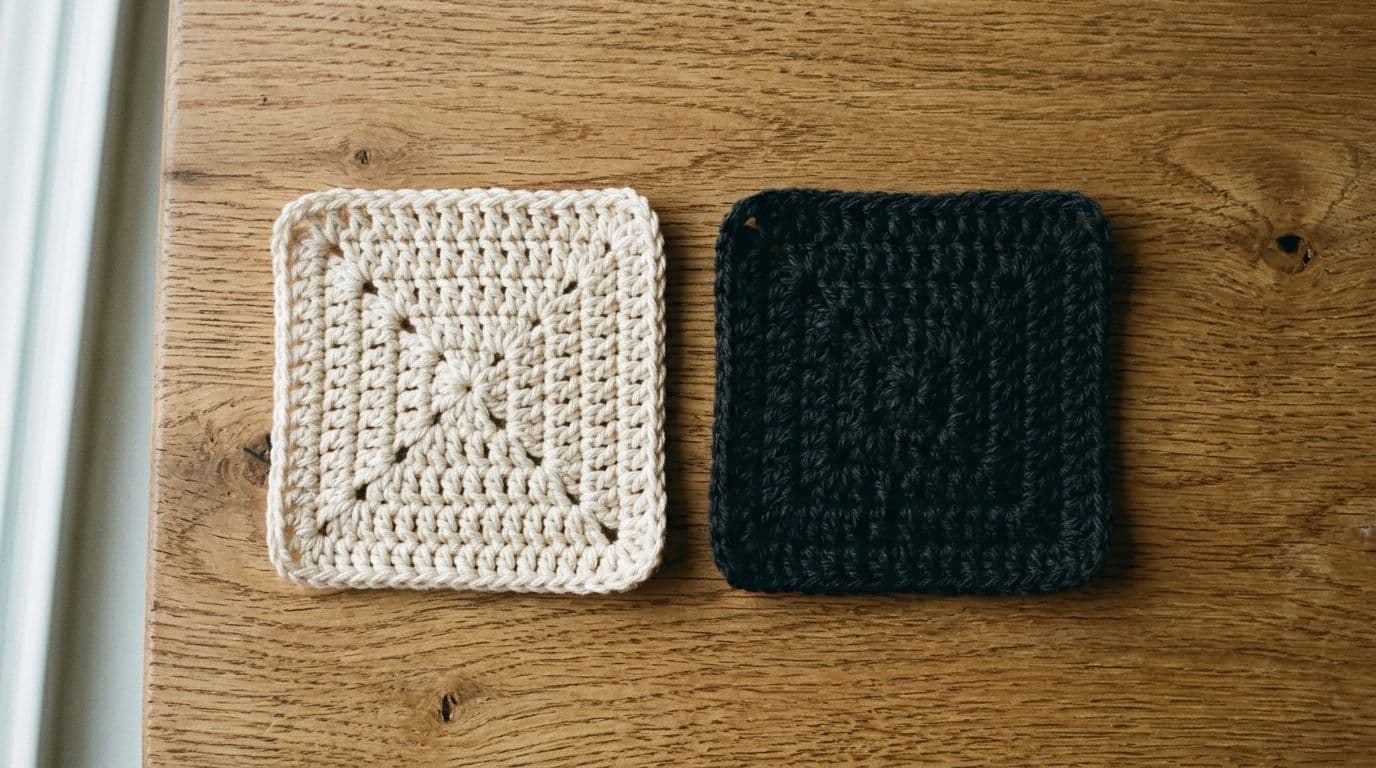
I know black matches everything.
I also know that when you pick black yarn, you won't be able to see a single stitch. You'll be crocheting or knitting completely blind, trying to count stitches by feel alone while also learning technique.
That's like learning to drive in the dark.
Stick to light colors for your first project.
White, cream, pale yellow, light gray any of these. You'll see every single stitch. When you make a mistake, you see it immediately. You can fix it before it becomes a bigger problem.
Once you've finished three or four projects and your hands know what they're doing, grab that black yarn. Or the navy. Or whatever dark, moody color you love. By then, you don't need to see every stitch to know it's right.
4. Texture: Smooth Wins Every Time
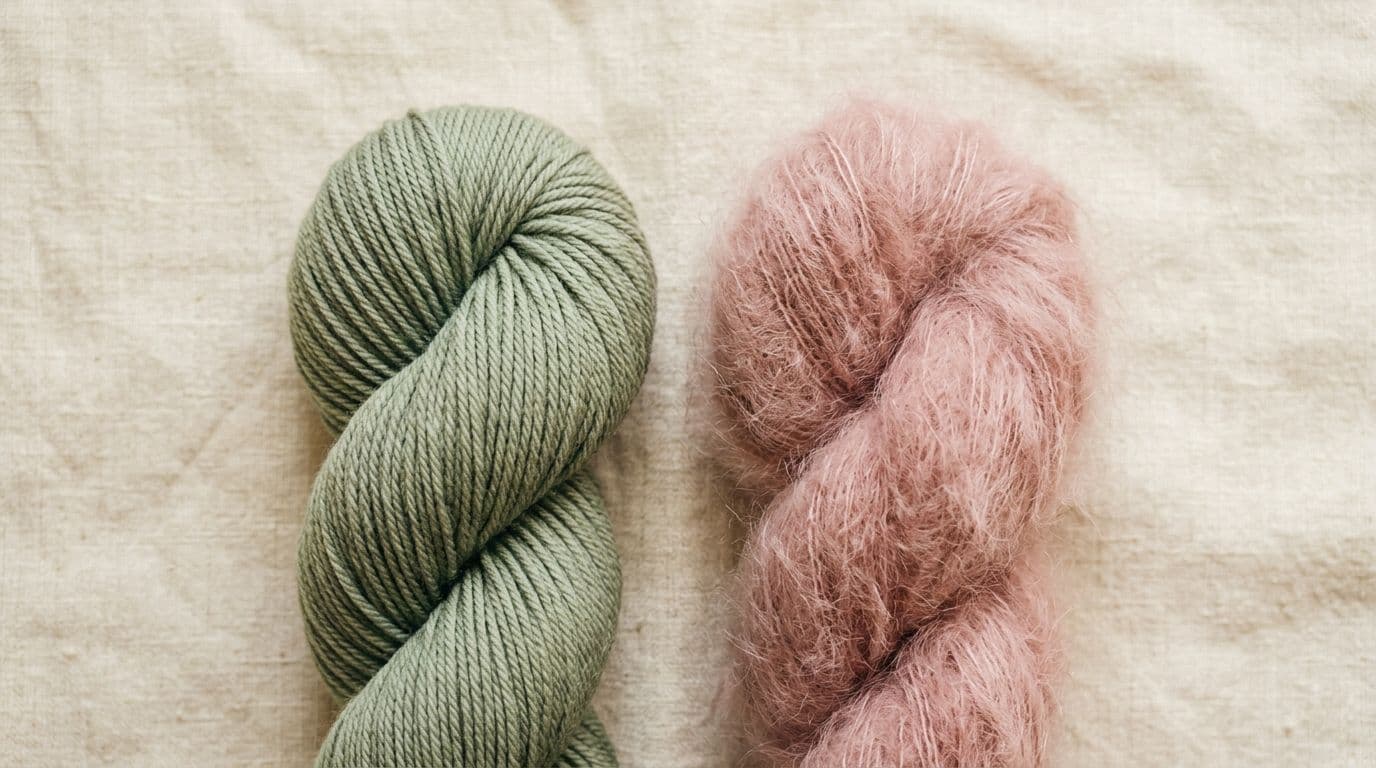
Fuzzy yarn looks fun on the shelf.
It's miserable to learn.
Mohair, novelty fibers, textured yarns hide your stitches. You can't see if you're doing single crochet or accidental double crochet. The texture catches on your hook or needle. When you need to pull it out and redo a row, it falls apart.
Choose smooth, evenly spun yarn. You're learning technique. You need to see what technique looks like.
Best Yarn for Beginners
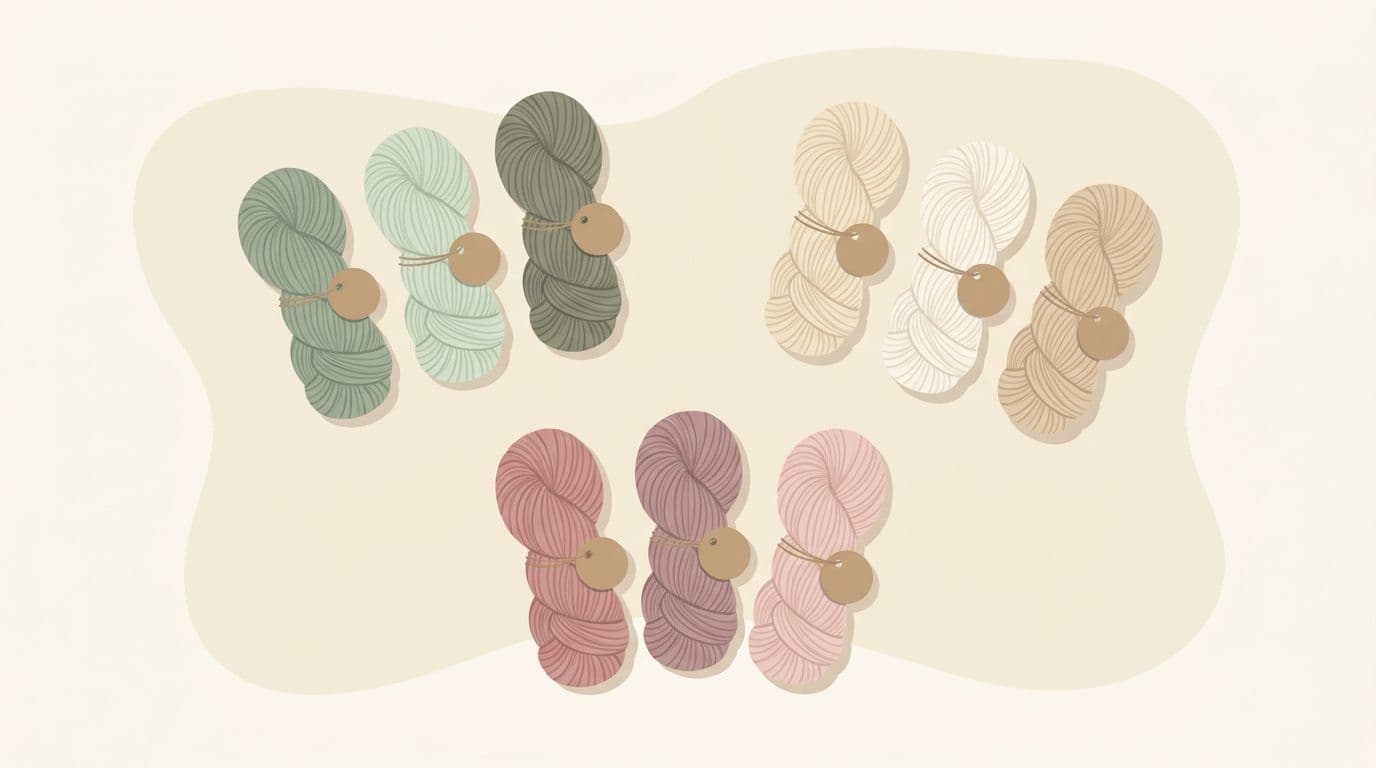
Now we get to the part where I actually tell you what to buy.
Budget Tier 1: Under $6 Per Skein
Red Heart Super Saver ($3.99-4.99) This is the workhorse of the craft aisle. Available literally everywhere. Comes in about a billion colors. Machine washable. You can buy five skeins without feeling guilty if you make a mistake and need to start over.
Is it the softest yarn ever? No. But for learning to crochet basic stitches or knitting basic stitches, it's exactly what you need. You can feel your stitches. It doesn't split (much). It works.
Hobby Lobby I Love This Yarn ($4.99) If Red Heart Super Saver feels a bit stiff to you, try this. It's slightly softer acrylic, same price point, still machine washable. Shows stitches clearly. This is what I'd grab if I wanted to start a crochet project as a complete beginner.
Budget Tier 2: $6-12 Per Skein
Lion Brand Wool-Ease ($6.99-8.99) This is a wool-acrylic blend, and it's genuinely the best middle ground. It has the stretch of wool (forgiving when your tension is off) with the affordability and easy care of acrylic (machine washable, no special treatment).
This is what I recommend for beginners who want something that actually feels nice without spending serious money. It's my top pick for a first knitting project if you want to upgrade from pure acrylic.
Caron Simply Soft ($5.99-6.99) Another solid acrylic, but softer than Red Heart. Good color range. Machine washable. Not fancy, but genuinely beginner-friendly.
Budget Tier 3: $12+ Per Skein
Cascade 220 Superwash ($12.99-15.99) Real merino wool, machine washable (because of the superwash treatment). This is what yarn teachers often recommend for a reason: it has stretch, beautiful stitch definition, and you're learning on actual quality wool. Makes your first projects look legitimately impressive.
Save this for when you're confident with your tension, or when you really want to invest in a nice first sweater.
What You Actually Need to Start Crocheting or Knitting
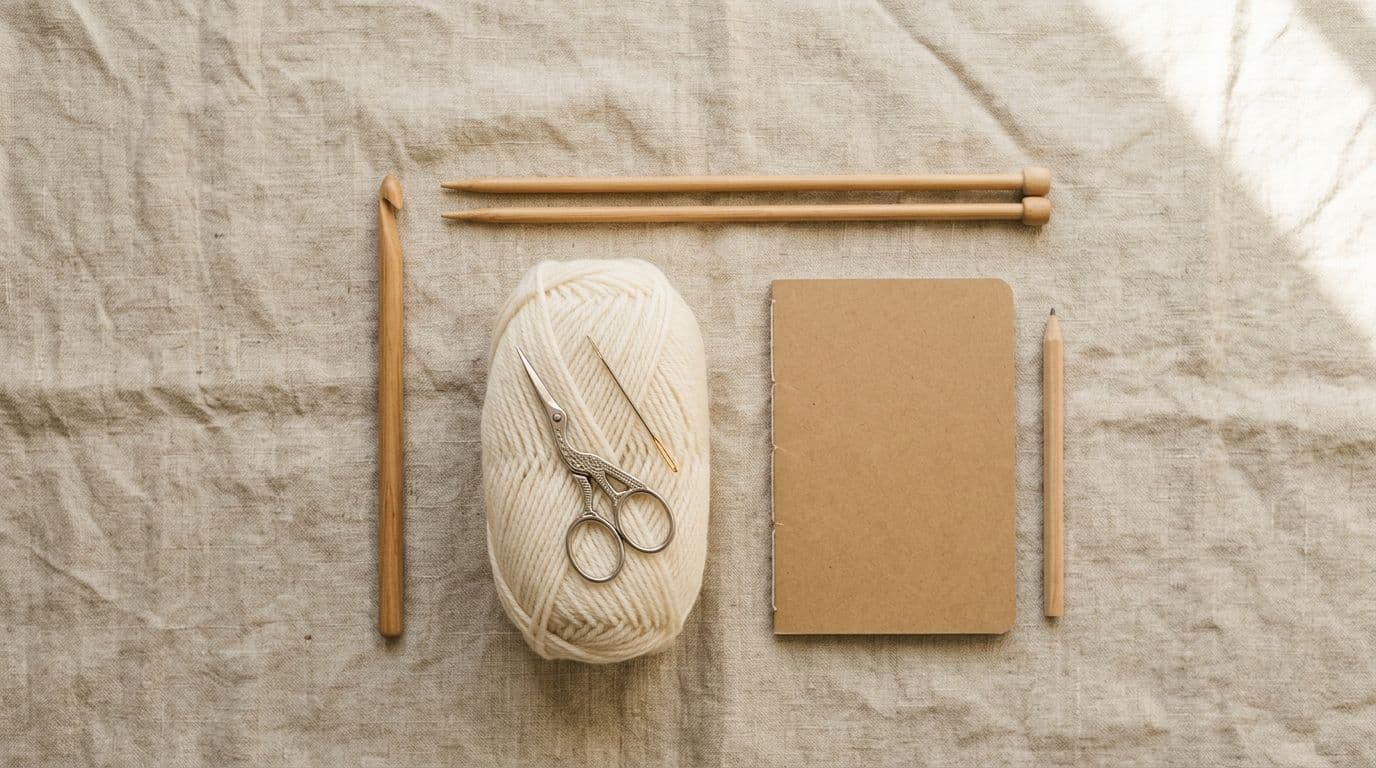
People think you need a ton of stuff. You don't.
To start crochet:
• Hook in the size your yarn label suggests
• Scissors
• Tapestry needle (for weaving in ends)
• Something to track rows (paper works fine)
To start knitting:
• Needles in the size your yarn label suggests
• Scissors
• Tapestry needle
• Row counter (paper works fine)
That's your entire setup. Seriously. Everything else is nice-to-have, not need-to-have.
If you want to organize yarn stash as you build your collection, yes, a yarn stash organizer helps. If you want to track what you own across projects, a yarn stash tracker or digital yarn inventory makes it easier. But for your first project? You need five things: yarn, hook/needles, scissors, tapestry needle, and a way to count rows.
Things You Can Make (And Should Make First)
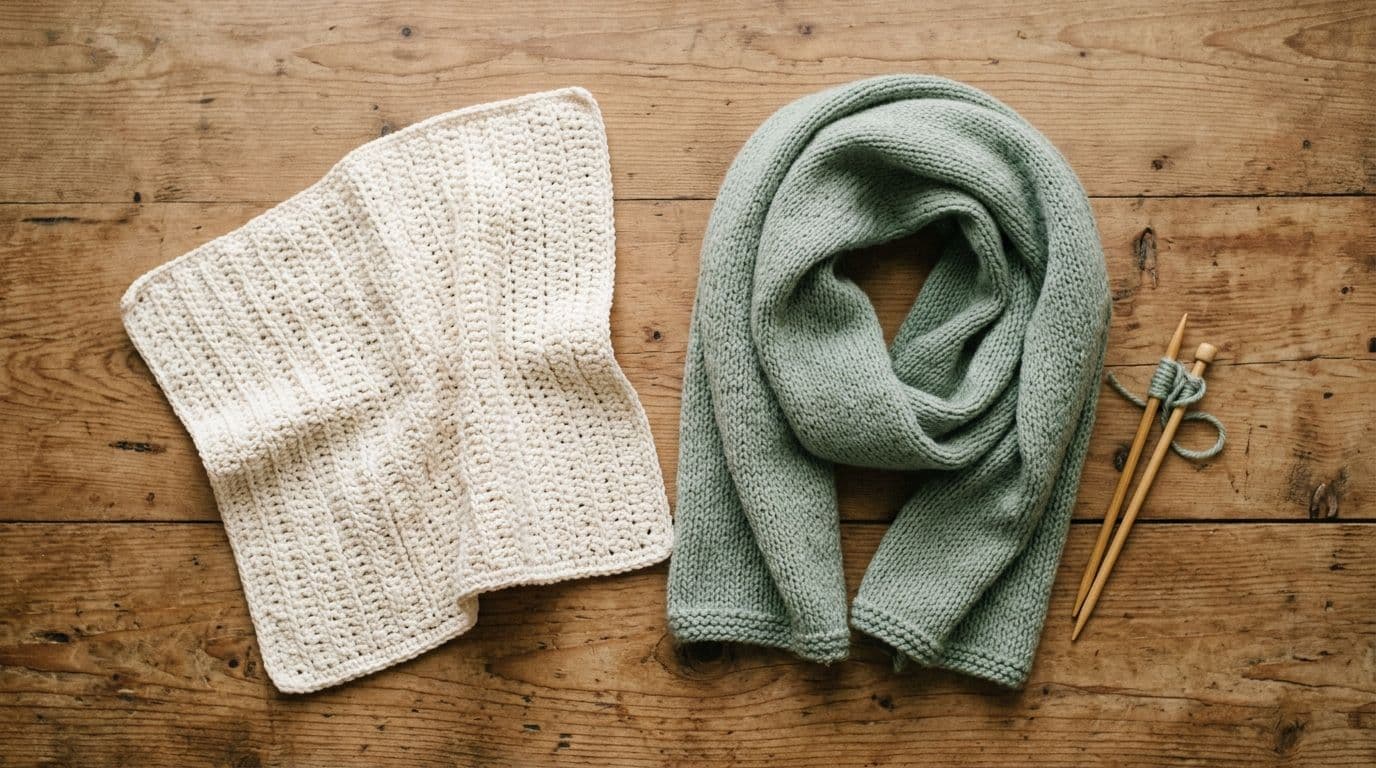
Easy Crochet Projects for Beginners:
• Dishcloths (about 4"x4", uses 200-400 yards)
• Simple scarves (uses 600-1000 yards)
• Blanket squares (can add to a larger blanket later)
• Washcloths (similar to dishcloths, super forgiving)
Easy Knitting Projects for Beginners:
• Simple scarves (uses 600-1000 yards)
• Baby hats or beanies (uses 400-700 yards)
• Dishcloths (yes, you can knit these too)
• Simple blankets (uses 2000+ yards, but you can break it into sections)
Start with a dishcloth or scarf. No shaping. No complicated stitch patterns. Just repeat the same stitch for however long the pattern says.
5 Mistakes Beginners Make (And How to Avoid Them)
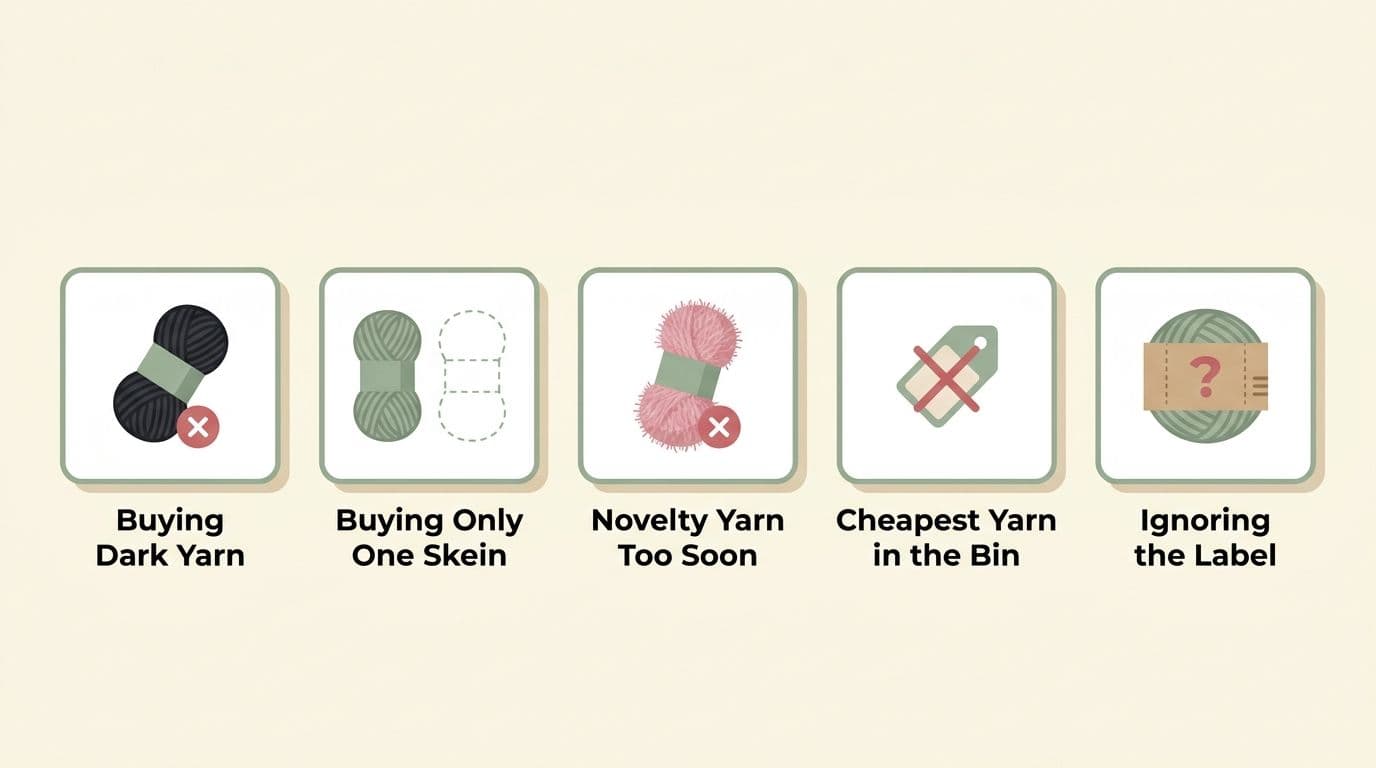
Mistake #1: Buying Dark Yarn Because It's Pretty You can't see your stitches. That's it. Skip it for now.
Mistake #2: Going for the Cheapest Yarn in the Bin Some ultra-cheap yarns are poorly spun. They split. They knot. They fray. Mid-range yarn ($5-8) is worth the extra dollars while you're building skills.
Mistake #3: Grabbing Novelty Yarn Because It Looks Fun That fuzzy, glittery skein calling to you? Save it. Seriously. Buy it for your fifth project, not your first.
Mistake #4: Buying Just One Skein "To Try It Out" You'll fall in love with your project, decide you want to keep going, and realize one skein wasn't enough. Dye lots won't match. Buy one extra skein. Always.
Mistake #5: Ignoring the Yarn Label Every label tells you fiber content, weight, yardage, and care instructions. These matter. Use them.
Understanding Yarn Labels (In 30 Seconds)
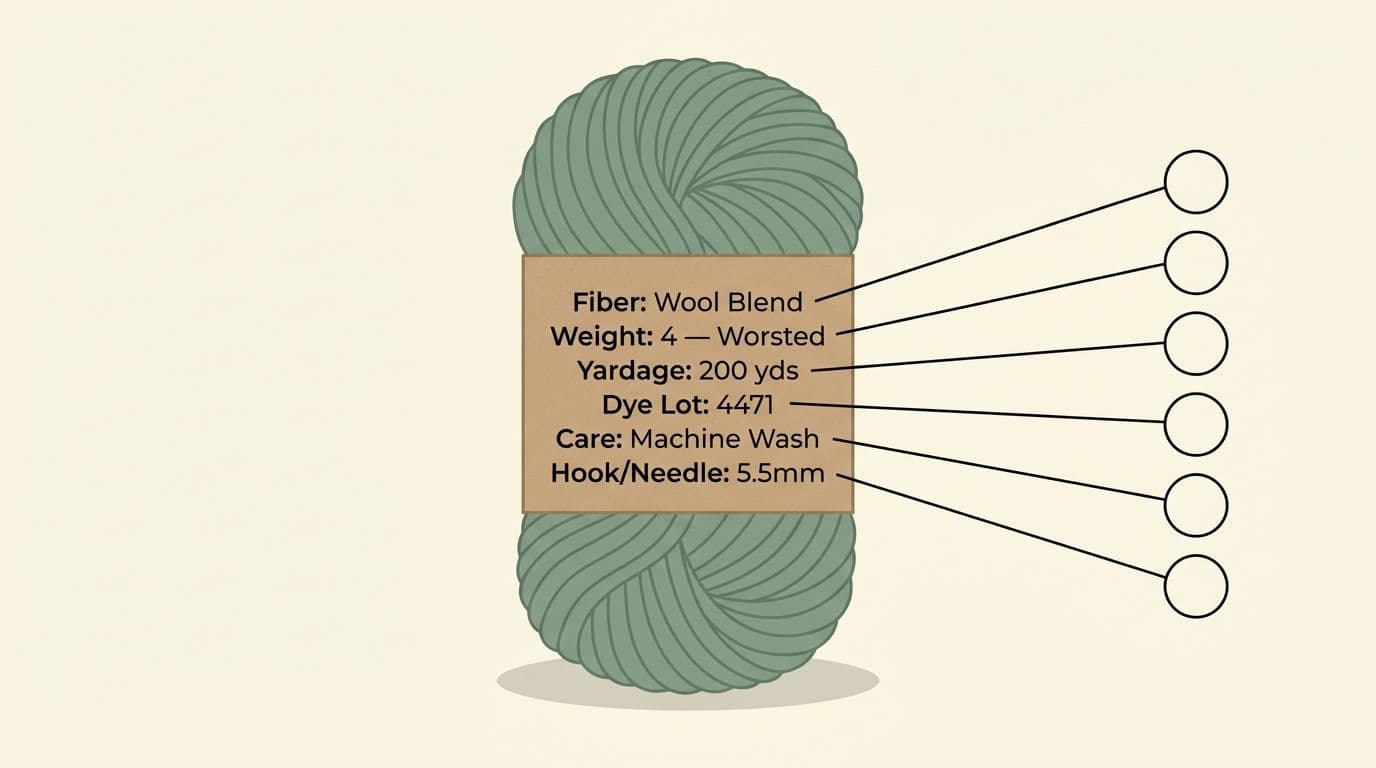
Stop staring at the label like it's written in code. It's not. Here's what matters:
Fiber content: What it's made of (wool, acrylic, cotton, or a blend)
Weight number: 0-7, showing thickness (aim for 3-4 for beginners)
Yardage: How much yarn is actually in the skein
Dye lot: A batch number; match this across skeins or risk color shifts
Care instructions: Hand wash or machine washable
Hook/needle size: Starting point for what size tool to use
Gauge: How many stitches per inch (useful later, less critical for beginners)
That's genuinely everything on that label you need to know right now.

Organize Your Yarn Stash Keep track of the yarn you already own and quickly find suitable substitutes for your next crochet or knitting project.
Explore Yarn Substitution
3 STACKS: Beginner Buying Strategies (With Tests)
STACK #1: The "Budget Learner" Stack
Best for: People who want to practice without financial stress
Your Yarn Combination:
• Red Heart Super Saver (2-3 skeins to start)
• Hobby Lobby I Love This Yarn (alternate colors to mix it up)
• One skein of Caron Simply Soft (to feel the difference)
The Test: Make a 4"x4" swatch in each yarn. Crochet or knit the same stitch pattern. Notice how the Red Heart feels stiffer? How is Caron softer? How Hobby Lobby is somewhere in between? This teaches you the difference without committing to a full project.
Total investment: Under $25, and you're not risking much if you decide it's not for you.
STACK #2: The "Quality-Conscious Beginner" Stack
Best for: People who want to feel like they're working with good yarn
Your Yarn Combination:
• Lion Brand Wool-Ease (primary learning yarn)
• Caron Simply Soft (backup yarn if you want to switch)
• One skein of Cascade 220 Superwash (to see what "nice" yarn feels like)
The Test: Start your first project in Wool-Ease. Halfway through, make a swatch in Cascade 220. Feel how the superwash wool bounces back? How does it feel more like "real" yarn? Finish your project in Wool-Ease, then use that Cascade for your second project when you're more confident.
Total investment: $35-40, and you're building with better materials while still staying reasonable.
STACK #3: The "I Want to Actually Enjoy This" Stack
Best for: People who don't want to feel like they're learning on cheap stuff
Your Yarn Combination:
• Cascade 220 Superwash (primary learning yarn, yes, really)
• One skein of a local yarn shop find (to support indie makers)
• One luxury yarn that makes you happy (hand-dyed, special)
The Test: Start with Cascade 220. Yeah, it's $13-15 per skein. But you'll care about every stitch. You'll finish your project and feel proud of how it looks. Make your second project in the local yarn shop find. Save the luxury yarn for project three.
Total investment: $50-60, but you're learning on yarn you actually want to work with.
Can You Use Knitting Yarn for Crochet (Or Vice Versa)?
Yes. Mostly.
The key thing: yarn is yarn. A worsted-weight skein is a worsted-weight skein. The hook or needle size is what changes, not really the yarn itself.
Knitting yarn for crochet: Usually fine. You might need a slightly larger hook than the label suggests.
Crochet yarn for knitting: Usually fine. You might need slightly smaller needles than the label suggests.
The real rule: match the weight to the pattern. If a pattern calls for worsted weight, use worsted weight (a 4 on the label). Fiber type matters way less than getting the weight right.

Find the Perfect Yarn Colors for Every Project Explore beautiful yarn color ideas, compare shades, and choose color combinations that bring your crochet and knitting projects to life.
Explore Yarn Colors
How to Actually Pick Your First Yarn (Right Now)
1. Decide: Crochet or knitting?
2. Pick a budget tier: Under $6? $6-12? $12+?
3. Choose from recommendations above based on your budget
4. Grab light-colored, worsted weight (weight 4)
5. Check the label for suggested hook/needle size
6. Buy one extra skein (you'll be glad you did)
7. Go home and start a simple dishcloth or scarf
That's literally it. You're overthinking this. Pick yarn, buy it, start your first project.
Conclusion
There's no such thing as a "perfect" yarn for every beginner. But there is a perfect first yarn for you, and you already know what to look for:
• Light color (so you see your stitches)
• Smooth texture (so it doesn't split)
• Worsted weight (so it's not frustrating)
• Forgiving fiber (acrylic, cotton, or wool blend)
Stop overthinking. Stop waiting for perfection. Pick yarn from the recommendations above, buy one extra skein, and start your first project today.
Your hands know less than you think they do right now. In four weeks, they'll know so much more. In twelve weeks, you'll wonder why this ever felt hard.
That journey starts with picking the right yarn. Now go do it.
Frequently Asked Questions
Choose the yarn based on fiber type, weight (it's thickness), project use and stitch visibility.
• Fiber type: Cotton, wool, acrylic, or blend
• Weight: Match it to your hook size
• Project use: Think about washability, warmth, and durability
• Stitch visibility: Smooth, solid colors show stitches best; fuzzy yarns hide them
Share this page
 X / Twitter
 Facebook
 Reddit
Related articles
Bernat Yarn Substitutes: What to Use Instead of Blanket, Maker, Pipsqueak & Bundle Up

How to Crochet a Pumpkin: Free Patterns for Fall & Halloween Decor
How to Read Crochet Patterns: A Beginner's Guide

Yarnzy: #1 Crochet & Knitting App
Track knitting and crochet projects with a timer & row counter, Import Patterns from Anywhere, Manage Stash & more all in one place.


Free to start · iOS, Android & Web
Scan to Download the App
Start your next project with confidence