
 Download the App
How Much Yarn Do I Need? Yardage Chart + Free Yarn Calculator
17 Sep, 2026
To accurately estimate your yarn needs, multiply the yardage required for your pattern by a 10-15% buffer. If you are wondering how many yards of yarn are needed for a blanket, a standard blanket can generally require around 1,400-2,000 yards of yarn.
The best and most accurate way to determine your yarn requirements is by checking the pattern yardage and the yardage per skein of the yarn you have chosen. If you are starting a project without a pattern, the next-best method can be swatch math.
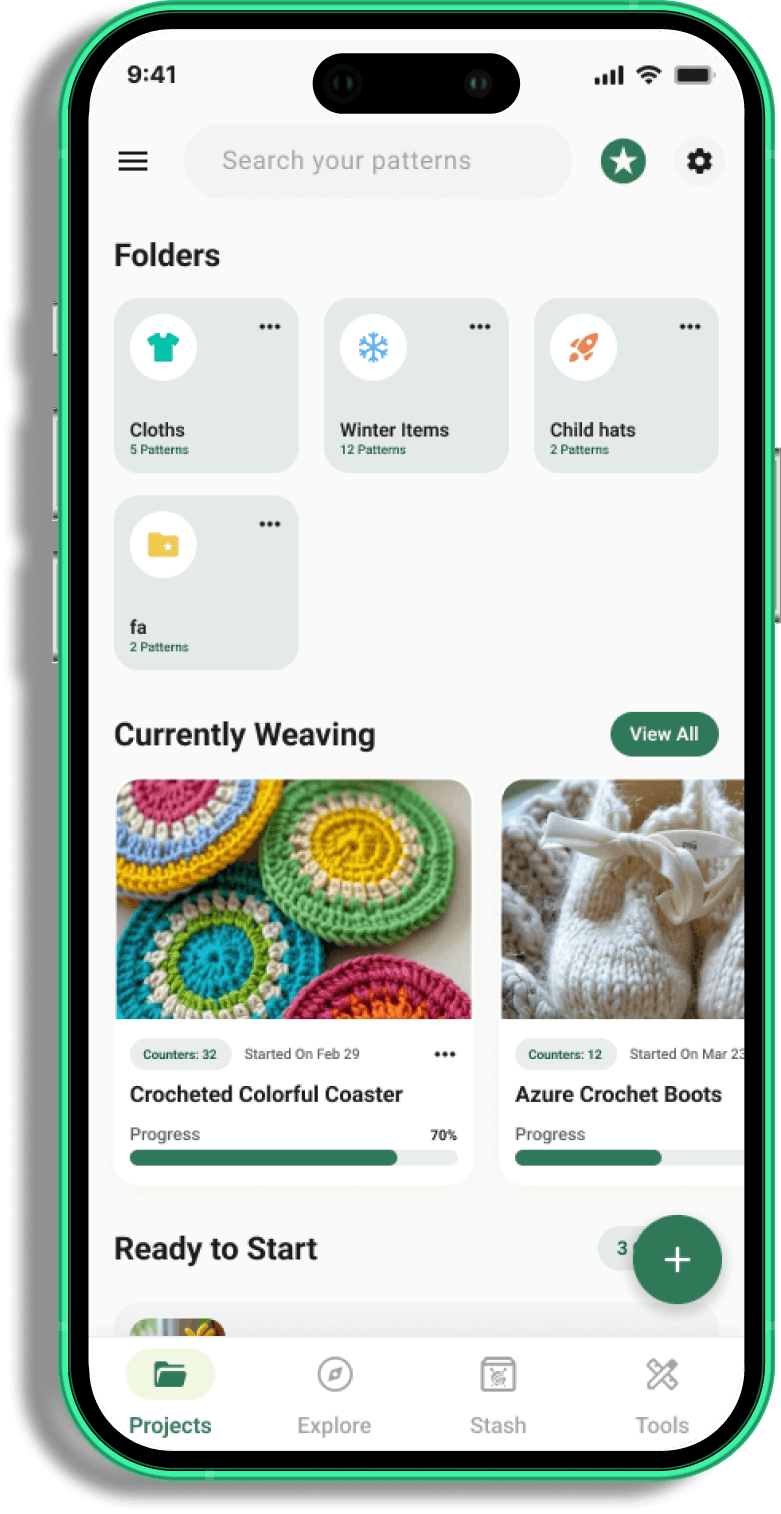
Plan Your Next Project with Yarnzy
 Download Yarnzy
Why Yarn Weight Is the Starting Point
Yardage charts are useless without knowing your yarn's weight first, and by "weight," nobody means how heavy the skein feels in your hand. Weight refers to thickness: how fine or chunky the strand is. It matters more than almost any other factor because thinner yarn simply stretches farther per gram than thicker yarn does. Two sweaters, same size, same stitch count, can call for totally different yardage depending on whether you're working in fingering weight or something bulky.
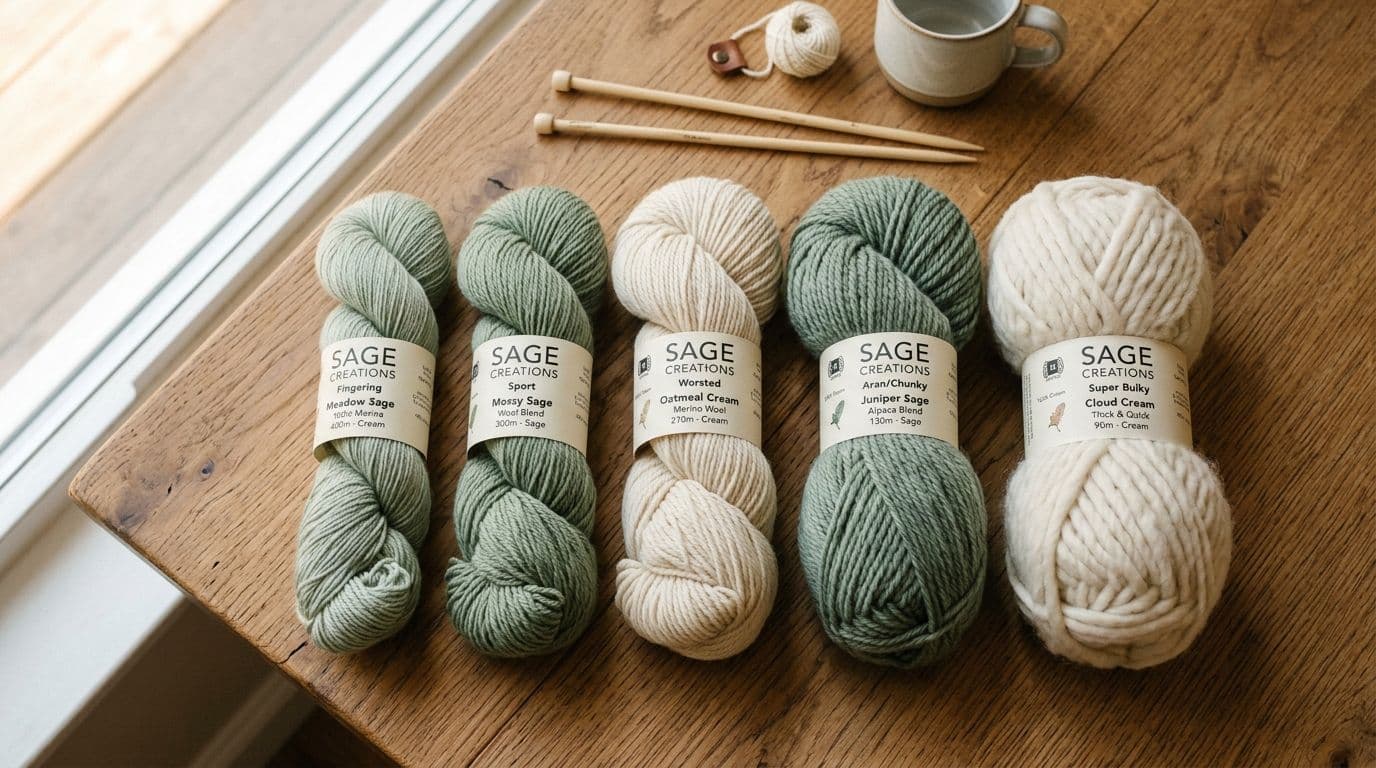
That's the real reason there's no single answer to "how much yarn do I need." There's an answer for your weight category, and it shifts a lot depending on which one you're using. A chunky throw blanket might only take six or seven skeins total, while the exact same blanket knit in a fine sport-weight yarn could eat through fifteen or more. Before buying anything, check what weight your pattern calls for, or, if you're swapping in different yarn, check the ball band. And if you're also choosing hooks or needles to match, Yarnzy's Hook and Needle Size chart lines up with each weight class below.
The 7 Yarn Weight Classes (Quick Reference)
| # | Weight Class | Typical Yards per 100g | Common Projects |
|---|---|---|---|
| 0 | Lace | 800-2,200 | Shawls, doilies, fine garments |
| 1 | Super Fine (Fingering/Sock) | 400-500 | Socks, baby items, light shawls |
| 2 | Fine (Sport) | 300-400 | Baby blankets, light sweaters |
| 3 | Light (DK) | 250-300 | Sweaters, hats, lightweight blankets |
| 4 | Medium (Worsted) | 190-220 | Blankets, sweaters, hats, scarves |
| 5 | Bulky | 120-180 | Chunky blankets, quick hats |
| 6 | Super Bulky | 60-110 | Fast throws, arm-knit projects |
| 7 | Jumbo | 20-60 | Statement blankets, giant projects |
These numbers shift by brand and fiber content, so treat the chart as a baseline rather than gospel, the ball band always wins. The categories themselves come from the Craft Yarn Council's standard weight system, which is basically the industry's shared language for yarn thickness.
How Much Yarn Do I Need? Yardage Chart by Project
Most yardage guides stall out at "it depends" and leave you there. Here's an actual working range for the projects people search for most, broken out separately for knit and crochet, because, as you'll see in a second, those two numbers are never quite the same.
| Project | Knit Yardage | Crochet Yardage |
|---|---|---|
| Throw blanket (worsted) | 1,200-2,200 yds | 1,600-2,800 yds |
| Baby blanket | 600-1,000 yds | 800-1,300 yds |
| Chunky/super bulky throw | 1,000-1,600 yds | 1,300-2,000 yds |
| Hat | 80-200 yds | 120-260 yds |
| Scarf | 250-450 yds | 300-550 yds |
| Socks (pair) | 350-450 yds | 400-500 yds |
| Sweater (adult, worsted) | 900-1,600 yds | 1,200-2,200 yds |
Think of these as a starting line, not a finish line; they assume worsted weight, an average adult size, and typical gauge. Your finished project might land higher or lower depending on size and stitch pattern, which is exactly what Yarnzy's Yarn Calculator adjusts for once you plug in your specifics.
Blankets (Throw, Baby, and Chunky)
Blankets are where people most often underestimate. The jump in yardage between sizes is bigger than it looks when you're just eyeballing a pattern. A standard throw somewhere around 50" by 60" takes 1,200-2,200 yards in worsted-weight knitting, or 1,600-2,800 yards if you're crocheting it. That gap between knit and crochet isn't a typo; crochet's denser stitch structure just burns through more yarn to cover the same square footage.
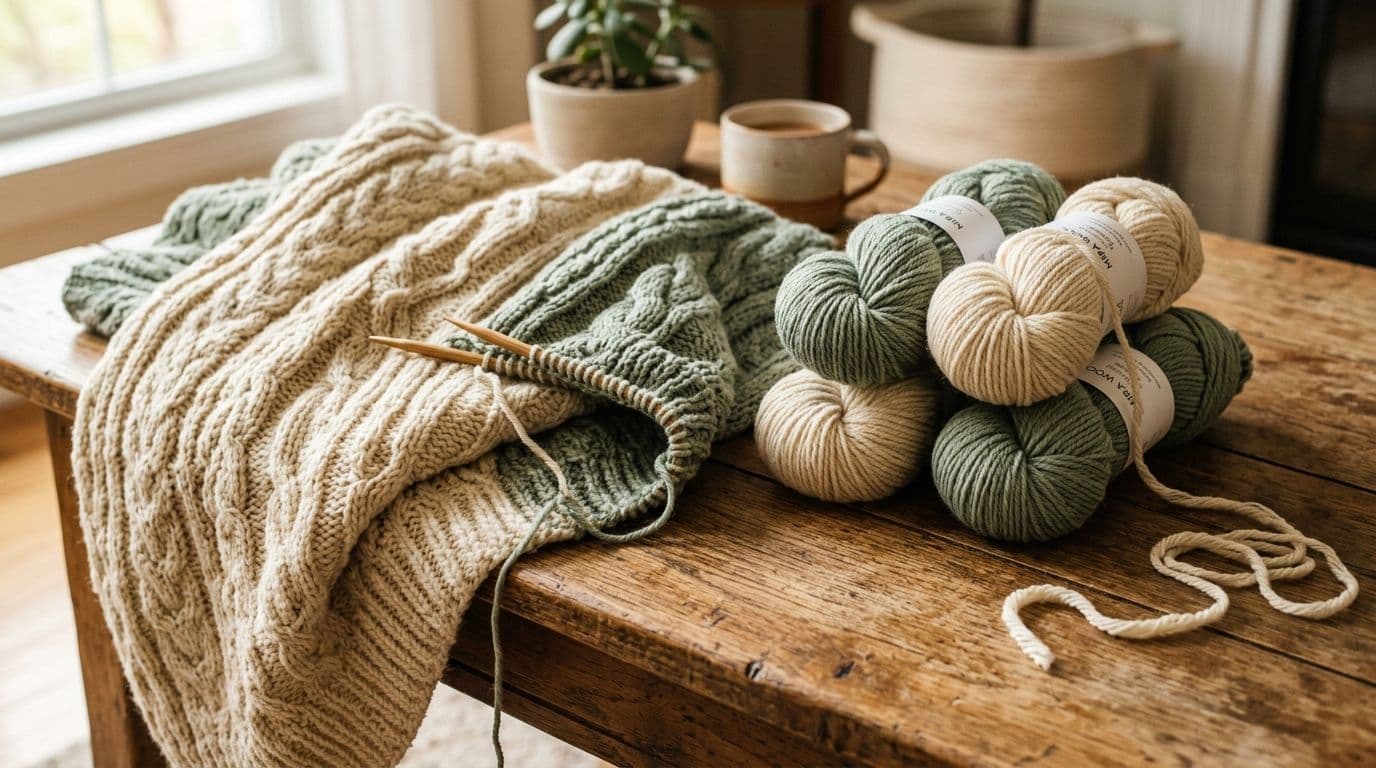
Baby blankets scale down from there plan on 600-1,000 yards knit, or 800-1,300 yards crochet, for a typical 30" by 36" size. Chunky and super bulky blankets are the odd one out: the total yardage actually drops (1,000-1,600 yards knit, 1,300-2,000 yards crochet), but because each chunky skein holds so few yards, the number of skeins you need can look surprisingly high. Don't let a lower yardage total fool you into buying too few skeins. Always divide it out before you check out.
Hats, Scarves, Socks, and Sweaters
Smaller projects are more forgiving, but the ranges still move quite a bit depending on weight and technique. A grown-up-sized hat takes about 80-200 yards knit or 120-260 yards crochet, with bulky-weight hats landing at the low end and fingering-weight ones climbing toward the top. Scarves fall somewhere in the 250-450 yard range knit, or 300-550 crochet, depending on how long and how dense you make them.
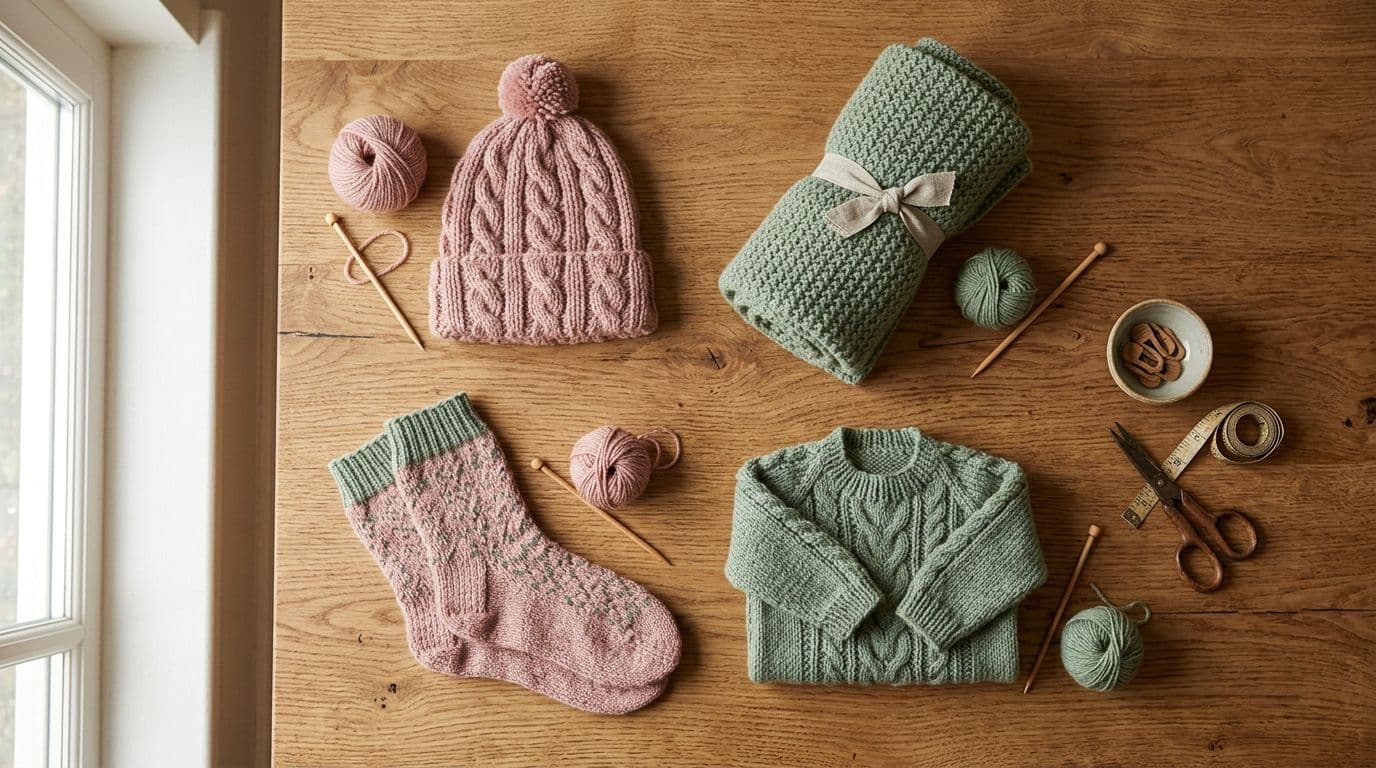
Socks are one of the more economical projects yardage-wise; a standard adult pair uses roughly 350-450 yards knit or 400–500 crochet, almost always in a fine fingering or sport weight. Sweaters have by far the widest range of anything on this list: 900-1,600 yards knit, or 1,200-2,200 crochet, for an adult worsted-weight pullover. Sizing, sleeve length, and anything fancy like cables or colorwork can all push that number around considerably.
Knit vs Crochet, Why the Numbers Differ
Notice that crochet keeps asking for 20-30% more yarn than knitting across nearly every project on this list. That's not a coincidence or a rounding error; it comes down to how each stitch is built. Crochet wraps the yarn around the hook multiple times per stitch, which creates a thicker, denser fabric for the same amount of surface area. Knitting only pulls one loop through another, so the resulting fabric is thinner and stretches further for every yard used.
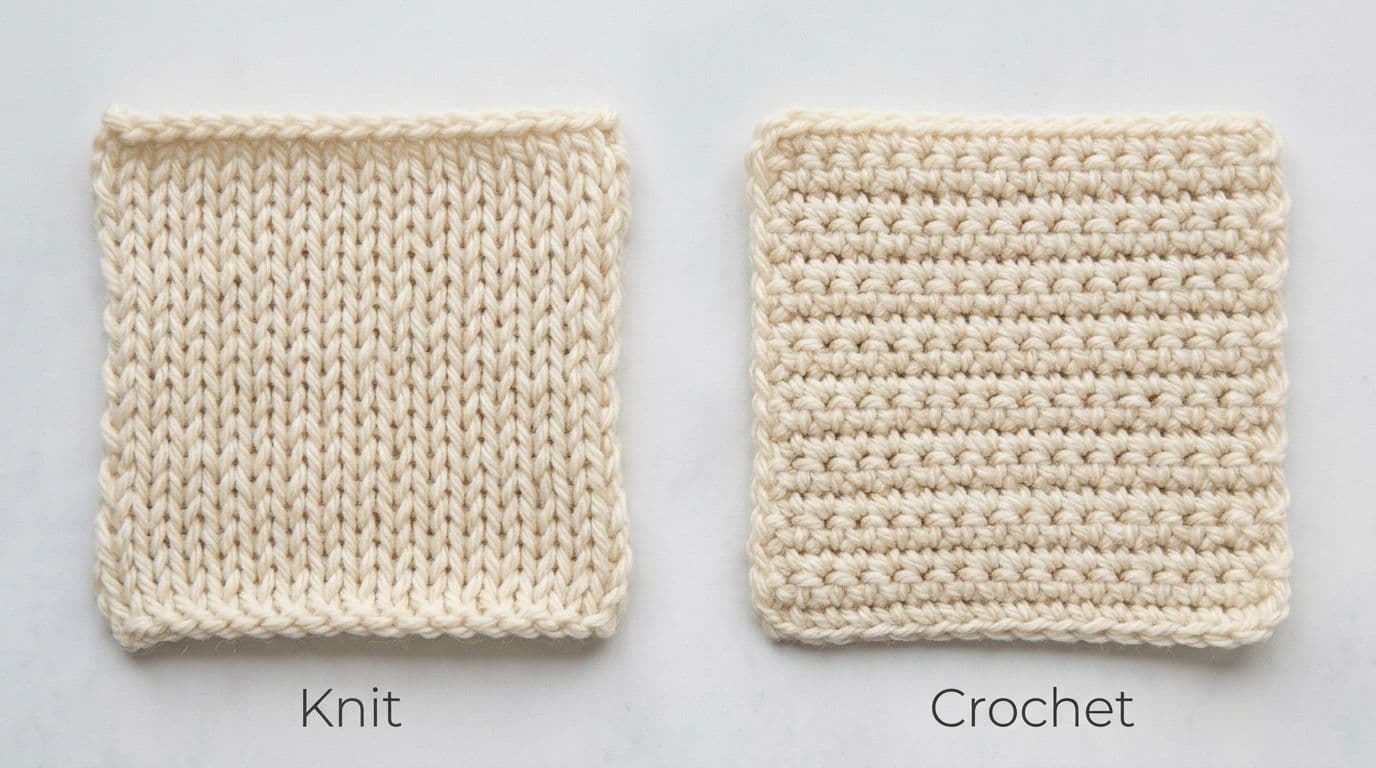
It's also why any decent yarn calculator needs to ask whether you're knitting or crocheting before spitting out a number; a chart that ignores technique will quietly shortchange crocheters every time. (If you want to dig into how the two techniques differ beyond just yardage, Yarnzy has a full breakdown of knitting vs. crochet.)

Skip the Math Let Yarnzy Do It The Yarnzy Yarn Calculator handles yardage estimates for knit and crochet projects instantly. Free, no account needed, works on any device.
How to Turn Yardage Into Skeins
Once you've got a target yardage number, turning it into an actual shopping list is one quick calculation away and it's worth doing by hand at least once so you trust it.
The Skein Math Formula
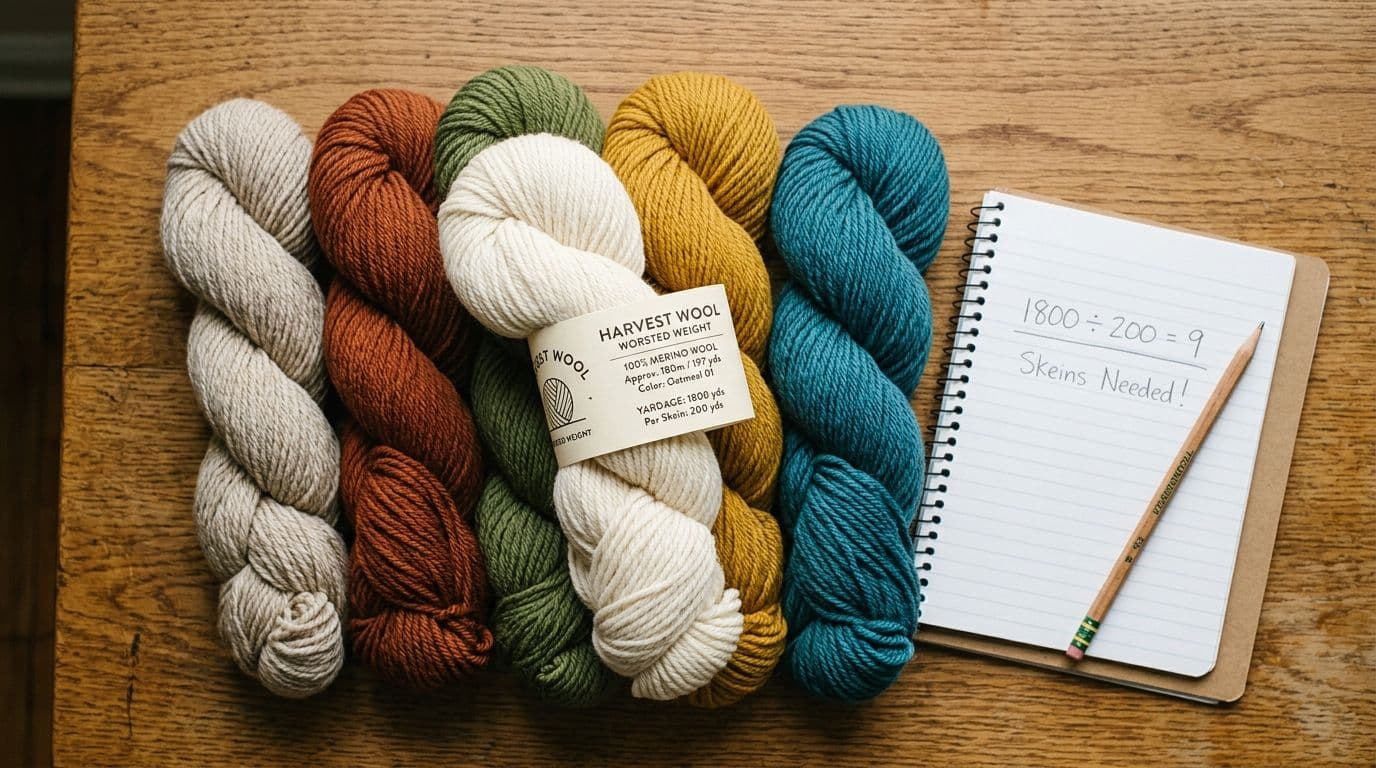
Here's the whole formula: total yardage needed ÷ yards per skein = how many skeins to buy. Always round up even one leftover yard from a skein still counts as a full purchase. Say your blanket needs 1,800 yards, and each worsted-weight skein holds 200 yards. That's 1,800 ÷ 200 = 9 skeins, before you even add your buffer.
That's the same calculation Yarnzy's Yarn Calculator runs behind the scenes, you just tell it your project and weight, and it hands back a skein count instead of you doing long division standing in the yarn aisle.
How Many Grams Is That? (Yards to Grams Conversion)
Some patterns give you yardage; others only list grams, or meters if the pattern's from outside the US. If you're working with meters, multiply by 1.094 to get yards. Here's a rough conversion table to bridge the gap:
| Yarn Weight | Approx. Yards per 100g | Approx. Grams per 200 yards |
|---|---|---|
| Fingering | 400-500 yds | ~40-50g |
| DK | 250-300 yds | ~65-80g |
| Worsted | 190-220 yds | ~90-105g |
| Bulky | 120-180 yds | ~110-165g |
| Super Bulky | 60-110 yds | ~180-330g |
If your yarn falls outside these rough numbers, or you're juggling a pattern written in mixed units, Yarnzy's Unit Conversion tool will do the meters-to-yards or grams-to-ounces math instantly.

Swapping Yarns? Check Your Yardage First If you're substituting one yarn for another, Yarnzy's Yarn Substitution tool calculates whether your replacement yarn will cover the same project at the same yardage.
How to Calculate Yarn Without a Pattern (Swatch Math)
No pattern in hand? You can still get a solid estimate with nothing more than a swatch, a kitchen scale, and some basic area math.
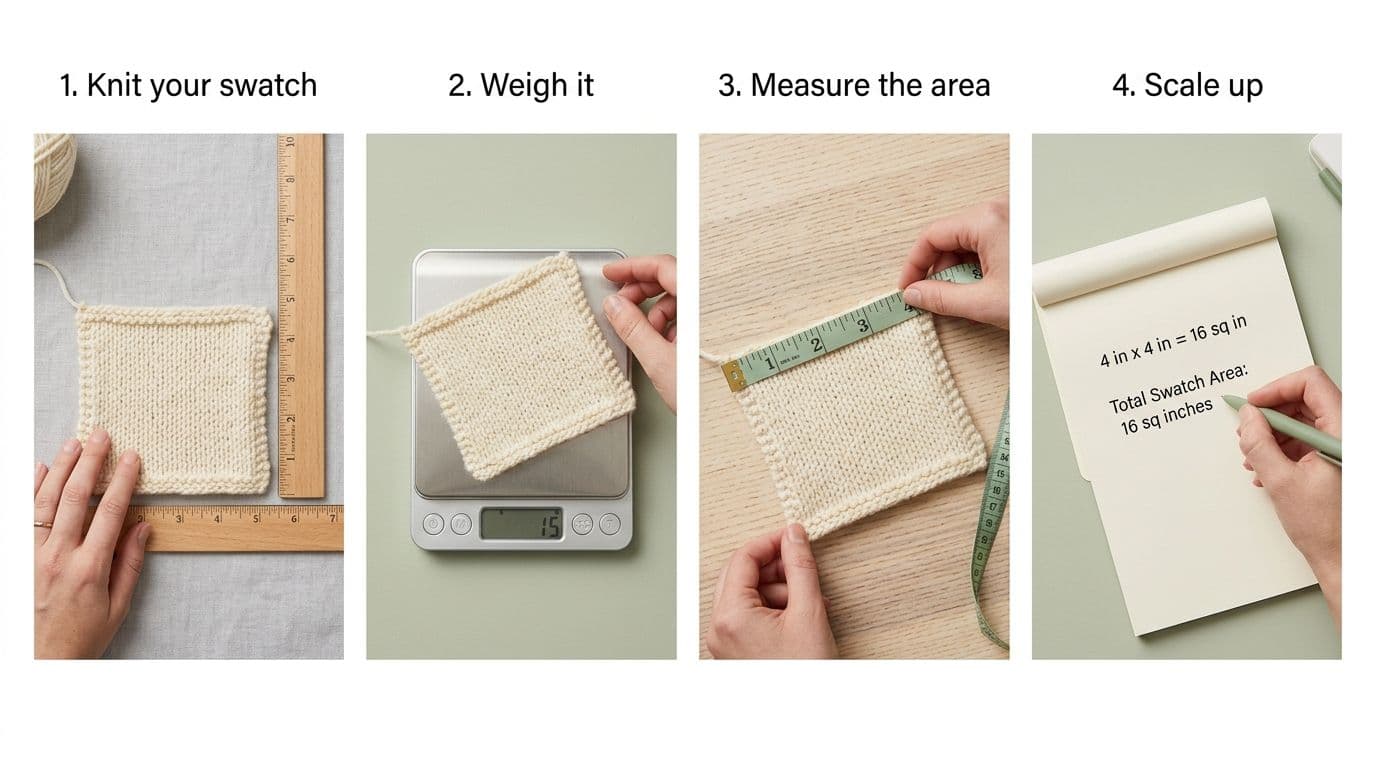
1. Knit or crochet a swatch. Make it at least 4" x 4", using your actual yarn, hook or needle, and the stitch pattern you plan to use.
2. Weigh the swatch. Put it on a kitchen scale and note the weight in grams.
3. Measure its area. Multiply the swatch's width by its height in inches, a 4" x 4" swatch comes out to 16 square inches.
4. Measure your actual project. Figure out the total area of whatever you're making, in the same square-inch units.
5. Scale the weight up. Divide your project's total area by the swatch's area, then multiply that result by the swatch's weight in grams. That gives you an estimated total weight for the whole project.
6. Convert to yardage. Use your ball band's yards-per-gram figure (or the conversion table above) to turn that weight into yards.
7. Pad it slightly. Add 10-15% on top before you settle on a final skein count.
This works for anything without an official pattern, improvised blankets, repairs, or yarn you're winging entirely on your own. If ratios and scaling aren't your thing, Yarnzy's Yarn Calculator also offers a project-type estimate that gets you close without needing a swatch at all.
The Buffer Rule, Why to Always Buy a Little Extra
Even a spot-on calculation deserves a little cushion, and the reason comes down to dye lots. Yarn colors can vary slightly from one dye batch to the next, and once a batch is sold out, there's often no way to match it again; this is especially true for hand-dyed yarns or anything discontinued. Buying your full calculated amount, plus a small buffer, is what keeps you from ending up with a visibly mismatched patch near the end of a project.
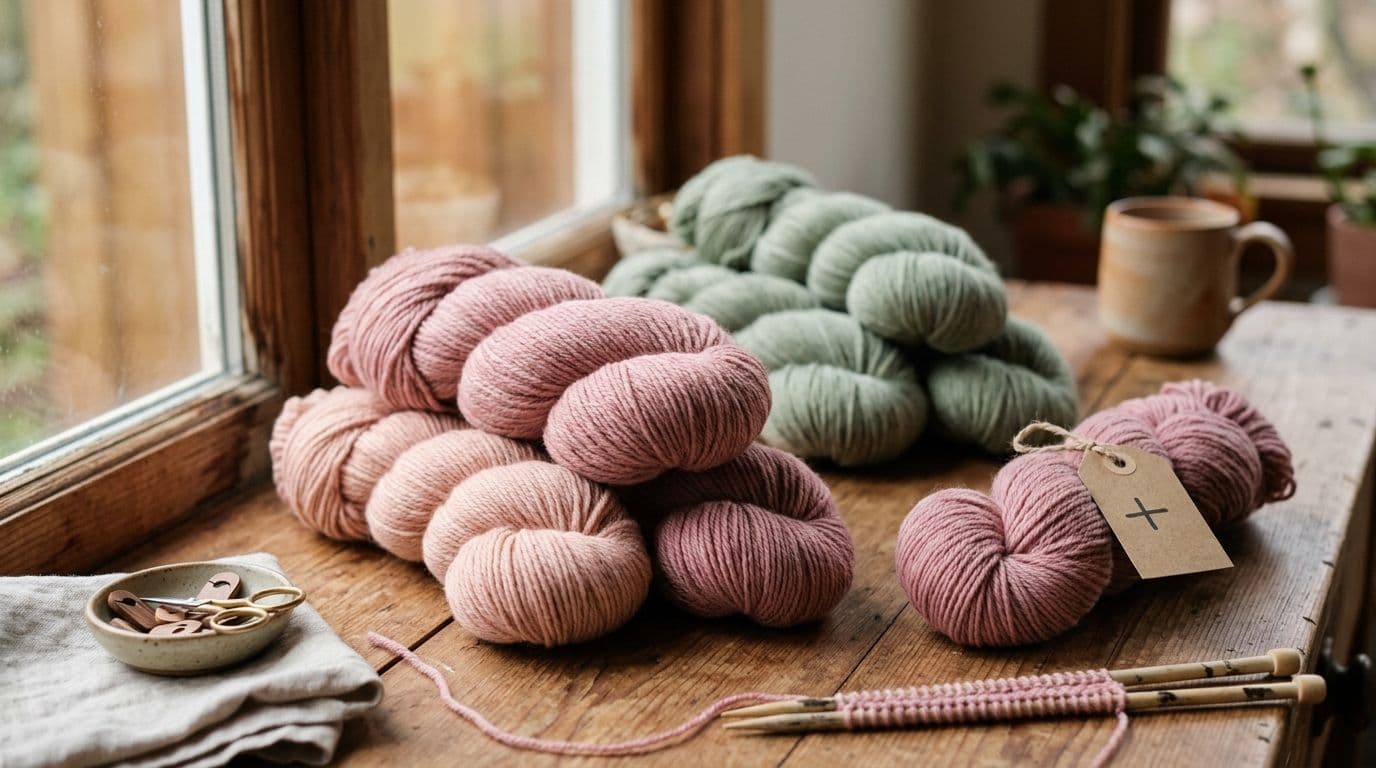
A buffer of 10-15% is the usual rule of thumb, and rounding up is almost always the safer call. For a project that needs 9 skeins, that's roughly one extra small cost compared to running out a few yards short on the very last row. And if that extra skein goes unused, it rarely goes to waste; leftover yarn is handy for swatches, small accessories, or stripe details on your next project.
Conclusion
However you slice it, yarn shopping always comes down to two numbers: how much your project needs, and how much lives in one skein. Everything else in this guide, weight class, knit versus crochet, buffers, swatch math, is just the path to getting those two numbers right before you're standing at the checkout. If you'd rather not run the math yourself, Yarnzy's free Yarn Calculator, Yarn Substitution, and Unit Conversion tools can handle it in a few seconds, leaving you more time to actually make something.
Frequently Asked Questions
Plan on roughly 1,200-2,200 yards for a knit throw, or 1,600-2,800 yards if you're crocheting one. The exact number moves with your size and stitch pattern, Yarnzy's Yarn Calculator can narrow it down once you enter your dimensions.
Share this page
 X / Twitter
 Facebook
 Reddit
Related articles
How to Join Granny Squares: 7 Easy Methods for Every Project

How to Fix a Dropped Stitch in Knitting: Step-by-Step for Every Stitch Type
Why Is My Crochet Curling? 6 Causes, Easy Fixes, and How to Stop It for Good

Yarnzy: #1 Crochet & Knitting App
Track knitting and crochet projects with a timer & row counter, Import Patterns from Anywhere, Manage Stash & more all in one place.


Free to start · iOS, Android & Web
Scan to Download the App
Start your next project with confidence