
 Download the App
Why Is My Crochet Curling? 6 Causes, Easy Fixes, and How to Stop It for Good
22 Sep, 2026
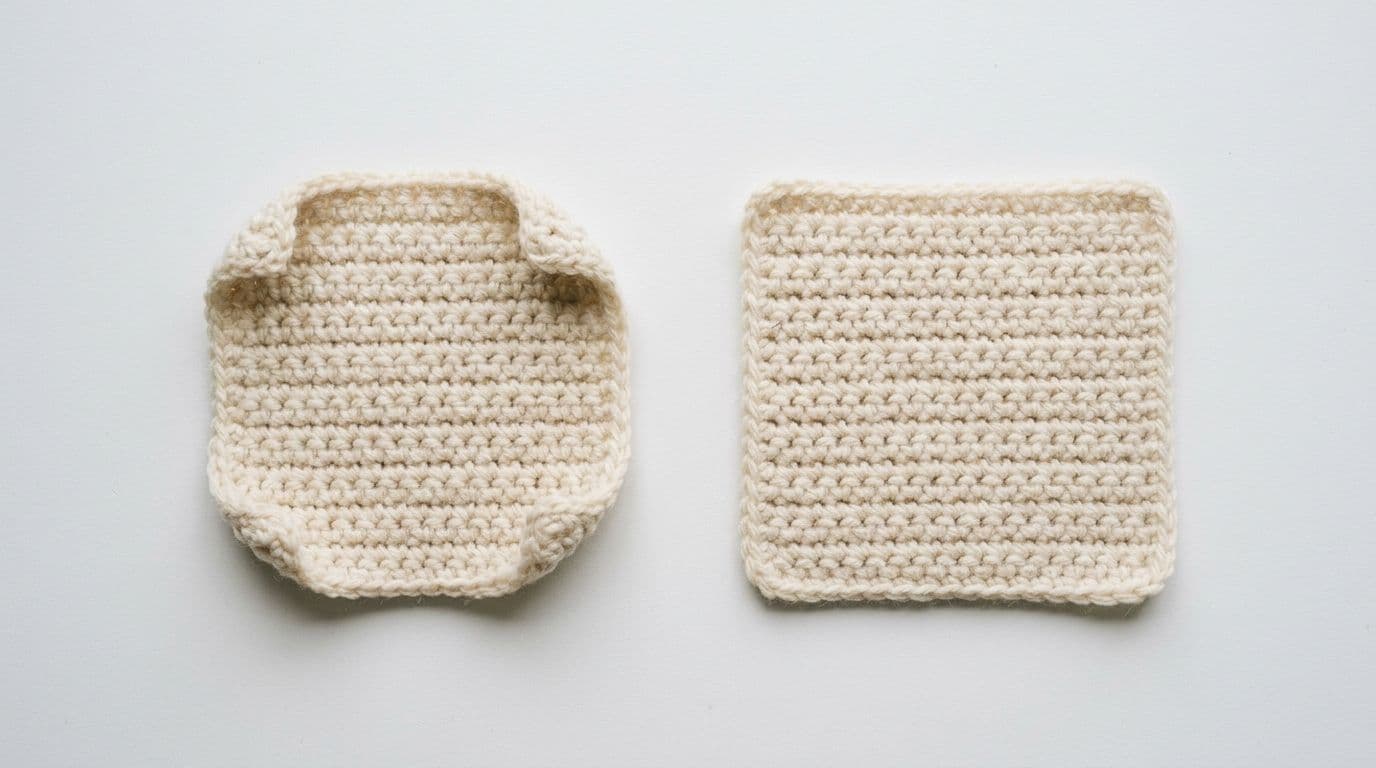
Crochet curls when the stitches on one side of the fabric pull tighter than the stitches on the other, so the whole piece bends toward the tight side. The usual causes are tight tension, a tight foundation chain, a hook that's too small, a stitch that naturally leans, or a stitch count that's drifted off.
Curling (or "curving," as many people search for it) rarely means you're doing crochet wrong. It's tension physics plus a few fixable habits. Below are the six causes, a quick way to tell which one you have, fixes for finished pieces, and a clear rule for deciding whether to rip back or keep going.
Keep Your Crochet Tools in Your Pocket
 Download Yarnzy
Which Type of Curling Do You Have?
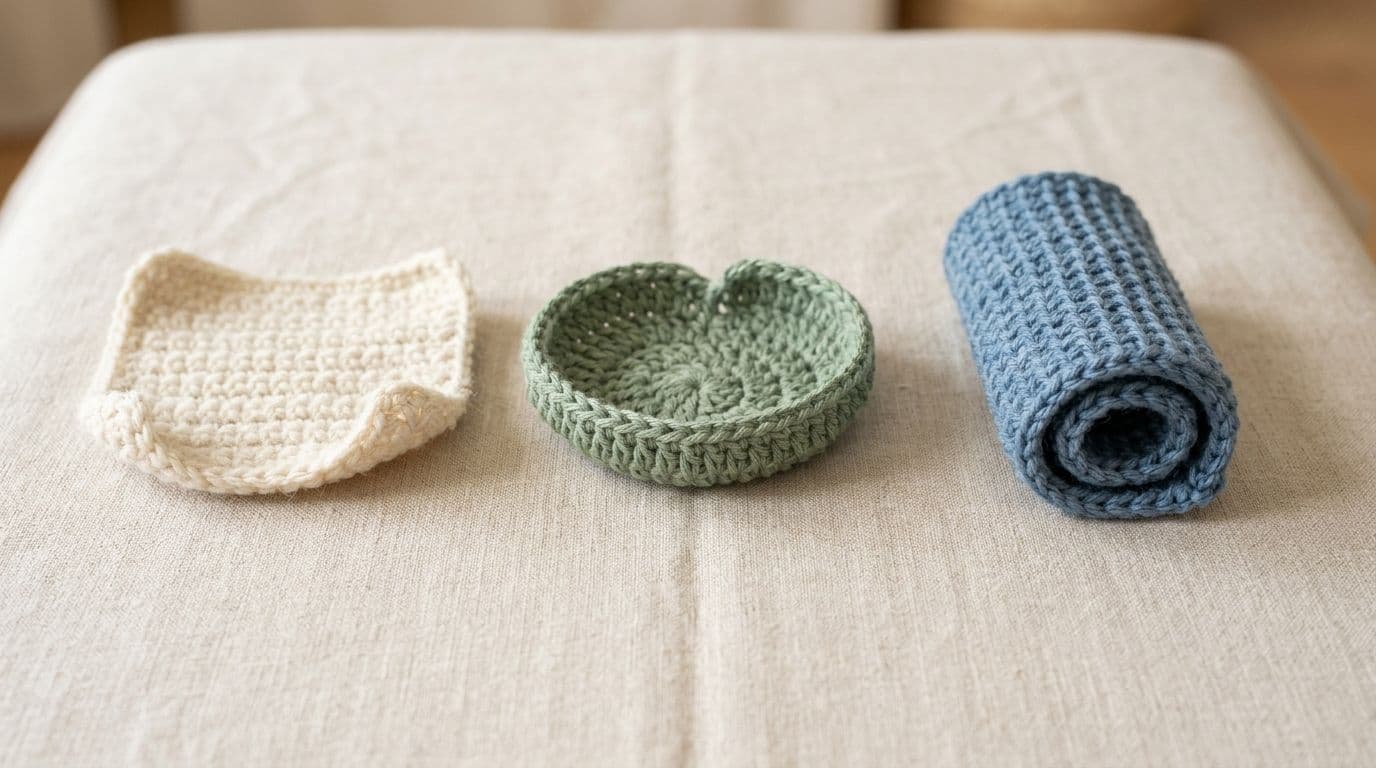
Where the curl shows up tells you why it's happening. Match your project below before you change anything.
| What you're making | What the curl looks like | Most likely cause | Fastest fix |
|---|---|---|---|
| Blanket or rectangle | Bottom edge pulls in; the piece is narrower at the start | Tight foundation chain | Redo the chain with a bigger hook, or use a chainless foundation |
| Blanket, scarf, dishcloth | All four corners lift | Tight tension + single crochet | Border or blocking; mix in taller stitches |
| Circle | Cups up like a bowl | Too few increases | Recount and rip back to the missed round |
| Circle | Ruffles like a wavy edge | Too many increases | Remove a few increases per round |
| Tunisian crochet | Rolls into a scroll | The stitch itself is one-sided | Bigger hook + border or a different stitch |
Two causes often overlap, such as tight tension on top of single crochet, so read all six before you decide.
The 6 Most Common Reasons Crochet Curls
Here are the six causes at a glance:
• Your tension is too tight
• Your foundation chain is too tight
• Your hook is the wrong size
• The stitch type naturally curls
• Your stitch count is off
• Your yarn isn't compatible with the pattern
1. Your Tension Is Too Tight
Tight stitches have no slack. Each one pulls on its neighbours, and the fabric has nowhere to go but inward, so the edges curl. Watch for a stiff, board-like fabric, a hook that's hard to slide into stitches, or cramping in your hand.
Tension often creeps up when you concentrate on counting or work with slippery yarn. Loosen your grip on the hook, let the yarn run more freely through your fingers, and take a break when your hand aches. If relaxing doesn't help, the hook is the next suspect (see cause 3).
2. Your Foundation Chain Is Too Tight
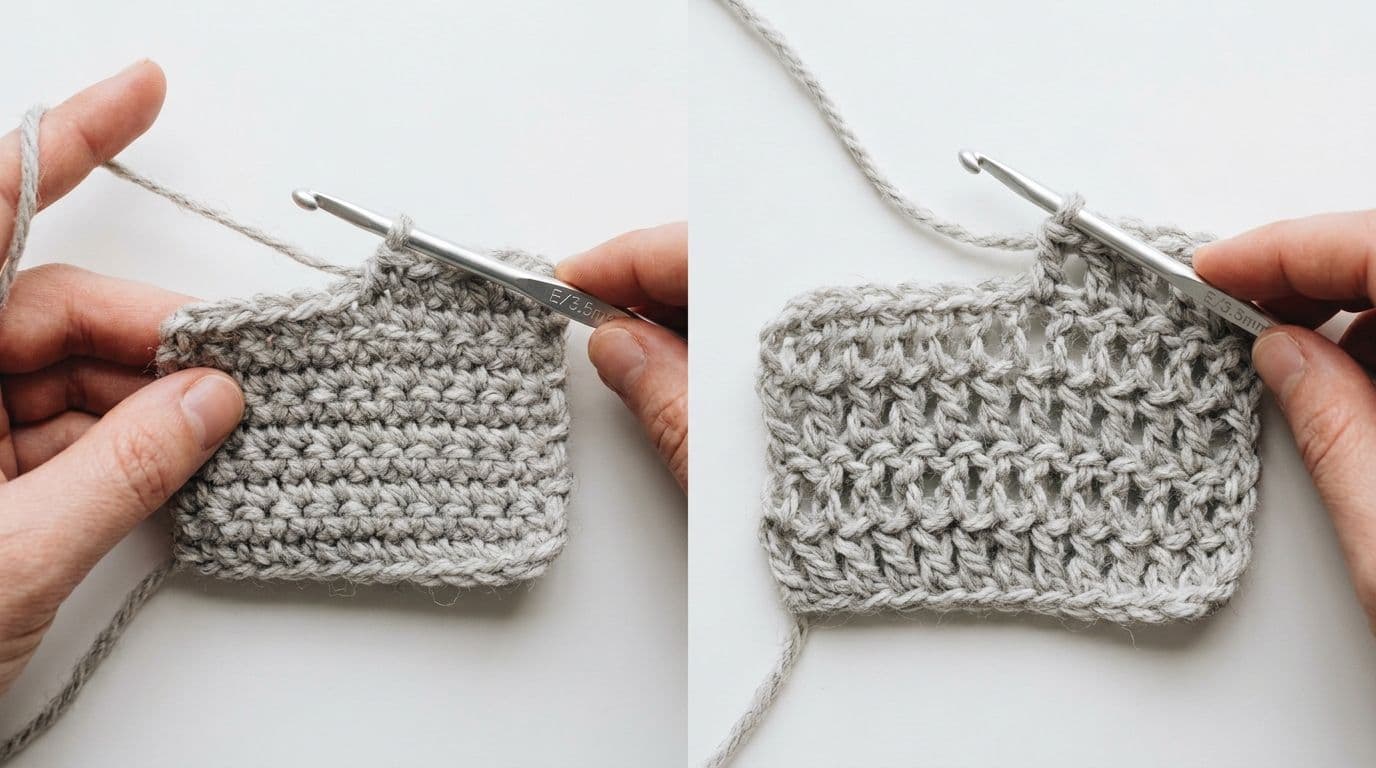
A chain has almost no give, and it's the narrowest point of your whole project. Every row above it is looser, so the bottom pulls inward and the piece tapers.
Use this quick check after about three rows. Lay the piece flat and compare the bottom edge to the top. If the bottom is noticeably narrower, the chain is the culprit. The fix is a hook one or two sizes larger for the chain only, or a chainless foundation (foundation single crochet), which builds the first row and its base together and stays stretchy. Chaining "more loosely" rarely works, because tension is a habit, not a decision.
3. Your Hook Is the Wrong Size
The hook size on a yarn label is a starting suggestion, not a rule. The Craft Yarn Council's yarn weight standards give worsted-weight yarn (category 4) a range of 5.5–6.5 mm, and where you should land inside that range depends on your hands and your yarn.
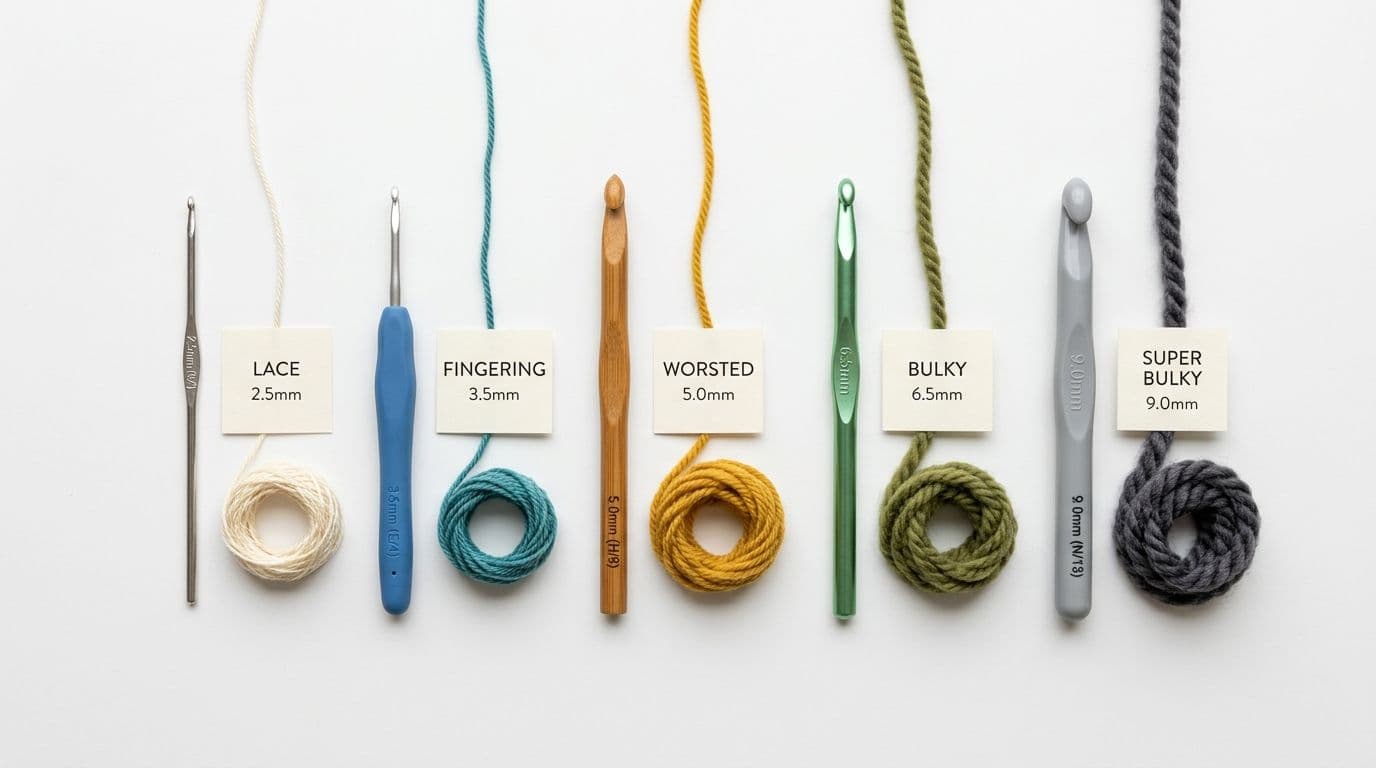
If your fabric feels stiff and the edges curl, try one size up before anything else. A bigger hook makes bigger loops, so stitches get room to relax without you changing how you crochet. The Hook & Needle Chart shows the recommended range for your yarn weight so you can pick a size to swatch with.

Check Your Hook Size in Seconds A mismatched hook is one of the top reasons crochet curls. Use Yarnzy's free Hook & Needle Chart to find the right hook for your yarn weight, no guessing needed.
4. The Stitch Type Naturally Curls
Sometimes it isn't you. Single crochet is one of the shortest stitches, so its rows pack tightly and the fabric leans. Tunisian simple stitch does the same thing, for reasons covered in the Tunisian section below.
Taller stitches such as half double crochet and double crochet leave more slack and usually lie flatter. If you love single crochet's texture, alternate it with a taller stitch, such as half double crochet on the first and last rows, so the pull balances out. Whether a stitch curls is worth knowing before you choose a pattern.
5. Your Stitch Count Is Off
Stitch counts drift more easily than you'd think. In flat rows, a missed last stitch or an extra one at the turn makes the edges wander and curve. In circles, each round is longer than the one before, so it needs more stitches. A common formula is 6 extra stitches per round for single crochet, 8 for half double crochet, and 12 for double crochet.
Too few increases make the circle cup up like a bowl. Too many make it ruffle. Count every round, and use a stitch marker to mark where each round begins. If you need the right numbers for a specific size, the Stitch Calculator will help you work them out.
6. Your Yarn Isn't Compatible with the Pattern
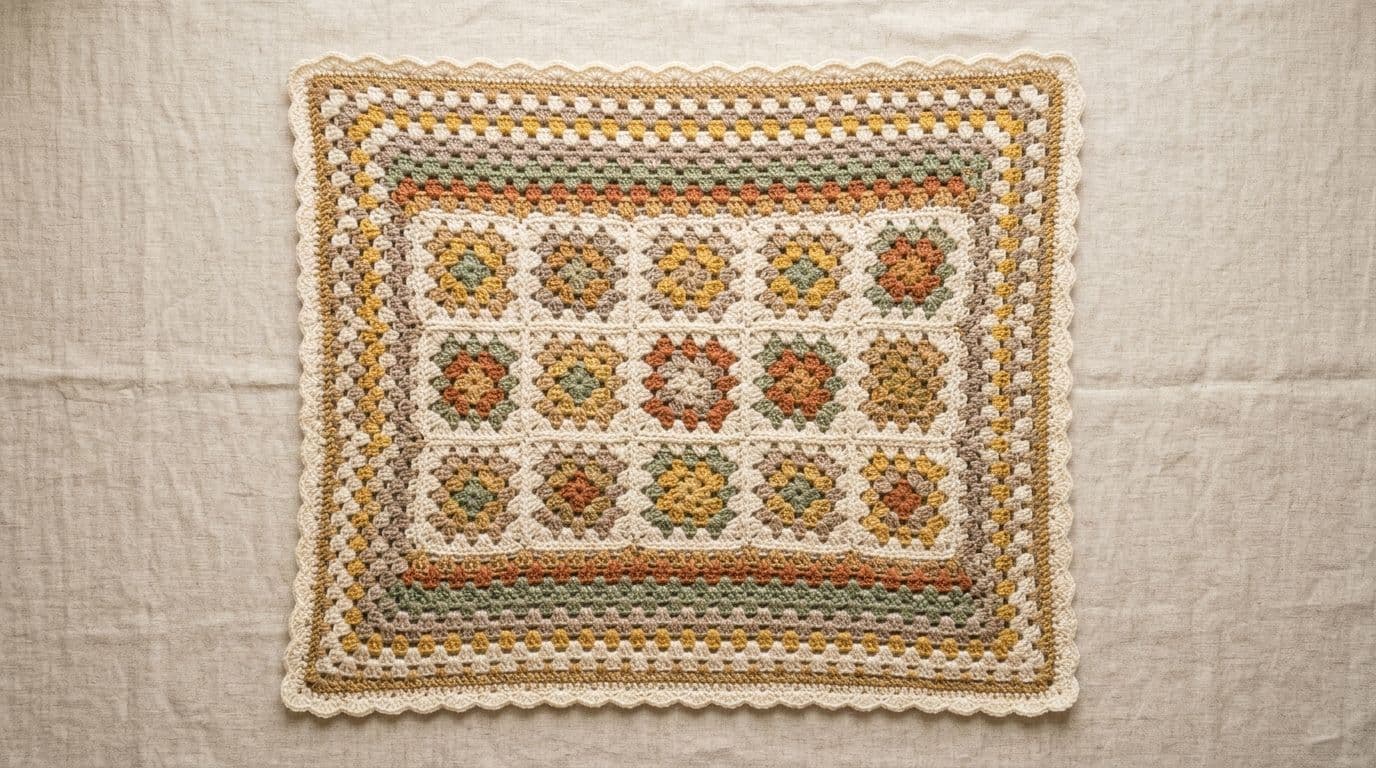
Patterns are written around the designer's yarn. Two yarns in the same weight category can behave very differently: one dense and stiff, one fluffy and stretchy. Fibres with little stretch, like cotton, show tension problems more than springy fibres do.
If you swapped yarns, your gauge probably shifted, and you may have adjusted stitch counts or hook size to compensate, which can create the curl. Swatch first and compare it to the pattern's gauge. The Yarn Substitution tool can help you choose a yarn that matches the pattern before you commit.
How to Fix Crochet That's Already Curling
Match the fix to the severity. Mild curl can often be blocked away, moderate curl usually needs a border, and curl that starts at a specific row may need a hook change.
Blocking: The Go-To Fix for Finished Pieces
What is blocking?
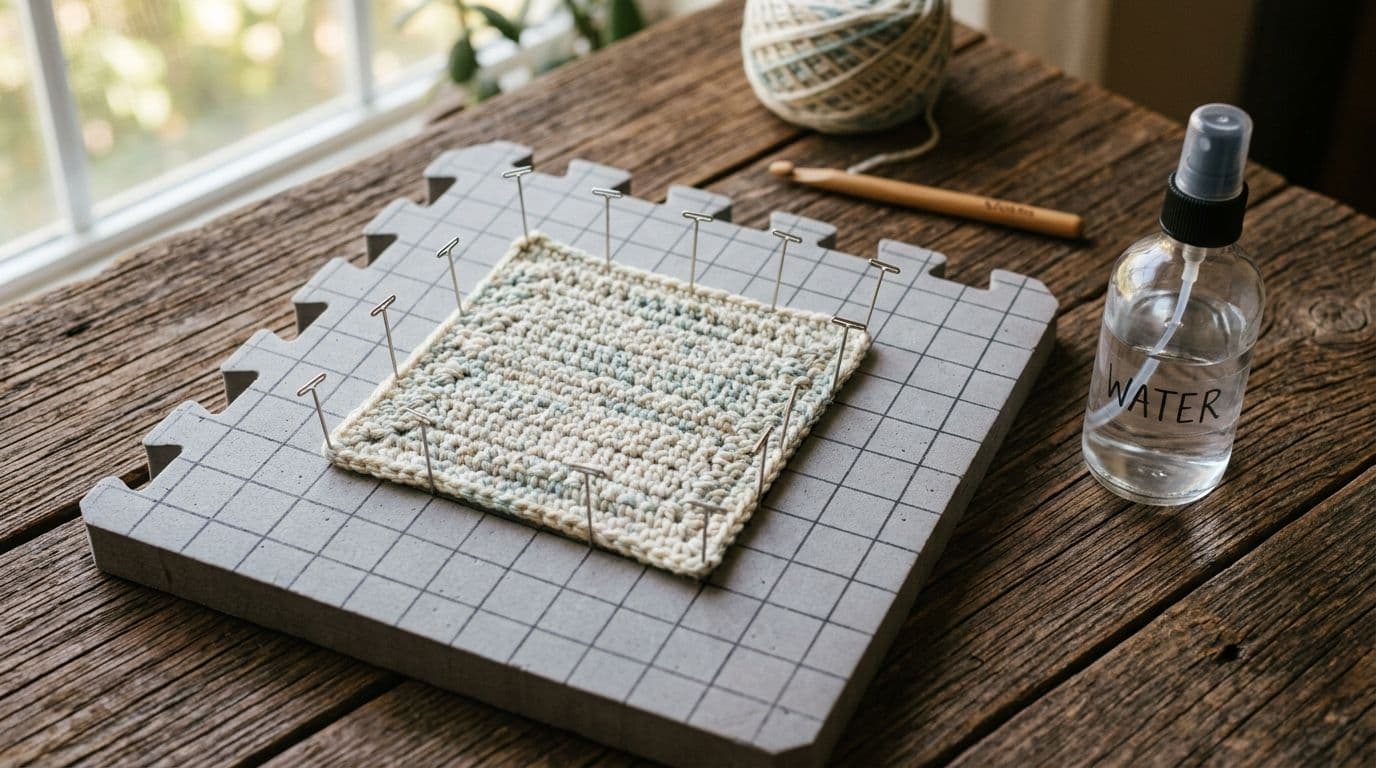
Blocking is a finishing method where you wet or steam a finished piece, then shape it while it dries so the fibres set in the new shape. It can flatten mild curl, but it can't correct structural problems like wrong stitch counts.
For natural fibres such as wool and cotton, wet blocking works well. Soak the piece, gently squeeze out the water (don't wring), pin it flat to size, and let it dry completely. Acrylic behaves differently. Wet blocking only gives a mild, temporary change, and steam has a stronger effect but carries a risk. Hold the steamer or iron a short distance above the fabric and never press down, because acrylic can melt or go limp permanently. Test on a swatch first.
Add a Border
A border adds weight and stitch balance along the curling edge. Slip stitch and single crochet borders both work. Use a larger hook, keep your stitches loose, and put a few stitches into each corner so it doesn't cup. A tight border makes the curl worse, so this fix depends on relaxed tension.
Adjust Your Hook or Tension Mid-Project
If the curl starts partway through, rip back to where it began and continue with a hook one size up. Swatch the new size first so the change doesn't show as a visible line in the fabric. This works best for flat items like scarves and blankets and is riskier for fitted garments.
Should You Start Over or Fix It at the End?
The less you've made, the cheaper it is to restart. Beyond that, use these four checks:
1. Try the tug test. Gently stretch the curled edge flat and let go. If it relaxes and stays calm, keep going and block later. If it snaps straight back, your tension or hook is the problem and blocking will only hide it.
2. Locate the curl. If only the corners or side edges curl, a border or blocking can handle it. If the bottom edge is pulled in from the chain, restart if the piece is small, and add a border if it's large.
3. Recount your circle. If it cups and your round counts are short, don't restart the whole thing. Rip back to the round where the count went wrong.
4. Check your hands. If your hand hurts and the fabric feels like cardboard, restart now with a bigger hook. It only gets worse as the piece grows.
How to Stop Crochet From Curling in Future Projects
Follow these six steps to prevent curling before it starts:
1. Make a gauge swatch first. Make it bigger than the usual 4 inches, wash or block it, and check whether the edges stay flat. Here's [how to make a gauge swatch:
2. Use a bigger hook for the foundation chain. Go up one or two sizes, then switch back for the rest of the work.
3. Choose your stitch for the job. Mix stitch heights in flat pieces to balance the fabric.
4. Count as you go. Mark round starts and recount at the end of each round, especially in circles.
5. Run a flat test at row 3 and row 10. Put the piece on a table. If it curls already, fix it now, not 40 rows later.
6. Relax your grip. If your knuckles are white, your edges will curl.

Swapping Yarn? Make Sure It's Compatible First Yarn substitution is a sneaky cause of curling that's easy to overlook. Use Yarnzy's free Yarn Substitution tool to find a yarn
A Note on Tunisian Crochet Curling
Tunisian crochet curls more than almost any other technique. In the simple stitch, the forward and return passes leave the fabric's structure weighted to one side, so the piece rolls up like a scroll. The tension of long loops on a long hook also makes things tighter than you'd expect.
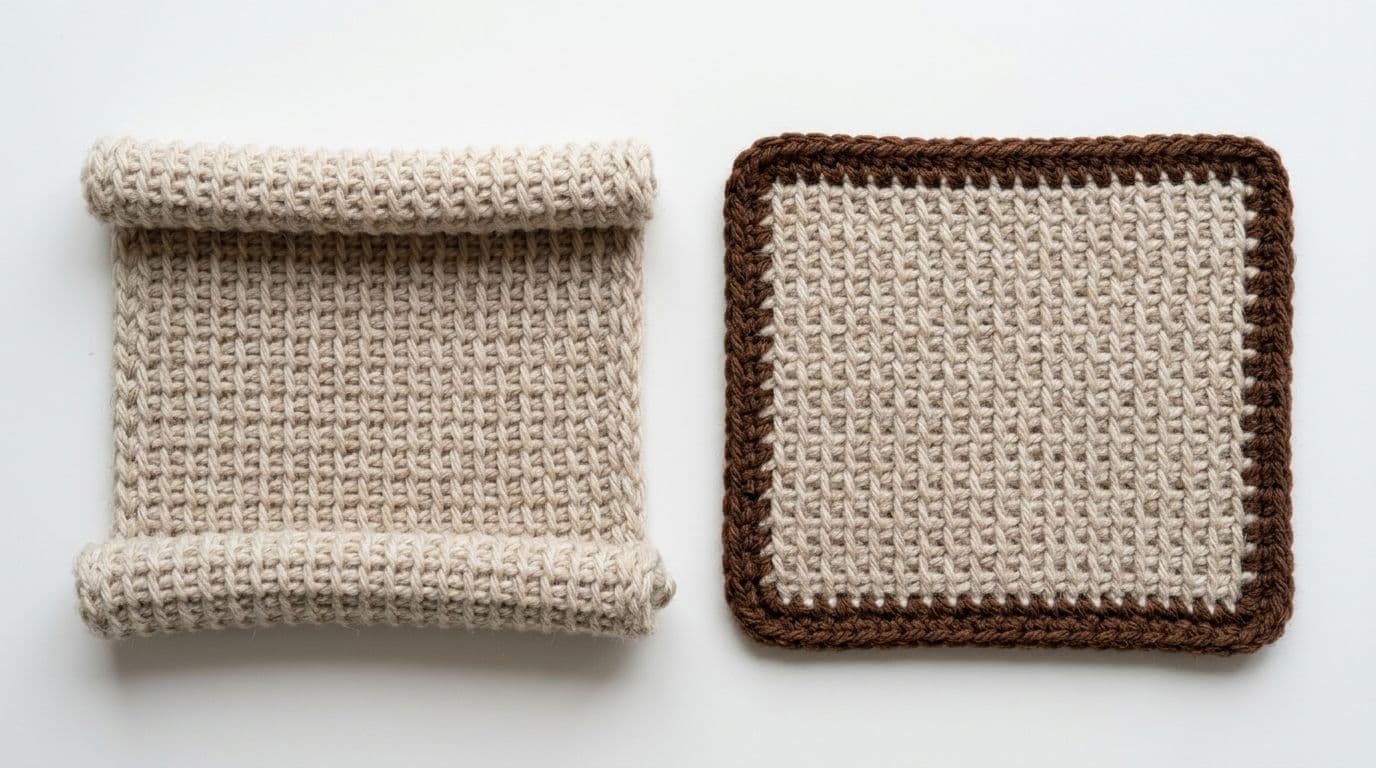
Three fixes work well together. First, use a larger hook than you would for regular crochet with the same yarn; Tunisian is commonly worked a size or more bigger. Second, add a border of a few stitches in a stitch that lies flat, such as purl, extended, or double stitch, along the bottom and sides. Third, choose a stitch pattern that balances itself instead of the plain simple stitch. Blocking helps too, especially steam along the edges (with the same acrylic caution as above).
Conclusion
Curling is a symptom, and where it shows up points to the cause. Use the table above to diagnose it, swatch before you commit to a project, and fix small curls with blocking or a border instead of ripping back everything. If you're mid-project and unsure, the four-point checklist will help you decide.
Frequently Asked Questions
Usually because your tension is too tight or your hook is too small, so stitches pull inward. Loosen your grip and try a hook one size larger. See causes 1 and 3 above.
Share this page
 X / Twitter
 Facebook
 Reddit
Related articles
How to Join Granny Squares: 7 Easy Methods for Every Project

How to Fix a Dropped Stitch in Knitting: Step-by-Step for Every Stitch Type
How Much Yarn Do I Need? Yardage Chart + Free Yarn Calculator

Yarnzy: #1 Crochet & Knitting App
Track knitting and crochet projects with a timer & row counter, Import Patterns from Anywhere, Manage Stash & more all in one place.


Free to start · iOS, Android & Web
Scan to Download the App

Start your next project with confidence