
 Download the App
Crochet Color Scheme Generator: How to Build a Yarn Color Palette Using Color Theory
24 Jul, 2026
Yarnzy's crochet color scheme generator builds a full yarn color palette from a single starting color, using color theory complementary, analogous, or triadic, so you're not guessing which skeins actually belong together. It's free, works in the browser, and doesn't need a sign-up.
Most crocheters and knitters hit the same wall: you've got the pattern, you've got the hook, and then you're standing in front of a yarn shelf (or fifty open browser tabs) trying to figure out which colors go together without just guessing and hoping. A real yarn color palette or a full crochet color scheme doesn't have to come from trial and error; it can come from the same color-relationship rules painters and designers have used for centuries, applied specifically to yarn.
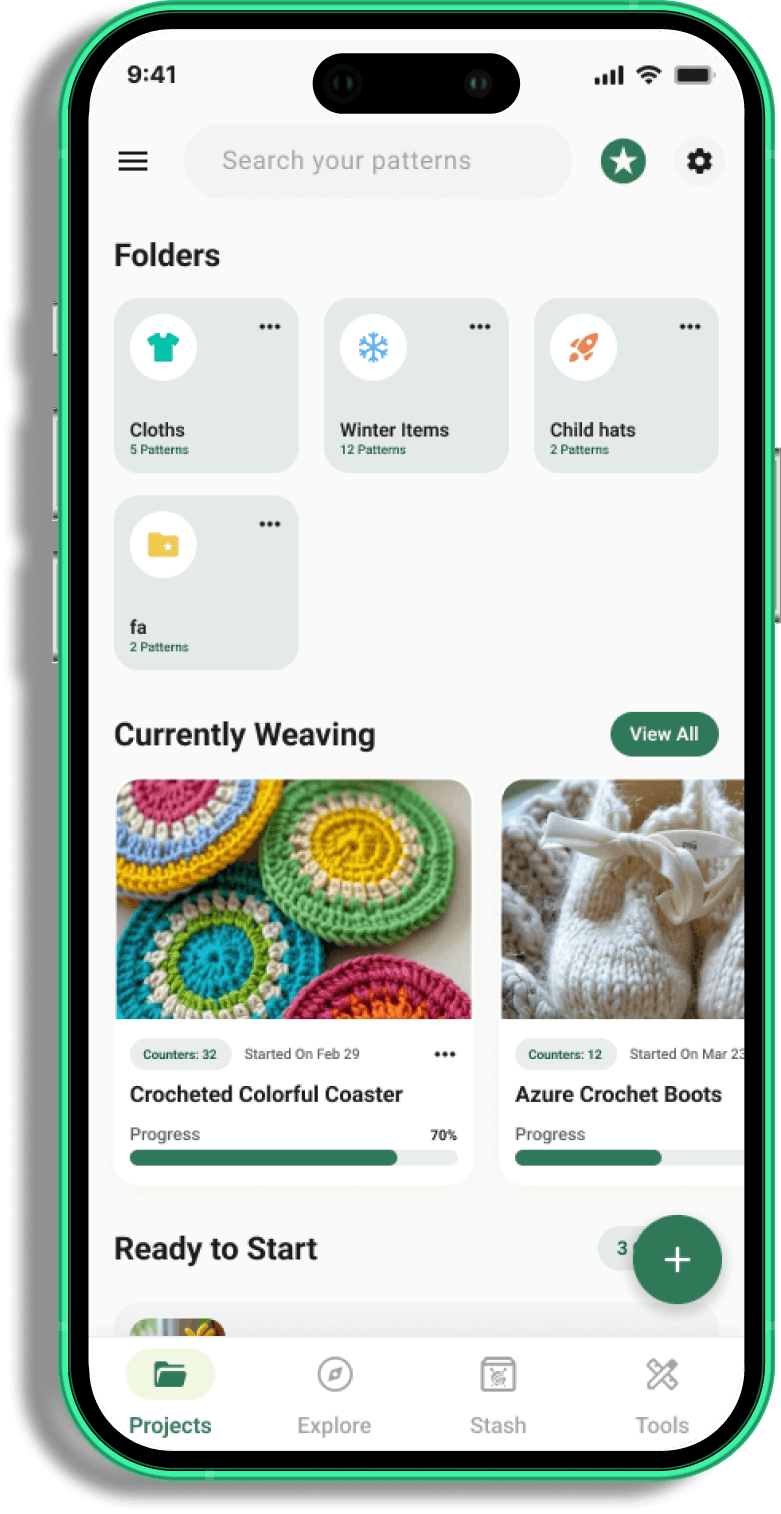
Get the full Yarnzy experience palettes, planners, and patterns all in one place.
 Download the Yarnzy app
What Is a Crochet Color Scheme Generator?
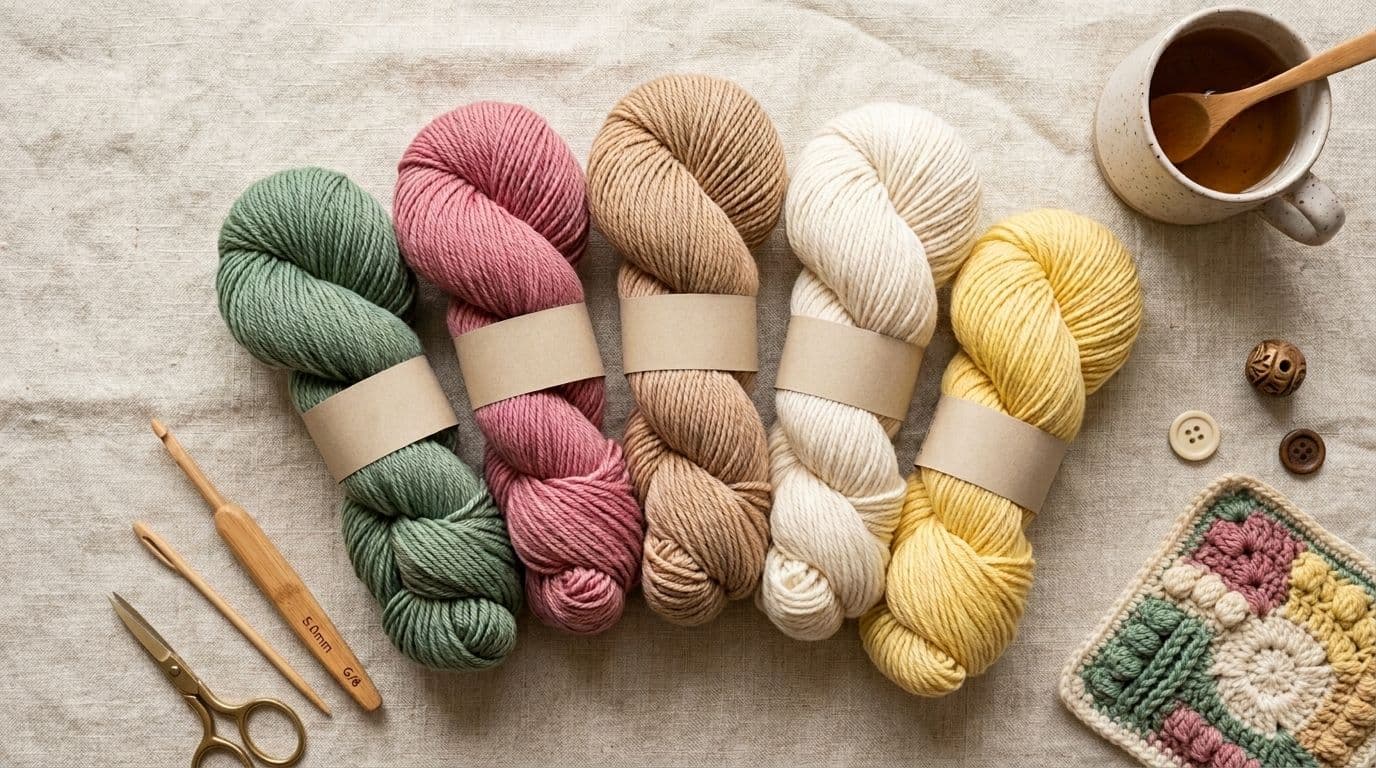
A crochet color scheme generator takes a color you already love, a skein, a photo, a hex code and builds out a full yarn color palette that pairs with it, based on where those colors sit on the color wheel. It's working from the same logic any yarn color palette generator uses: complementary, analogous, or triadic relationships that are visually proven to work, not random guesswork.
Where it gets yarn-specific is the part a general color tool (Coolors, Adobe Color, and the like) ccan't account for: yarn colors that go together don't just depend on hue. A variegated or self-striping yarn colorway already contains three or four hues in a single skein, so pairing it with a solid needs to account for the dominant shade in that mix, not just the label color. And fiber type changes how a color reads in person; wool and cotton reflect light differently than acrylic, so two skeins that match perfectly on a screen can look slightly off once they're side by side under a lamp. A tool built for crochet colors and crochet yarn colors specifically not just color in the abstract, accounts for both.
Open the Color Palette generator and you'll see this play out as you pick and adjust a base color: it's a shortcut, not a replacement, for your own taste. It narrows the field so you're choosing between five good options instead of five hundred random ones. That's the whole point of a yarn palette tool.
Color Theory Basics for Yarn (Complementary, Triadic, Analogous)
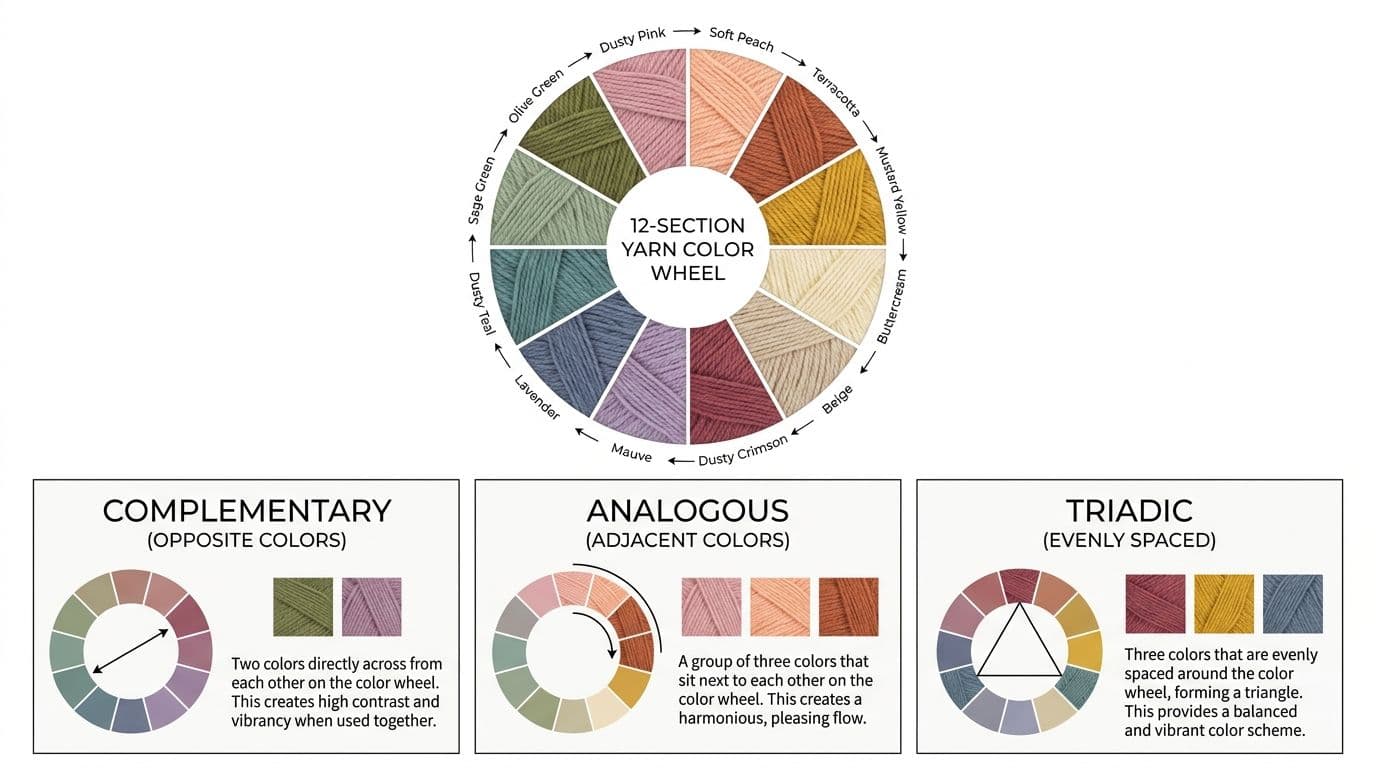
Before the tool does its job, it helps to know what it's actually doing. A yarn color wheel works exactly like the one from art class twelve colors built from three primaries (red, yellow, blue), the secondaries they create when mixed, and the tertiaries in between. Every yarn color combination you'll ever pick traces back to where colors sit relative to each other on that wheel.
Complementary Colors
Complementary colors sit directly across from each other on the color wheel for crochet red and green, or blue and orange. They're high-contrast on purpose. In yarn specifically, this pairing works best when one color takes a clear lead role (say, 70% of the project) and the other stays an accent two complementary colors used in equal amounts tend to fight each other rather than pop, especially in a busy stitch pattern like popcorn or bobble stitch where texture already adds visual noise.
Analogous Colors
Analogous colors sit next to each other on the wheel blue, blue-green, green. Because they're neighbors, they blend rather than clash, which makes analogous palettes the safest starting point if you're still building color confidence. This is also the easiest relationship to pull off with variegated yarn, since a self-striping skein's internal color shifts are less likely to clash with a neighboring solid than a bold complementary pairing would be.
Triadic & Monochrome
Triadic combinations use three colors spaced evenly around the wheel: red, yellow, blue, or orange, green, violet. They're punchier than analogous but more balanced than a straight complementary pair, since no single color dominates. Monochrome skips hue-mixing entirely and varies the tint and tone of one hue instead of several blues, from icy pale to deep navy. It's an underused yarn color combination chart style that reads as intentional rather than "matchy," and it's the most efficient option if you already own a lot of one yarn colorway and want to stretch it across a bigger project like a crochet blanket color scheme without buying anything new. All three relationships are one click apart in the Color Palette generator, so you can compare them side by side before committing to yarn.
How to Use the Yarn Color Palette Generator (Step by Step)
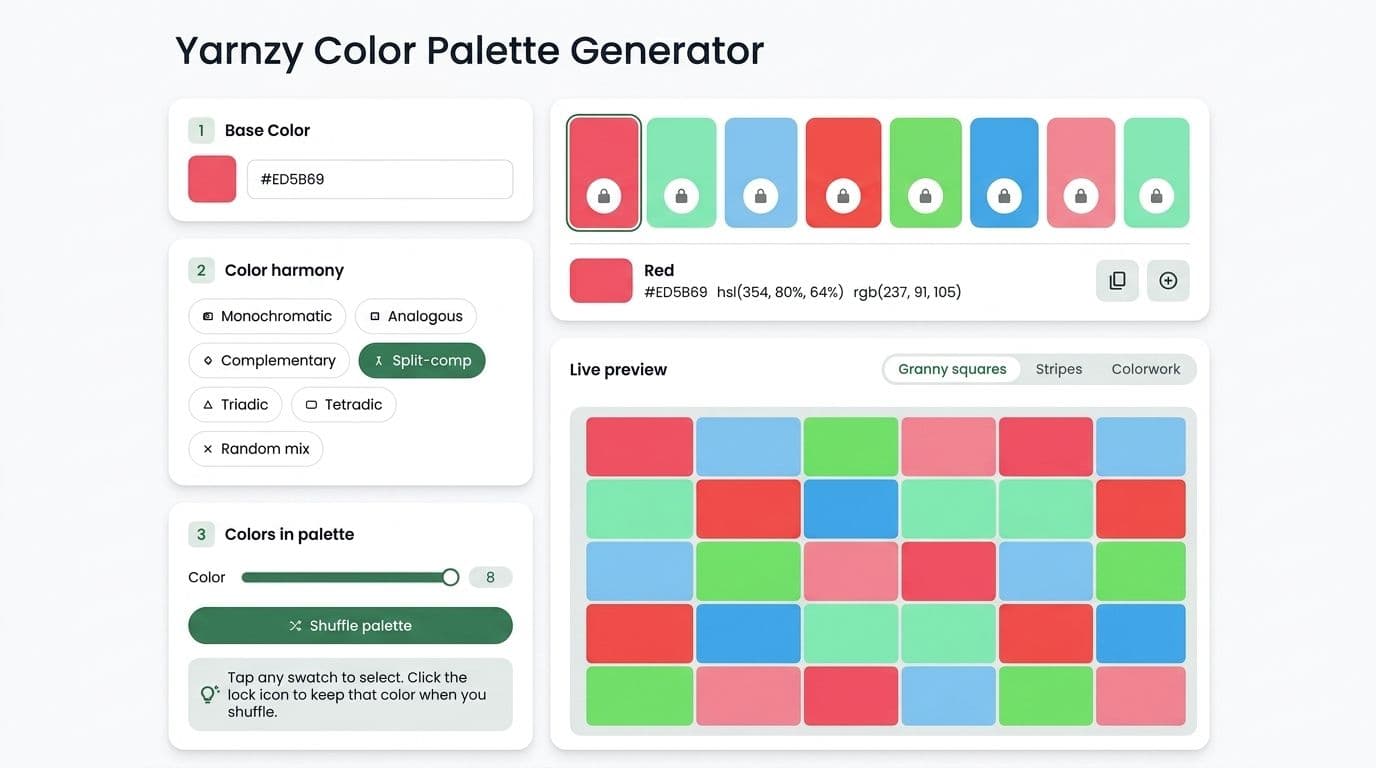

Try it now: build a complementary, analogous, or triadic palette in one click
Choosing a Color Combination for a Granny Square Blanket
Granny squares are one of the few crochet formats where color choice does most of the visual work; the stitch barely changes, so the palette is the design. A good granny square color generator (the same crochet color scheme generator logic, applied square by square) starts with three to five colors: one or two dominant shades repeating across most squares, one or two accents used sparingly, and often a neutral (white, cream, grey, or black) framing each square.
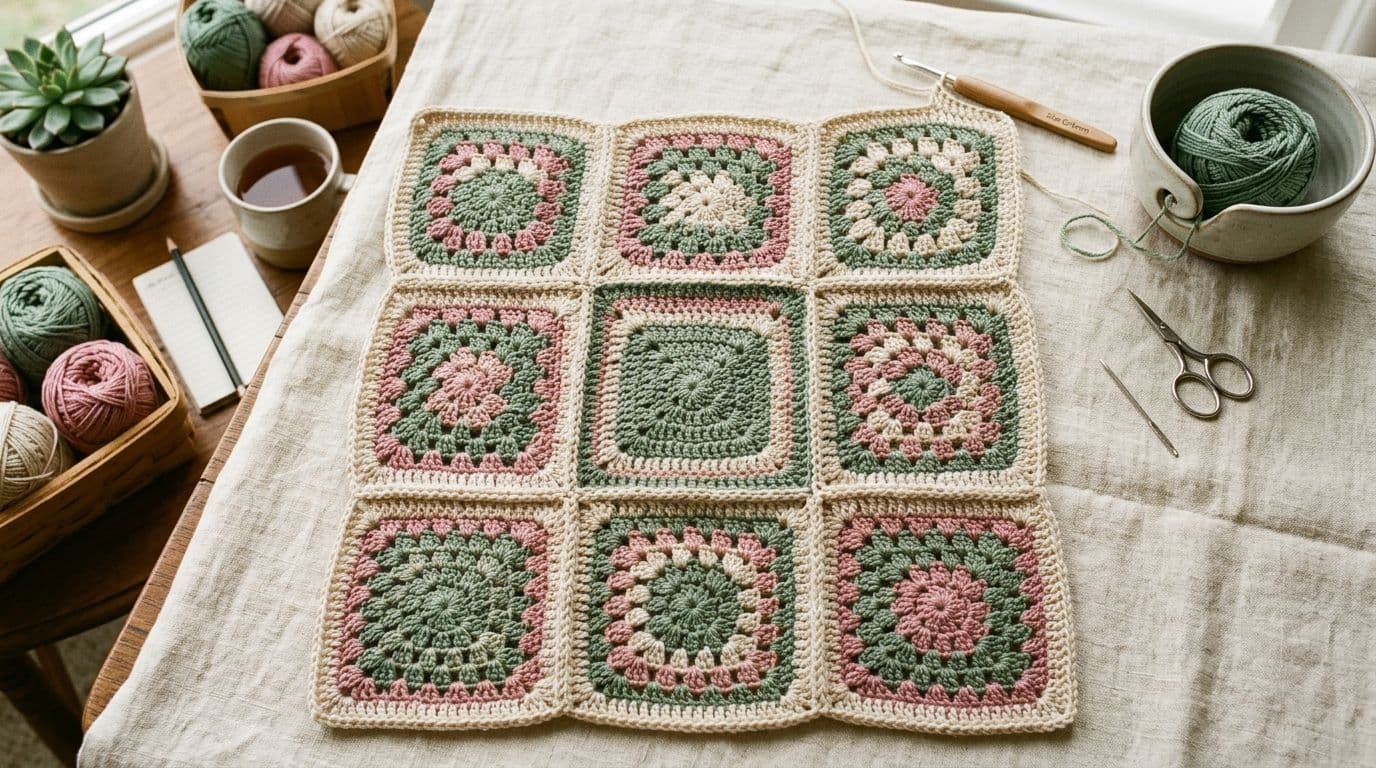
If you're building out a full board of crochet blanket colour ideas before buying yarn, decide your neutral first; it's the one color every other choice gets tested against. Most workable crochet blanket colour trace back to a single neutral decision made early, not a lucky final combination. Once that's settled, sketch out a few different crochet blanket color schemes side by side rather than committing to the first one that looks decent. And once you've locked in your blanket colors, a granny square color combination generator lets you preview the full grid, not just one square since colors that look fine alone can turn busy fast once you're seeing forty of them side by side. The Square Planner takes it further: lay out exactly where each color goes across the whole blanket before you pick up a hook, so you're not redoing squares halfway through.
Building a Color Scheme for a Temperature Blanket
Temperature blankets work differently from almost any other crochet color project, because the palette isn't a style choice it's a data set. Each row represents a temperature range for one day, so you need enough distinct colors to cover your climate's full swing over a year, typically 10 to 15 shades for a standard temperature blanket color scheme.
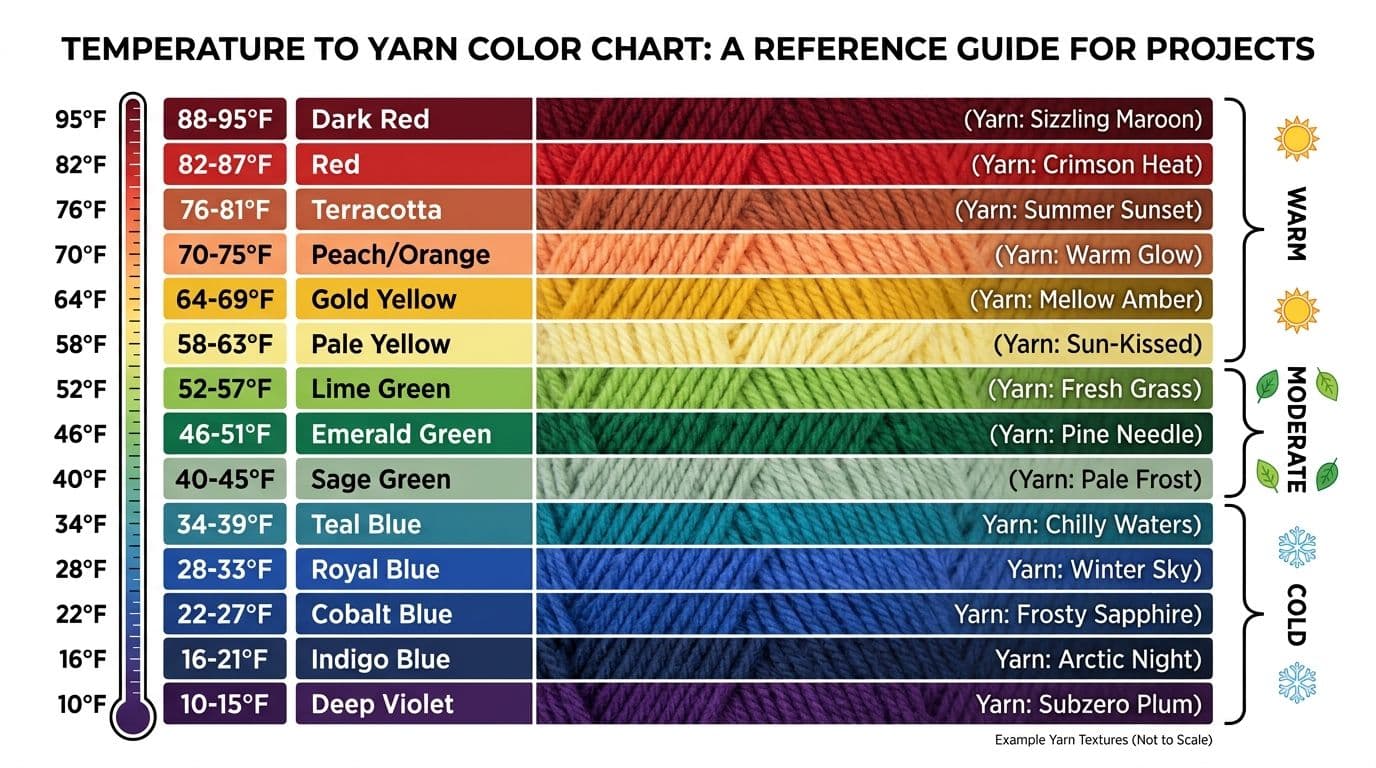
Here's a worked example: a climate that swings from 10°F in January to 95°F in July needs roughly 12 shades split into 5°F–10°F bands. That's five cool tones (violet through blue for the coldest days), two neutral-greens for the mid-40s to 60s, and five warm tones (yellow through deep red for the hottest days). The [Color Palette generator] can lay out that full temp blanket color chart in order before you buy a single skein, and once your gradient is set, running it through the Yarn Calculator a proper yarn calculator for crochet blanket planning tells you roughly how much of each color you'll need across the full year, so you're not stuck reordering a discontinued dye lot in month nine.
Trending & Seasonal Yarn Color Combinations
Color trends move slower in yarn than in fashion, but they still move. This fall, yarn colors are trending warmer and muddier than the crisp orange-and-brown palettes of a few seasons back terracotta, burnt sienna, and deep olive in place of stark pumpkin-orange, with warm oatmeal replacing bright white as the neutral of choice. It's a crochet color palette built around depth rather than brightness, which tends to hold up better across more of the year than a strictly seasonal palette does.
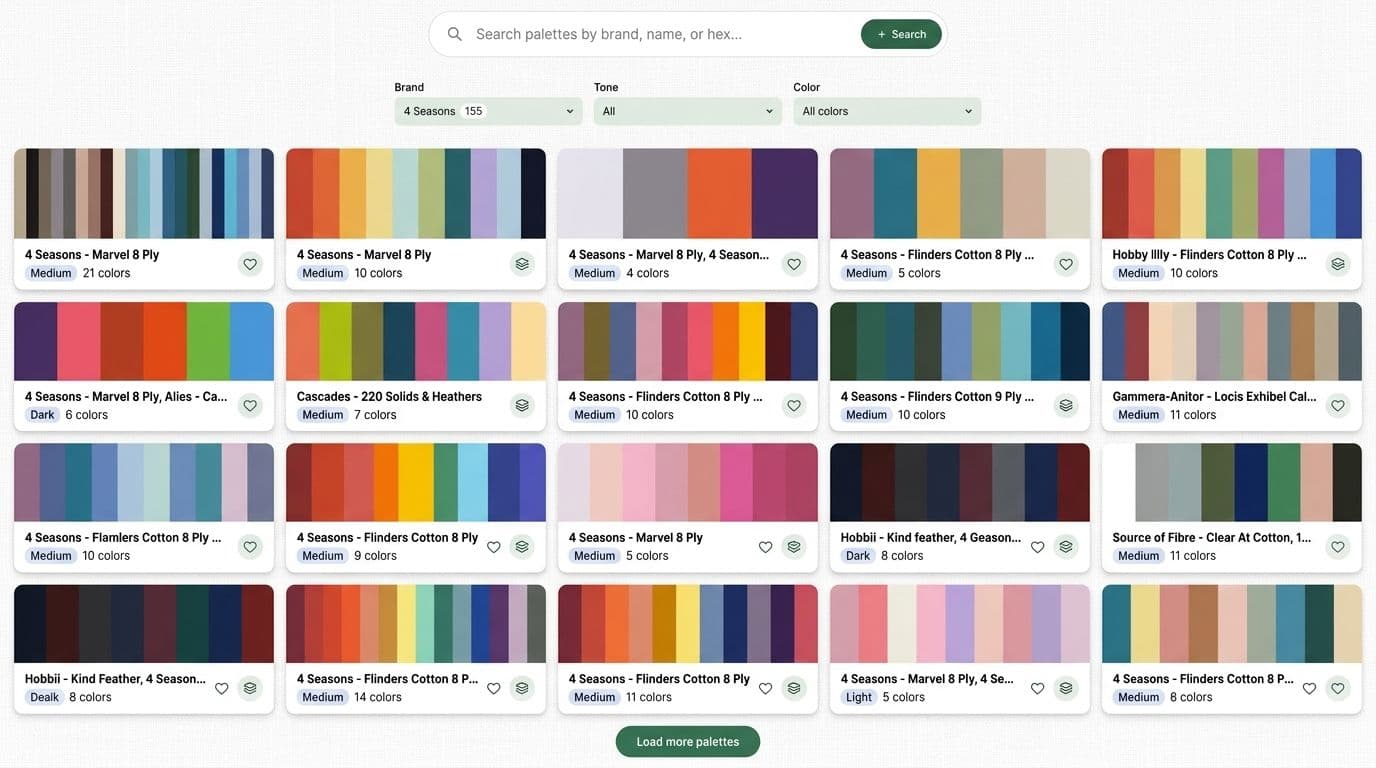
If you'd rather browse than build from scratch, Curated Palettes keeps a running set of seasonal crochet yarn color combinations that update as trends shift worth checking each time a season turns rather than committing to one palette months in advance, since muted-vs-bright preferences do genuinely shift year to year.

Ready to stop guessing and start matching? Build your palette free with the Color Palette generator no sign-up needed, right in your browser or the Yarnzy app.
Common Mistakes When Combining Yarn Colors
A few habits trip up even experienced crocheters when picking yarn colors that go together the same mistakes a crochet color scheme generator is built to help you avoid:
• Too many loud colors at once. One bold color reads as a statement; three or four together usually just read as noise. Let one color lead and use the rest as support.
• Ignoring value, not just hue. Two colors can be theoretically complementary and still clash if they're both mid-tone pairing; at least one lighter and one darker shade almost always looks more intentional than matching purely by color-wheel position.
• Forgetting that fiber changes color. The same crochet colors in wool, cotton, and acrylic will read differently under the same light. Wool tends to look richer and slightly darker, acrylic can look flatter and cooler. Always check your final palette in the actual fiber you're buying, not just the dye card.
• Testing variegated yarn against the wrong solid. A multi-color skein already contains several hues that pair it against its dominant shade, not the color it's labeled as, or the combination can look muddier than expected once you're a few rows in.
If you're still new to crochet more broadly, not just the color side of it, Choose the Best Yarn for Beginners is worth reading alongside this guide: picking the right fiber and weight for your skill level matters just as much as picking the right shade.
Final Thoughts
Picking yarn colors doesn't have to be the part of a project that stalls you out. Once you know whether you're going for complementary contrast, an easy analogous blend, or a bolder triadic mix, the rest is really just previewing and adjusting until something feels right whether that's a simple scarf, a full granny square blanket, or a year-long temperature blanket tracking every day's weather. Start with one color you already love, let the theory do the heavy lifting, and trust your eye for the final call.
Frequently Asked Questions
Start from a single color you already love, then apply a color-theory relationship complementary, analogous, or triadic to build out the rest. A crochet color scheme generator does this automatically; even by eye, picking colors in a deliberate relationship beats picking at random.
Share this page
 X / Twitter
 Facebook
 Reddit
Related articles
Bernat Yarn Substitutes: What to Use Instead of Blanket, Maker, Pipsqueak & Bundle Up

How to Crochet a Pumpkin: Free Patterns for Fall & Halloween Decor
How to Read Crochet Patterns: A Beginner's Guide

Yarnzy: #1 Crochet & Knitting App
Track knitting and crochet projects with a timer & row counter, Import Patterns from Anywhere, Manage Stash & more all in one place.


Free to start · iOS, Android & Web
Scan to Download the App

Start your next project with confidence