
 Download the App
Crochet Abbreviations: The Complete Guide to Stitches, Terms & Symbols (US & UK)
21 Jul, 2026
Crochet abbreviations are shorthand codes that make patterns easier to follow. Common ones are ch (chain), sc (single crochet), dc (double crochet), and tr (treble). Critical difference: US and UK terminology differ mechanically. A US single crochet is a UK double crochet. A US double crochet is a UK treble. Most patterns specify which system they use. Tools like Stitch Dictionary help you reference abbreviations instantly.
This guide covers abbreviations, explains US vs UK differences, shows how to read symbols, and includes a complete cheat sheet. Yarnzy also lets you look up abbreviations, understand pattern instructions, track your patterns, and manage your projects from one free app.
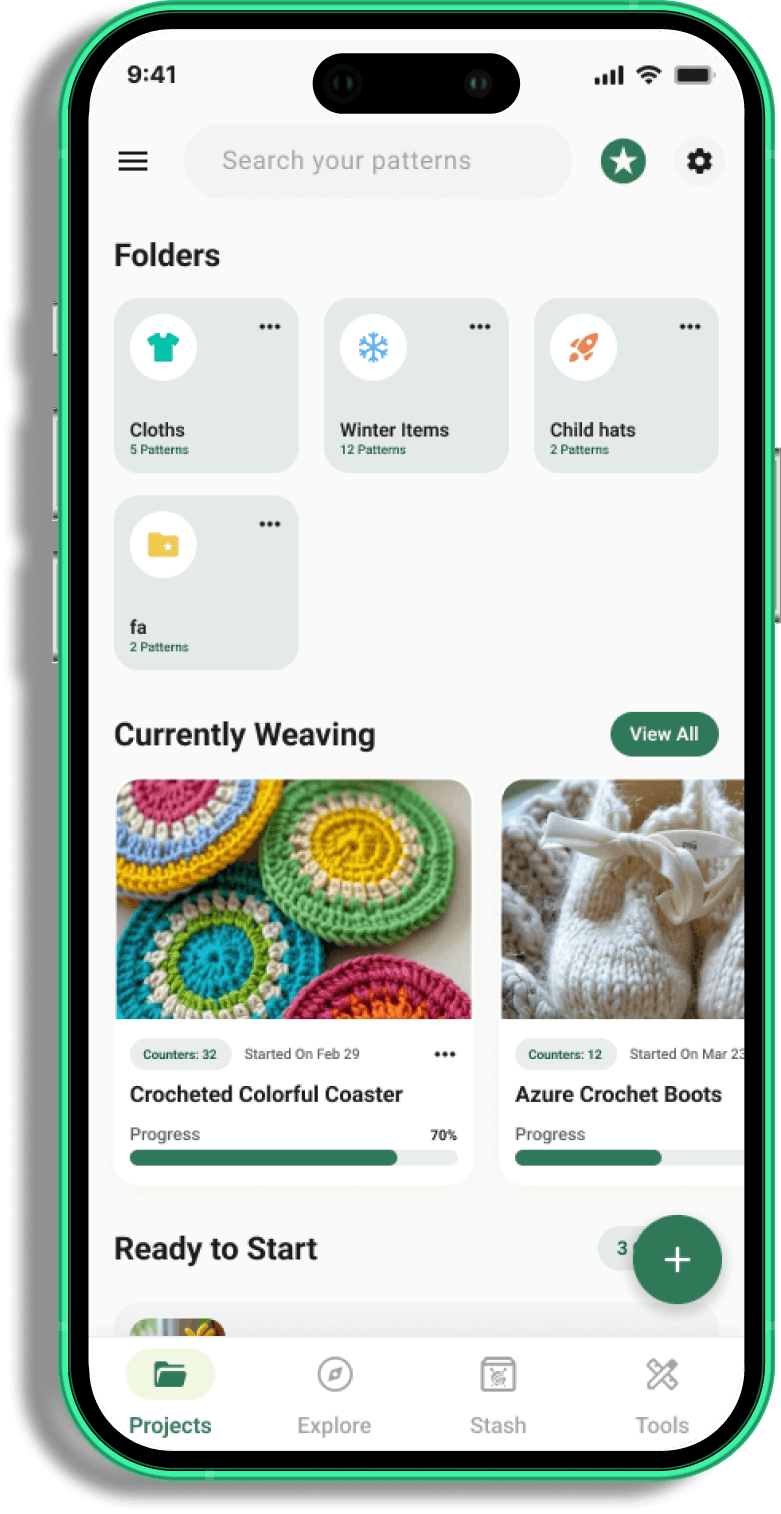
Get the Free Yarnzy App, Abbreviations Always in Your Pocket
 Download Yarnzy App now
What Are Crochet Abbreviations?
Crochet abbreviations are shorthand symbols that pattern writers use to describe what you're doing in each stitch. Instead of writing "insert your hook into the next stitch, yarn over, pull through, yarn over again, pull through both loops on your hook," they write "dc."
They exist for one reason: brevity. A pattern that would be 20 pages written out in full sentences becomes 3-4 pages when written in abbreviations. They also make patterns internationally readable, a Japanese crocheter can follow a US pattern as long as they know what the abbreviations mean.
The abbreviations represent three categories: stitches (sc, dc, tr), techniques (inc, dec, yo, tog), and pattern structure (rs, ws, rep, pm). Each category has its own set of shortcuts, and once you recognize them, patterns become clear.
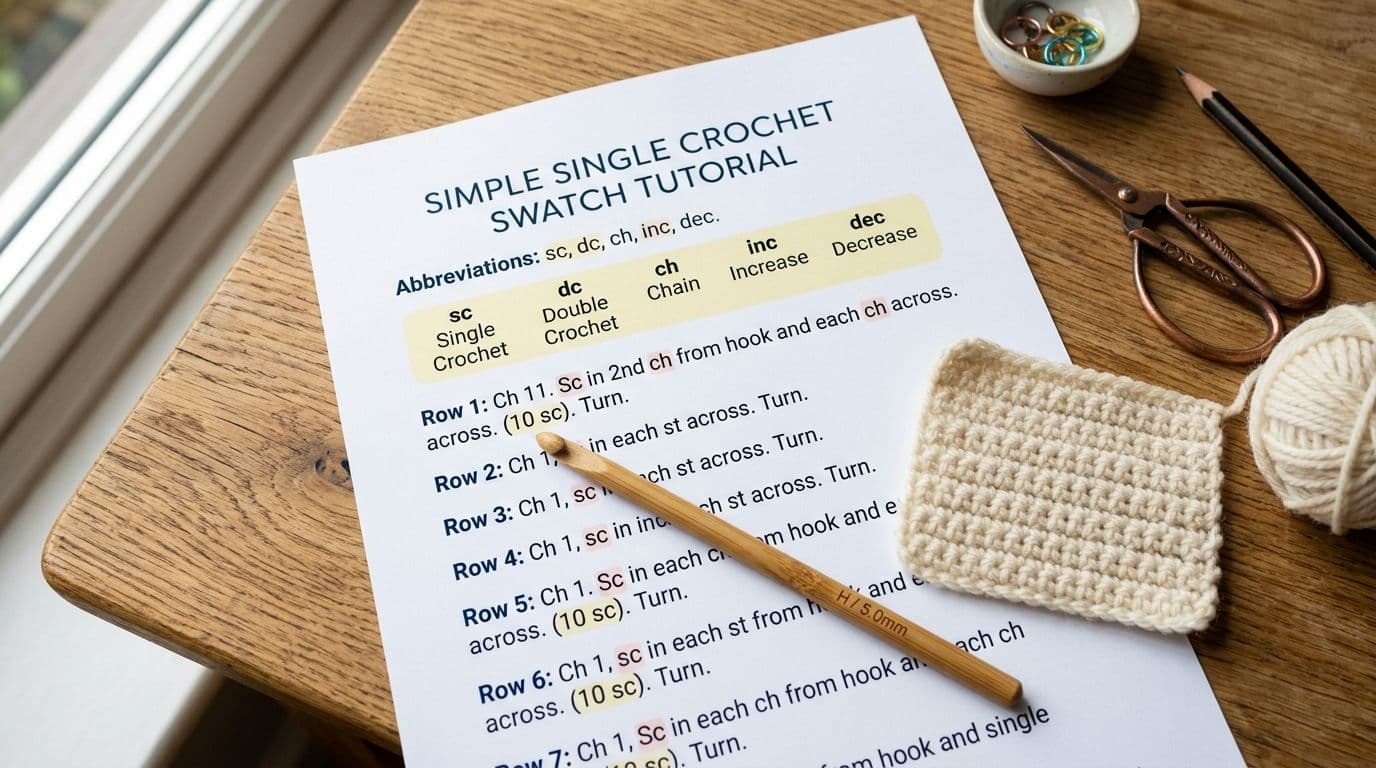
Common Crochet Abbreviations Cheat Sheet
Basic Stitch Abbreviations
Single crochet (sc) is the shortest stitch, one yarn over, makes tight fabric, used for amigurumi and structured items. Half double crochet (hdc) is medium-short, still one yarn over but taller than sc, sits between sc and dc. Double crochet (dc) is the most common stitch, two yarn overs, medium height, used in 70% of patterns. Treble (tr) is tall with three yarn overs, creating open airy fabric for lace. Double treble (dtr) is very tall with four yarn overs. Slip stitch (sl st) has zero yarn overs, it's just connecting, no height added. The pattern: more yarn overs = taller stitch = more open fabric. Choose based on what fabric you want.
| Abbreviation | Full Term | What It Means | Yarn Overs |
|---|---|---|---|
| ch | Chain | Foundation stitch; a loop | 0 |
| sl st | Slip Stitch | Connects rounds or joins; minimal height | 0 |
| sc | Single Crochet | Shortest stitch; dense fabric | 1 |
| hdc | Half Double Crochet | Medium-short stitch; between SC and DC | 1 |
| dc | Double Crochet | Medium stitch; most common | 2 |
| tr | Treble | Tall stitch; open fabric | 3 |
| dtr | Double Treble | Very tall stitch; airy fabric | 4 |
Key insight: The number of yarn-overs determines stitch height. More yarn-overs = taller stitch = more open/airy fabric. Less yarn-overs = shorter stitch = denser fabric.
Technique Abbreviations
"yo" (yarn over) is wrapping yarn around a hook, the motion that creates loops on your hook. "inc" (increase) means work multiple stitches in the same stitch, instead of 1 stitch there, you now have 2 or 3. "dec" (decrease) means combine stitches, 2 stitches become 1, reducing stitch count. "tog" (together) means work them as one. "sk" (skip) means pass over a stitch without working it, creating gaps or reducing count. "rep" or "repeat" means do the sequence again. "st/sts" is singular/plural of stitch. "sp" is the space between stitches. "FLO/BLO" means to work only the front or back loop of the stitch, creating texture. These modify stitches, not replace them.
| Abbreviation | Meaning | Example |
|---|---|---|
| yo | Yarn over | The motion of wrapping yarn around hook |
| inc | Increase | Work multiple stitches in same stitch |
| dec | Decrease | Combine multiple stitches into one |
| tog | Together | Work stitches together (usually decrease) |
| sk | Skip | Pass over the next stitch without working it |
| rep or repeat | Repeat | Do the same sequence again |
| st/sts | Stitch/Stitches | Plural: 5 sts = 5 stitches |
| sp | Space | The gap between stitches |
| FLO | Front Loop Only | Work only the front loop of the stitch |
| BLO | Back Loop Only | Work only the back loop of the stitch |
Pattern-Structure Abbreviations
"RS" means Right Side, the front of your finished piece that people see. "WS" means Wrong Side, the back that's usually hidden. You need to know which is which because some stitches look different on each side. "PM" means Place Marker, mark that exact stitch so you remember it. This matters for shaping. "FO" means Fasten Off, secure your last stitch so it doesn't unravel. "BO" means Bind Off, similar to FO. "rnd" means round, working in circles. "row" means row, working back and forth in lines. These aren't stitches, they're instructions about how to work and organize your piece. They don't add or remove stitches, just guide your work.
| Abbreviation | Meaning |
|---|---|
| RS | Right Side |
| WS | Wrong Side |
| PM | Place Marker |
| FO | Fasten Off |
| BO | Bind Off |
| rnd | Round |
| row | Row |
Bonus: Tunisian (Afghan) Crochet Abbreviations
Tunisian crochet is a hybrid of knitting and crochet. Its abbreviations are slightly different:
| Abbreviation | Meaning |
|---|---|
| tch | Tunisian Chain |
| tss | Tunisian Simple Stitch |
| tks | Tunisian Knit Stitch |
| tps | Tunisian Purl Stitch |
| R | Return pass (the second half of each Tunisian row) |
Stitch Dictionary: Look Up Any Abbreviation Instantly
Don't pause your crochet to search online. The Stitch Dictionary is free, works on web and app, and has every abbreviation, every stitch, plus worked photos.

Try the Stitch Dictionary: Free, Instant Lookup Don't memorize abbreviations. Look them up in seconds with the Yarnzy Stitch Dictionary. Free on web and app, no sign-up needed. Works offline too. Keep it bookmarked while you crochet.
US vs. UK Crochet Terms: What's the Difference?
This is where beginners get stuck. A pattern from a UK designer uses completely different names for stitches than a US pattern, even though the abbreviations look the same.
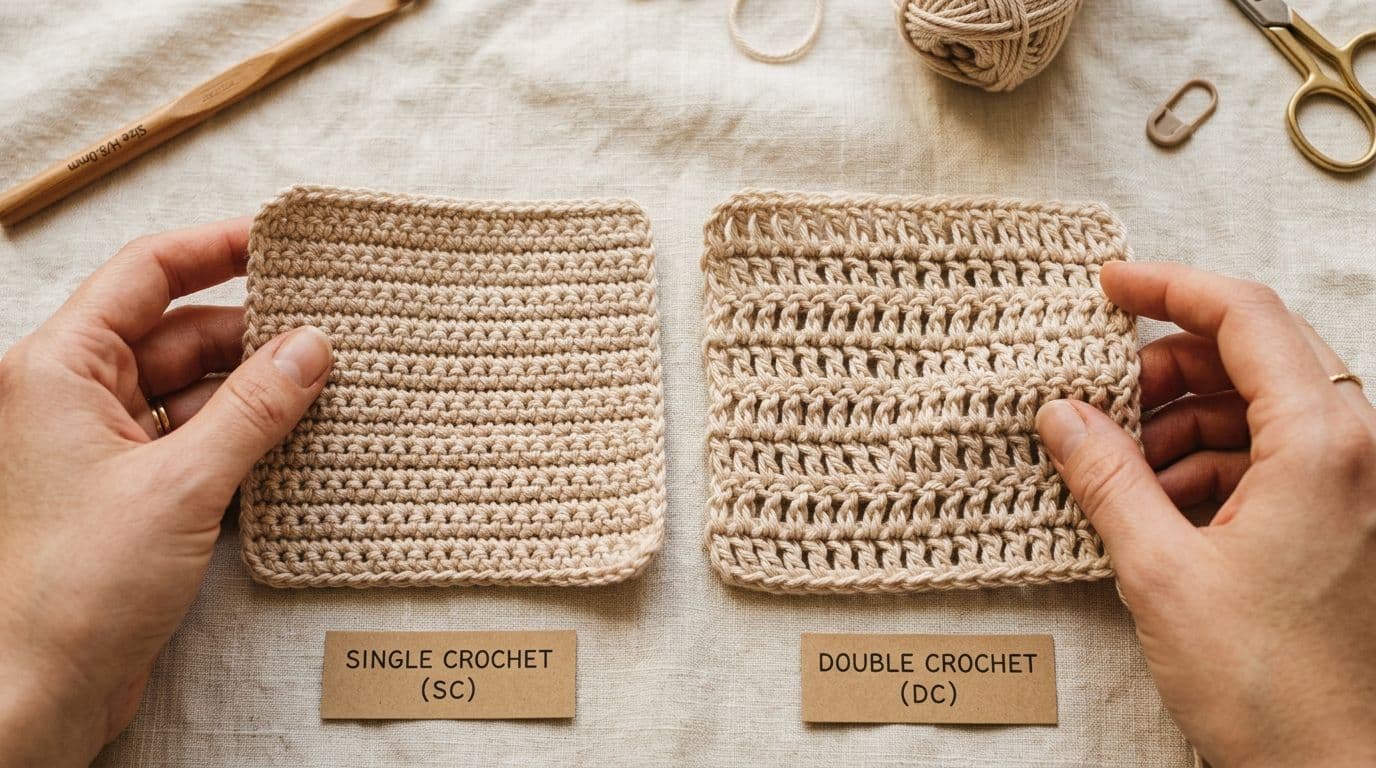
US-to-UK Stitch Conversion Table
| US Term | US Abbr | UK Term | UK Abbr | Height |
|---|---|---|---|---|
| Single Crochet | sc | Double Crochet | dc | Short |
| Half Double Crochet | hdc | Half Treble | htr | Medium-short |
| Double Crochet | dc | Treble | tr | Medium |
| Treble | tr | Double Treble | dtr | Tall |
| Double Treble | dtr | Triple Treble | tr tr | Very tall |
Important note: Canada follows the US system, not UK. Australia uses UK terms. If you're not sure which system your pattern uses, check before you start.
How to Tell Which System a Pattern Is Using
Look for these clues:
1. Check the pattern's origin. Is it from a US, UK, or Australian designer?
2. Search Ravelry's pattern language field. when you find the pattern on Ravelry, the page lists "Abbreviations" in the pattern details. It will say "US terms" or "UK terms" if the designer specified it.
3. Look at the yarn weight recommendation. If a pattern says "US double crochet" with worsted weight yarn and the gauge is 4 dc = 4 inches, it's US. If the same yarn calls for "treble" and the gauge says 4 tr = 4 inches, it's UK (because UK treble = US double crochet).
4. When in doubt, ask the designer. most indie designers respond to pattern questions within 24 hours.
Why US and UK Double Crochet Aren't Actually the Same Stitch
This confuses everyone. Here's why they're different:
US Double Crochet (dc): Yarn over once, pull through, yarn over, pull through 2 loops = 2 steps UK Double Crochet (dc): Yarn over once, pull through, yarn over, pull through 2 loops, yarn over, pull through 2 loops = 3 steps
A US dc requires 2 pull-throughs. A UK dc requires 3 pull-throughs. They're mechanically different stitches, not just differently named. This is why a pattern written in US terms will come out a different size than the same pattern written in UK terms.
Crochet Symbols Explained (Reading Stitch Charts)
Many patterns include symbol charts alongside or instead of written abbreviations. Each symbol represents a stitch or technique, shown as a small picture.
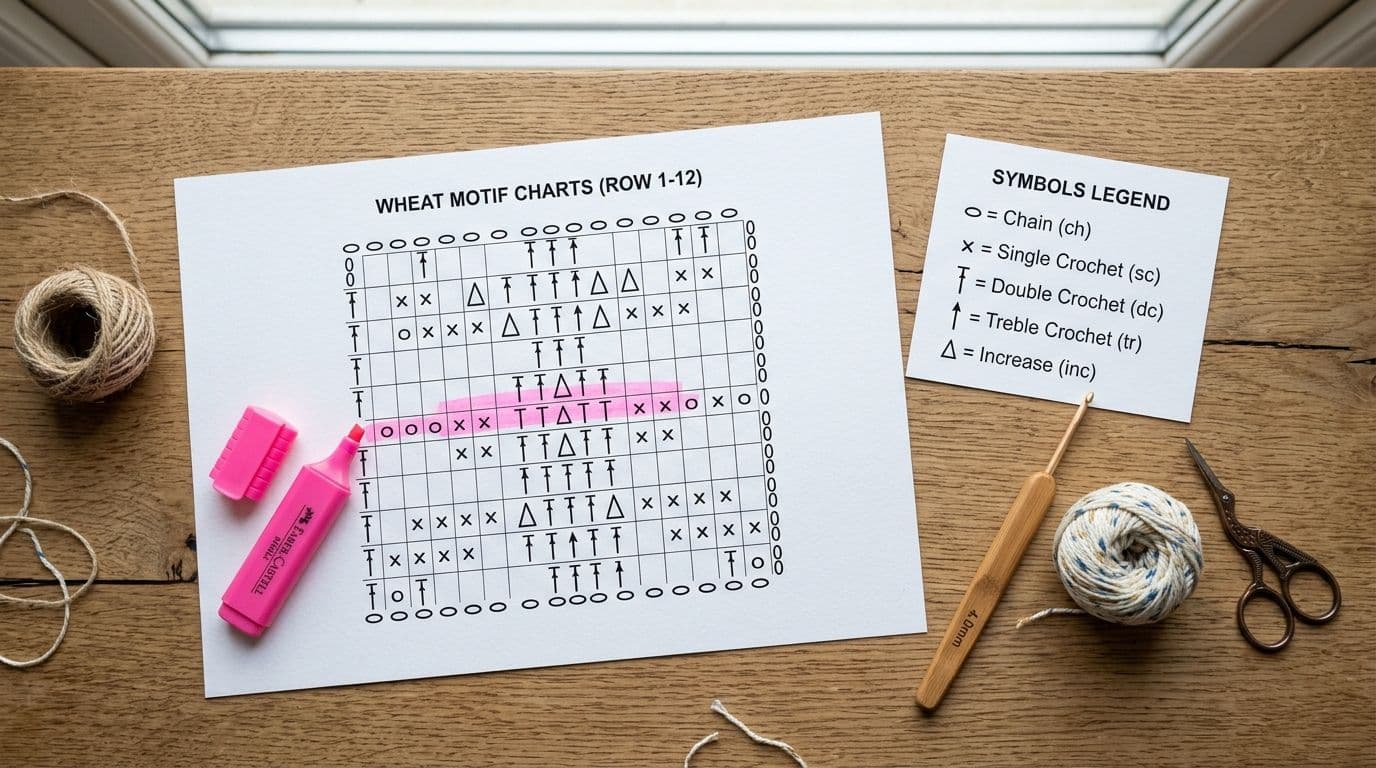
Common symbols:
• o = Chain (ch)
• x or + = Single Crochet (sc)
• T = Double Crochet (dc)
• ↑ = Treble (tr)
• Δ = Increase (inc)
• ⌃ = Decrease (dec)
• ( or ) = Turning chain
Charts are read bottom to top and right to left (opposite of how you read text). The bottom row is row 1, the top row is the most recent row you've completed.

Pattern Symbols Chart: Decode Any Chart Symbol in Seconds Visual charts make crochet easy. The Pattern Symbols tool shows you every symbol side-by-side with what it means. Free, no sign-up, works on phone.
Single Crochet vs. Double Crochet (and Other Quick Comparisons)
Single Crochet (sc):
• Shortest stitch
• Creates very dense fabric
• Best for: Amigurumi, tight stitching, structured items
• 1 yarn over
Double Crochet (dc):
• Medium height stitch
• Most common stitch in patterns
• Best for: Blankets, garments, balanced projects
• 2 yarn overs
Treble (tr):
• Tall stitch
• Creates open, airy fabric
• Best for: Lacy shawls, lightweight garments
• 3 yarn overs
The difference is almost entirely about stitch height. Taller stitches = more open fabric. Shorter stitches = denser fabric. Choose based on what you're making.
How to Read a Crochet Pattern Using Abbreviations
Read crochet patterns left-to-right, top-to-bottom, like normal text. Look up any abbreviation you don't know using the cheat sheet. Asterisks (*) mark sequences that repeat. Parentheses show how many times to repeat. Numbers in parentheses at the end of each row show your final stitch count.
Follow each instruction in order, and if you make a mistake, rip back and try again. There's zero risk.
A typical pattern instruction looks like this:
"Row 1: ch 20, sc in 2nd ch from hook, sc in each ch across. (19 sc)"
Breaking this down:
• ch 20 = Make a chain of 20 stitches
• sc in 2nd ch from hook = Slip your hook under the 2nd chain from the hook and work a single crochet
• sc in each ch across = Work a single crochet in every chain stitch across the row
• (19 sc) = You should have 19 stitches total
Pattern instructions always assume you understand basic abbreviations. If you don't know what "sc" means, you're already lost. That's why the cheat sheet is essential, keep it nearby.
Understanding Asterisks, Brackets & Parentheses
Patterns use these symbols to show you what to repeat:
Asterisks (*): Mark the start of a repeating sequence.
• sc 2, dc 1 means: single crochet twice, double crochet once. Then do it again.
• "Repeat from * across" means keep doing this sequence until you reach the end of the row.
**Brackets or Parentheses ([...] or (...)): Show how many times to repeat or group stitches.
• (dc 2, ch 1) 5 times = Do "double crochet twice, chain once" a total of 5 times.
• [sc in next 3 sts, sk 1] means: single crochet in the next 3 stitches, skip 1. This sequence might repeat multiple times depending on the pattern.
Worked example:
Row 1: ch 25, sc in 2nd ch from hook, *sc 2, sk 1, sc 1*, repeat from * across. (19 sc)
• Make 25 chains
• Sc in the 2nd chain from hook
• Then do this sequence: sc 2, sk 1, sc 1
• Keep repeating until you reach the end
• End with 19 stitches total
Crochet vs Knitting Pattern Abbreviations, Key Differences
Crochet pattern abbreviations are different from knitting pattern abbreviations because the stitches themselves are completely different. Crochet has "sc" (single crochet) and "dc" (double crochet). Knitting has "k" (knit) and "p" (purl). Crochet uses one hook and pulls yarn through loops. Knitting uses two needles. You can't follow a crochet pattern with knitting needles. The abbreviations don't translate,they're separate systems.
Why Are They Different?
Crochet and knitting are fundamentally different crafts:
• Crochet
Uses ONE hook - Pulls yarn through ONE active loop at a time - Each stitch is built on top of the previous one
• Knitting:
Uses TWO needles - Has multiple active loops on the needles - Works rows of stitches simultaneously
Tips to Memorize Crochet Abbreviations (and What You Can Skip For Now)
Here's the truth: You don't need to memorize everything. Most patterns use the same 5-6 abbreviations over and over. You'll naturally memorize them through repetition.
Start with these 5 (and memorize them now):
1. ch (chain)
2. sc (single crochet)
3. dc (double crochet)
4. yo (yarn over)
5. sk (skip)
These five abbreviations cover about 80% of all beginner patterns. Once you're comfortable with those, learn:
• inc (increase)
• dec (decrease)
• rep (repeat)
Skip these for now (you'll learn them when you need them):
• Advanced abbreviations like bobble (bob), popcorn (pc), puff (pf), cluster (cl)
• Specialty abbreviations like FPdc (front post dc) or BPdc (back post dc)
• International systems beyond US/UK
• Tunisian abbreviations (unless you're specifically learning Tunisian crochet)
The best part about crochet abbreviations? You genuinely cannot make a mistake. If you don't know what an abbreviation means, you look it up, try it, and if it doesn't work, you rip back and try again. The stakes are zero. Every crochet mistake is a free learning opportunity.
Frequently Asked Questions
Abbreviations are shorthand for stitches, techniques, and pattern structure. "dc" means "double crochet," "yo" means "yarn over," "sk" means "skip." They make patterns shorter and internationally readable. Use the cheat sheet above to look up any abbreviation.
Share this page
 X / Twitter
 Facebook
 Reddit
Related articles
Bernat Yarn Substitutes: What to Use Instead of Blanket, Maker, Pipsqueak & Bundle Up

How to Crochet a Pumpkin: Free Patterns for Fall & Halloween Decor
How to Read Crochet Patterns: A Beginner's Guide

Yarnzy: #1 Crochet & Knitting App
Track knitting and crochet projects with a timer & row counter, Import Patterns from Anywhere, Manage Stash & more all in one place.


Free to start · iOS, Android & Web
Scan to Download the App
Start your next project with confidence