
 Download the App
Types of Crochet Stitches: Guide to Chain, Single, Double, Half Double, Triple & Slip Stitch
16 Jul, 2026
Crochet stitches are the basic techniques you repeat with yarn and a single hook to build fabric. The six essential stitches are: chain stitch, single crochet, half double crochet, double crochet, treble crochet, and slip stitch. Each stitch has a different height based on yarn-over count. Mastering these six stitches lets you make any crochet project.
• Chain stitch (sc) is the foundation of every crochet project. You create chains by yarning over and pulling yarn through the loop on your hook repeatedly
• Single crochet (sc) is the shortest and tightest stitch in crochet, using only one yarn over.
• Double crochet(dc) is one of the most common stitch in crochet patterns, used in roughly 70% of projects.
• Half double crochet (hdc) is the balanced stitch between single and double crochet.
• Treble crochet(tc) is the tall stitch that creates open, airy, lacy fabric perfect for summer garments and shawls.
• Slip stitch(sl st ) is a joining stitch, not a building stitch. It has zero height and is used only for connecting rounds, moving yarn invisibly, and joining pieces together.
Stitch calculator, pattern library & project tracker in your pocket. Works on web & app.
 Get Yarnzy free
1. Chain Stitch (ch): The Foundation of Everything
A chain stitch is the foundation of every crochet project you'll ever make. It's the first stitch you learn because without chains, you can't start anything. Chain stitches are created by yarning over and pulling yarn through the loop on your hook, over and over. They look like a rope made of tiny loops connected together. Chain stitches don't count as actual stitches in your project, they're just the starting edge. Patterns say "ch 20" meaning make 20 chains. Chains are flat (no height). You can't build fabric from only chains. But every single pattern starts with a chain foundation. Without understanding chains, you can't crochet.
What Is a Chain Stitch?
A chain is a series of loops connected in a rope-like structure. When you yarn over and pull yarn through the loop on your hook, you create one chain.
How many chains? Patterns specify: "ch 20" = 20 chain stitches.
What it looks like: Bumpy on the back, V-shaped on the front.
How to Make a Chain Stitch (Step-by-Step)
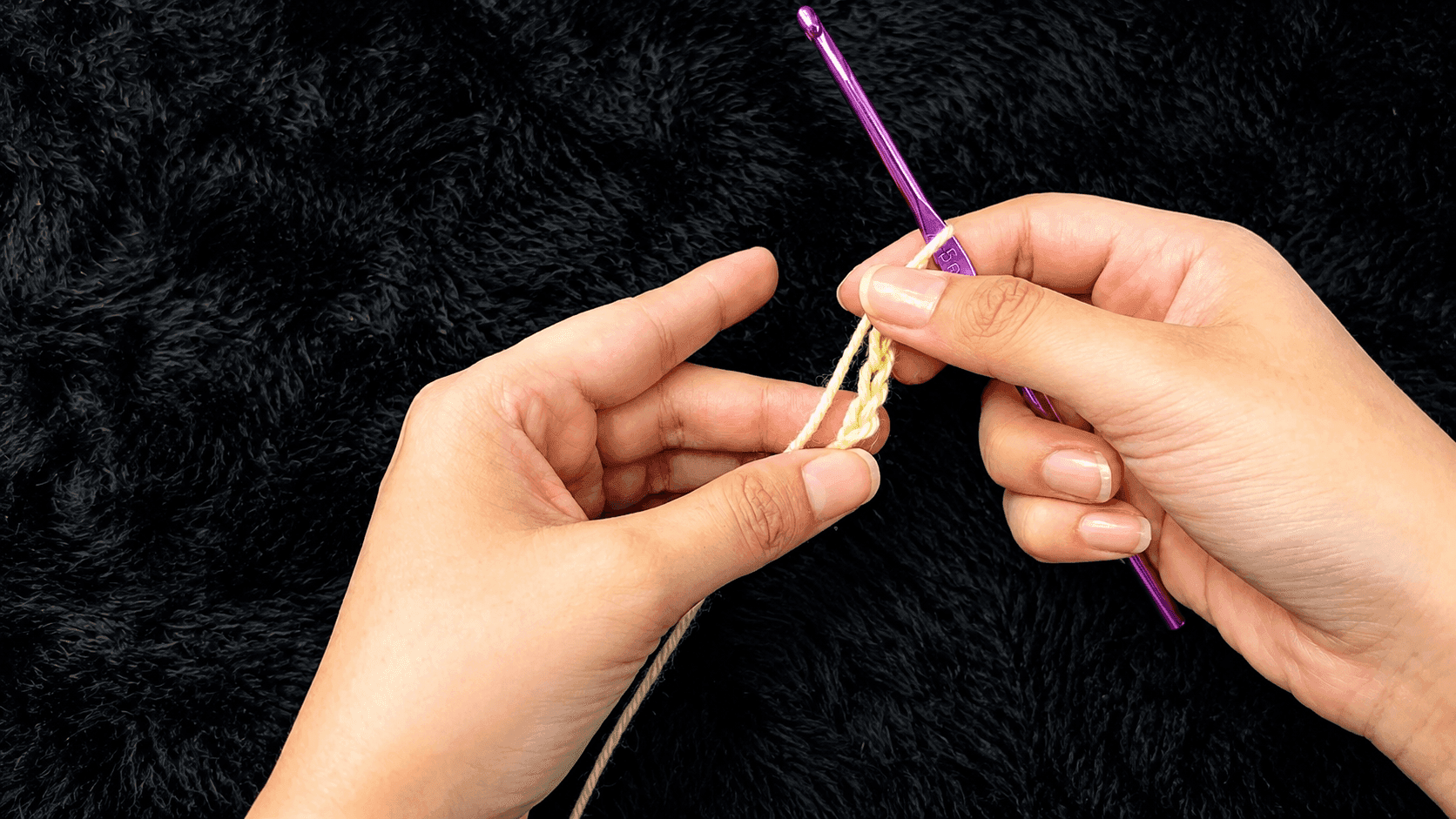
Step 1: Make a slip knot on your hook
Step 2: Yarn over (wrap yarn around the hook)
Step 3: Pull through the loop on your hook
Step 4: You now have 1 chain
Step 5: Repeat steps 2-3 for however many chains you need
Pro tip: Make chains loose, not tight. Loose chains are easier to work into on your first row. Too tight = frustrated row 1.
Common Chain Mistakes
1: Chains too tight
Solution: Practice making loose chains. They should have breathing room.
2: Forgetting to skip the first chain
Solution: Write it on a sticky note: "Skip the first chain, work in 2nd."
3: Uneven chain sizes
Solution: Each chain should be the same size. Consistency comes with practice.
When You Use Chains
• Starting foundation for every project
• Creating height and spacing mid-project
• Building decorative edges
• Starting new rows
• Creating gaps in lace patterns
Real-world example: A simple baby blanket starting instruction: "Ch 40" = make 40 chains as your foundation.
2. Single Crochet Stitch (sc): Tight & Strong
Single crochet (sc) is the shortest stitch in crochet. It's dense, stiff, and strong, the toughest stitch. Use a single crochet when you need structure: amigurumi (stuffed toys), bag bottoms, sturdy edges, or adding a neat finish. A single crochet uses only 1 yarn, which is why it's so short. Each single crochet stitch is barely taller than the yarn itself. Because stitches are short, you need many of them to reach width, this means single crochet projects take longer to crochet. The finished fabric feels heavy and tight. A single crochet is the strongest stitch because fabric is dense with no gaps. Most projects don't use only a single crochet because it's too stiff for clothing or blankets.
What Is a Single Crochet?
Single crochet creates tight, bumpy, dense fabric. Perfect for projects that need strength.
Stitch height: Shortest of all basic stitches.
Yarn overs: Just 1 yarn over = short stitch.
Fabric density: Very dense, almost rigid.
Speed: Slowest stitch (short stitches = more stitches needed).
How to Make Single Crochet (Step-by-Step)
Step 1: Insert hook into stitch
Step 2: Yarn over
Step 3: Pull through (2 loops on hook now)
Step 4: Yarn over
Step 5: Pull through both loops
Step 6: Done 1 single crochet complete
That's it. Simpler than it sounds. Practice 10 times and it becomes muscle memory.
What Single Crochet Looks Like
From the front: Bumpy texture, like corn kernels. From the side: Very short and flat. Finished fabric: Looks solid and sturdy.
Best Uses for Single Crochet
Amigurumi (stuffed toys): Tight fabric so stuffing doesn't poke through
Bag bottoms: Needs support to hold shape
Sturdy blankets: Baby blankets, weighted blankets
Edges and finishing: Creates neat, clean edge
Projects needing strength: Baskets, coasters
NOT good for: Summer garments, loose scarves, anything you want to drape
Why Single Crochet for Amigurumi?
Amigurumi (tiny stuffed toys) need tight fabric. A regular double crochet has gaps, stuffing pokes through. Single crochet is so tight stuffing stays in. That's why amigurumi patterns always call for a single crochet. You could use it with bigger yarn and bigger hooks, but a single crochet is the classic choice.
Single Crochet Beginner Tips
1: Don't pull too tight. Your stitches should slide smoothly on the hook. Too tight = hand cramps.
2: Keep stitches consistent. All single crochets should be the same size. This takes practice.
3: Count your stitches. Count at the end of each row to make sure you didn't drop any.
4: Practice tension. The tension (how tight you hold yarn) matters more than anything else.
Common Single Crochet Mistakes
1: Working too tight
Solution: Relax your hands. Breathe. Yarn tension should be loose in your fingers.
2: Missing the first stitch of the row
Solution: Count your stitches. If you're one short, you probably skipped stitch #1.
3: Inconsistent stitch sizes
Solution: Practice consistency. Every stitch should look the same.
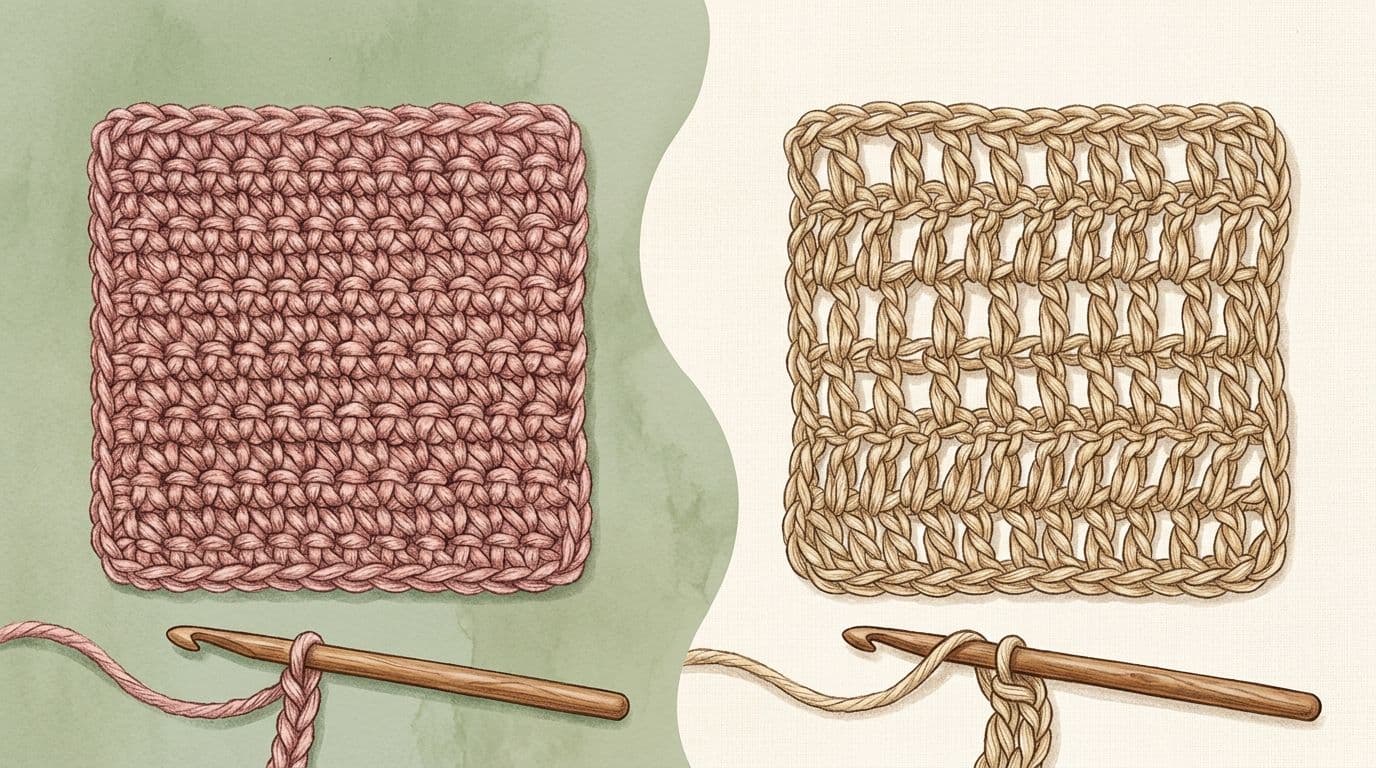
Stitch Comparison: Single Crochet vs Others
| Stitch | Height | Density | Best For |
|---|---|---|---|
| Single Crochet | Shortest | Densest | Strength, structure |
| Half Double | Medium-short | Medium | Balance |
| Double Crochet | Medium | Less dense | Most projects |
| Treble | Tallest | Openest | Light, airy |

Try Yarnzy's Stitch Dictionary, Look Up Any Stitch Instantly The free Yarnzy Stitch Dictionary has step-by-step photos of every stitch. Search any stitch name and see exactly how it's made.
3. Half Double Crochet Stitch (hdc): The In-Between Stitch
Half double crochet (hdc) is the "Goldilocks" stitchnot too tight, not too loose, just right. It's taller than single crochet but shorter than double crochet. Half double crochet creates balanced, slightly stretchy fabric. Use it for hats, scarves, and light blankets where you want some drape but not floppy fabric. Half double crochet uses 1 yarn over (technically 1.5, which is why it's called "half"). Because stitches are taller than single crochet, projects work up faster. Half double crochet is less common than single or double crochet, but it's perfect when you need something between the two. Most beginners skip half double and go straight to double, but half double has special uses.
What Is Half Double Crochet?
Half double crochet is the middle ground between single and double crochet. Not too stiff, not too floppy.
Stitch height: Medium-short (between single and double).
Yarn overs: 1 yarn over (sort of you yarn over before inserting hook).
Fabric feel: Slightly elastic, not rigid.
Speed: Faster than single, slower than double.
How to Make Half Double Crochet (Step-by-Step)
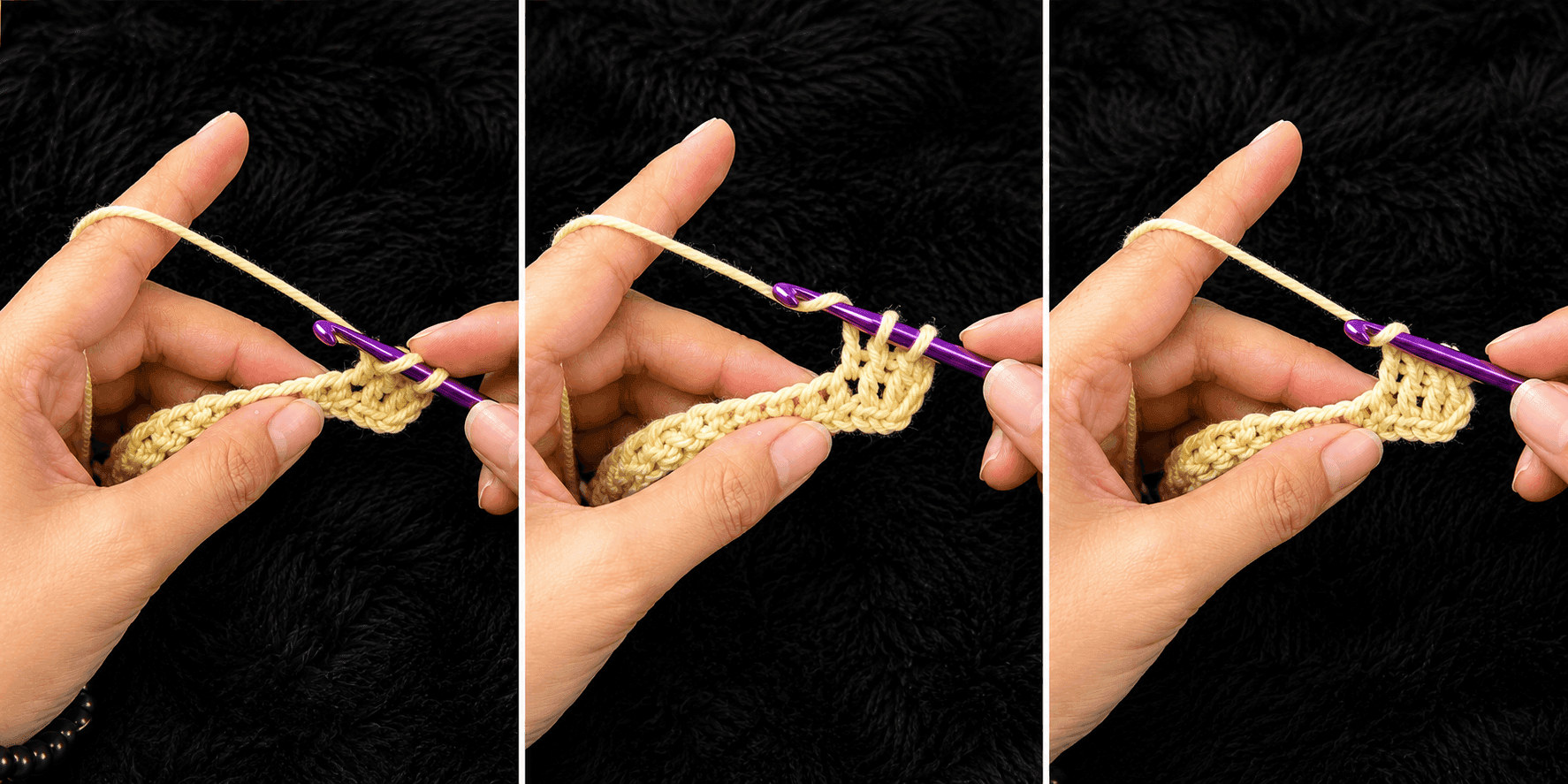
Step 1: Yarn over (before you insert hook)
Step 2: Insert hook into stitch
Step 3: Yarn over
Step 4: Pull through (3 loops on hook now)
Step 5: Yarn over
Step 6: Pull through all 3 loops at once
Step 7: Done 1 half double crochet complete
The tricky part is step 1 yarning over before inserting the hook. This is different from single crochet.
Why "Half" Double?
The name comes from history. Early crocheters called it "half" because it's halfway between single and double in height. Not because it's incomplete, this confuses everyone. It's a complete stitch. Just a weird name.
What Half Double Looks Like
From the front: Medium-height bumps. From the side: Taller than single, shorter than double. Finished fabric: Balanced look, slightly textured.
Best Uses for Half Double Crochet
Hats: Structured but wearable, good warmth
Scarves: Decent drape, holds shape
Light blankets: Balanced weight and warmth
Shawls: Opens up nice drape
Beginner-friendly projects: Good practice between single and double
NOT good for: Amigurumi (not tight enough), structured bags (not tight enough)
The Secret Advantage of Half Double
Most crocheters ignore half double crochet. But experienced makers use it for specific projects. Here's the secret: half double is the perfect stitch for items that need balanced weight not too heavy like single crochet projects, not too light like treble projects.
Half Double Crochet Beginner Tips
1: Remember the yarn first. The hardest part is remembering to yarn over BEFORE inserting your hook. Write it on a sticky note.
2: Don't pull the final yarn overs too tight. Step 5-6 happens fast. Pull through all 3 loops smoothly.
3: Count your stitches. Same as the single crochet count at the end of each row.
4. Double Crochet Stitch (dc): The Workhorse Stitch
Double crochet (dc) is the most common stitch in crochet patterns, about 70% of patterns use it. It's medium height, versatile, and works for almost every project type. Double crochet is faster than single or half double because stitches are taller so you need fewer to reach width. Use double crochet for blankets, scarves, garments, baby items, anything. Double crochet creates balanced, drapey fabric that looks polished and professional. The finished texture is beautiful, not too tight, not too open. Double crochet uses 2 yarn overs, which makes it taller than single crochet (1 yarn over). If you master one stitch, make it double crochet. It's the foundation of most crochet projects you'll make.
What Is Double Crochet?
Double crochet is the most versatile crochet stitch. Perfect for beginners and experienced makers.
Stitch height: Medium (about twice as tall as single).
Yarn overs: 2 yarn overs (this is what makes it "double").
Fabric feel: Soft, drapey, professional-looking.
Speed: Faster than single, standard for most patterns.
How to Make Double Crochet (Step-by-Step)
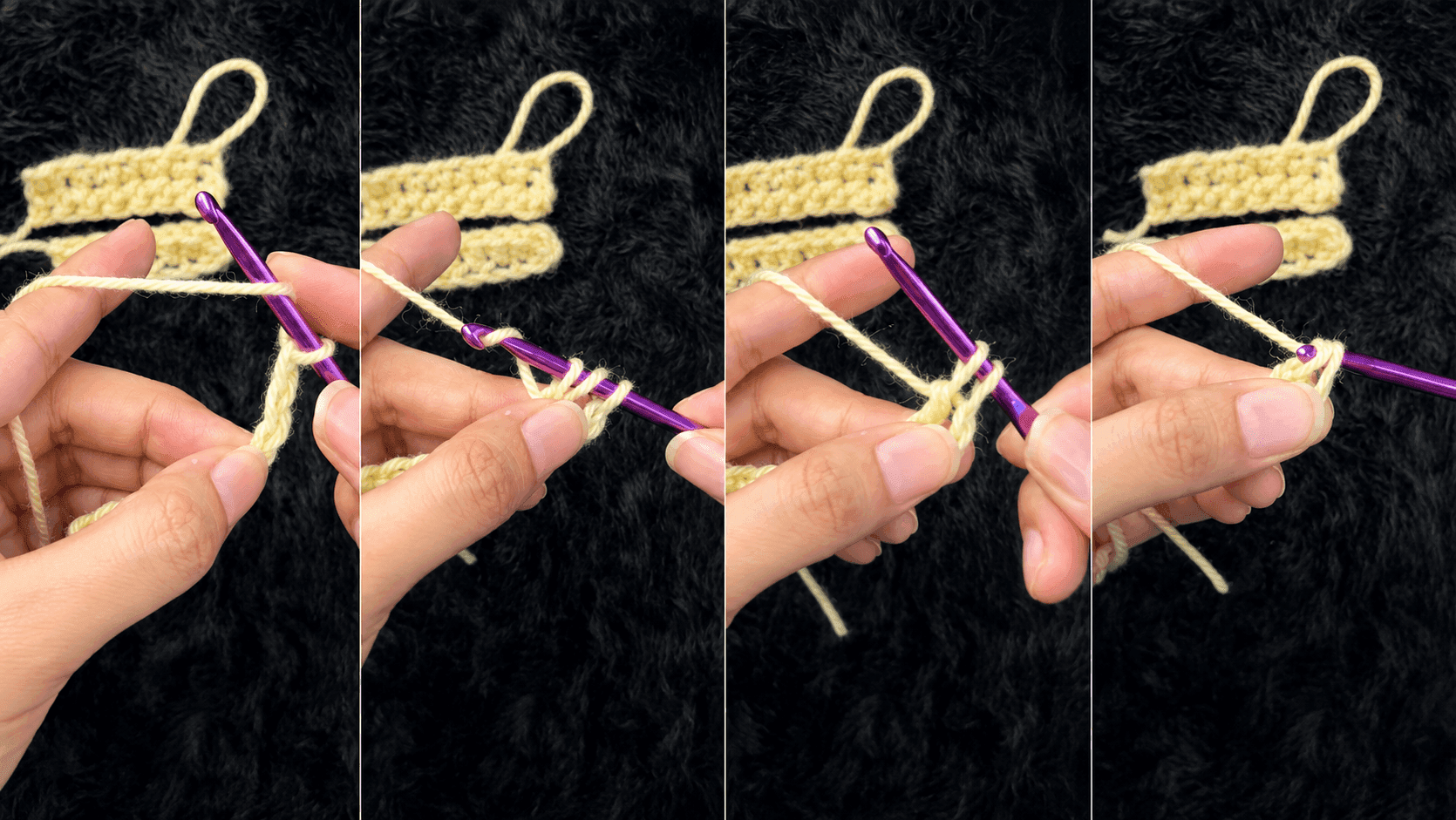
Step 1: Yarn over
Step 2: Insert hook into stitch
Step 3: Yarn over
Step 4: Pull through (3 loops on hook)
Step 5: Yarn over
Step 6: Pull through 2 loops (2 loops remain on hook)
Step 7: Yarn over
Step 8: Pull through 2 loops
Step 9: Done, 1 double crochet complete
Yes, it's more steps than a single crochet. Yes, it becomes automatic. Practice 20 times and your hands will do it without thinking.
What Double Crochet Looks Like
From the front: Medium-tall bumps, polished look. From the side: Clearly taller than single, clearly shorter than treble. Finished fabric: Professional, balanced, beautiful.
The "Double" in Double Crochet
"Double" crochet is named for the 2 yarn overs. Single crochet has 1 yarn over, double crochet has 2, treble has 3. The name comes from the yarn overs, not the stitch height.
Best Uses for Double Crochet
Blankets: Standard choice, beautiful drape
Garments: Hats, sweaters, cardigans
Scarves Perfect weight and drape
Baby items: Soft, wearable, beautiful
Dishcloths: Structured but absorbent
Literally anything: Works for almost all projects
NOT ideal for: Amigurumi (too loose, stuffing shows), very structured items (not tight enough)
Why Double Crochet Rules
Double crochet is the sweet spot:
• Not too tight (unlike single)
• Not too slow (unlike half double)
• Drapey but structured (best balance)
• Works with any yarn weight
• Most pattern options (biggest pattern library)
• Looks professional (doesn't look beginner-ish)
Real-World Example
A beginner blanket pattern: "Ch 40, dc in 4th ch from hook, dc in each ch across." That's it. 40 chains for foundation, then rows of double crochet. Simple. Beautiful result.
Double Crochet Beginner Tips
1: Watch your loop count. After step 4, you should have 3 loops. After step 6, you should have 2 loops. This is the hardest part to get right.
2: Pull through smoothly. Don't yank the yarn. Smooth, controlled pulls make neat stitches.
3: Keep tension consistent. Double crochet stitches should all be the same size and tightness.
4: Practice the stitch first. Make a practice swatch (30+ stitches) before starting a real project.
Double Crochet vs Single Crochet: Why Double Wins
| Factor | Single | Double |
|---|---|---|
| Speed | Slow | Fast |
| Drape | Stiff | Beautiful |
| Finished look | Dense | Professional |
| Best for | Structure | Most projects |
| Beginner difficulty | Easy | Medium |
Most beginners start with single crochet (simpler), but switch to double crochet fast (better results).
5. Treble Crochet Stitch (tr): Tall & Lacy
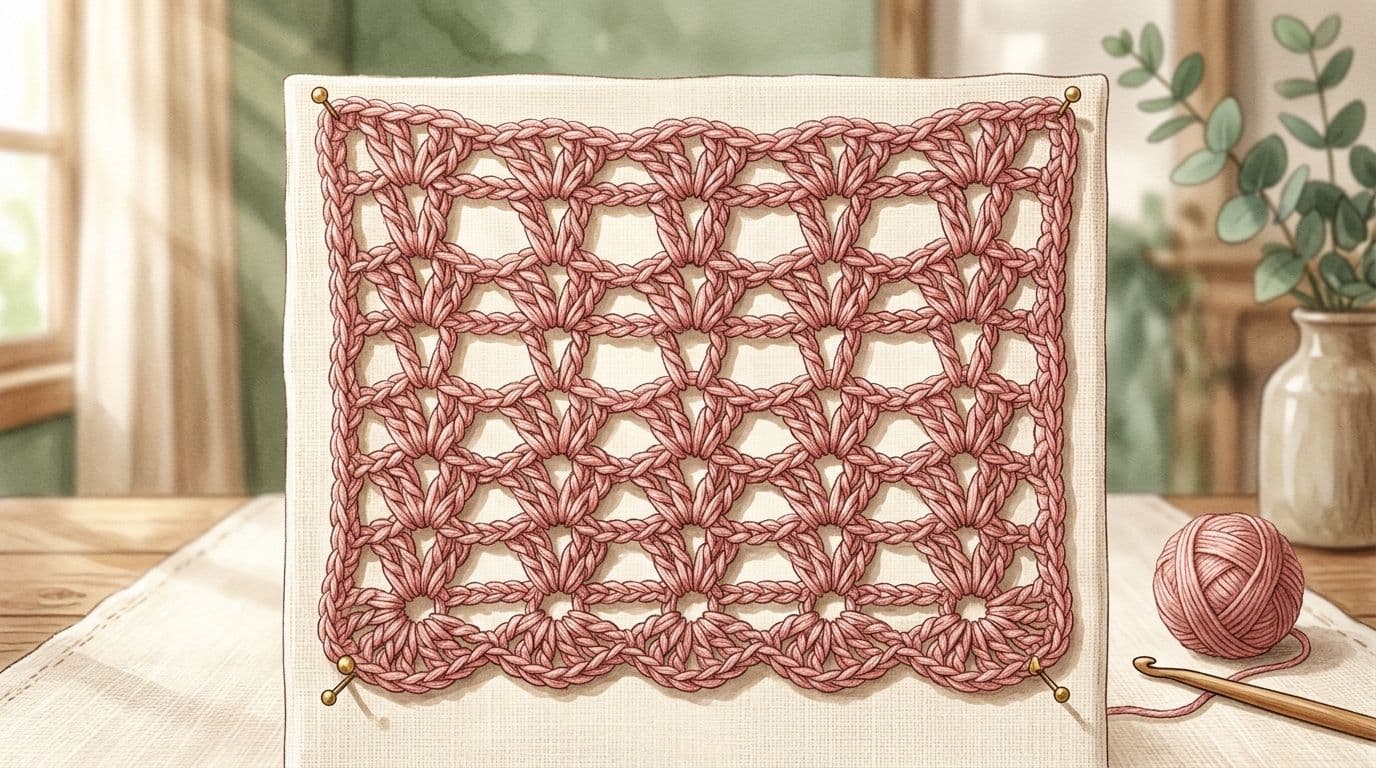
Treble crochet (tr) is the tall stitch that creates open, lacy, airy fabric. Treble uses 3 yarn overs, which makes it much taller than double crochet. The extra height creates natural gaps between stitches, this is what makes treble look lacy. Use treble for summer garments, shawls, lacy blankets, and projects where airiness is the goal. Treble fabric breathes beautifully and looks elegant. Treble takes longer to work because each stitch is complex, but the finished look is worth it. Most summer crochet patterns use treble because the open fabric keeps you cool. Treble is common in Irish lace and vintage crochet designs. If you want your project to look fancy and open, treble is the stitch.
What Is Treble Crochet?
Treble crochet creates open, lacy, lightweight fabric. Perfect for warm-weather items.
Stitch height: Tall (about 3x taller than single).
Yarn overs: 3 yarn overs (this is what makes it "triple", though we call it "treble" in USA).
Fabric feel: Airy, open, drapey, light.
Speed: Slow (complex stitch).
How to Make Treble Crochet (Step-by-Step)
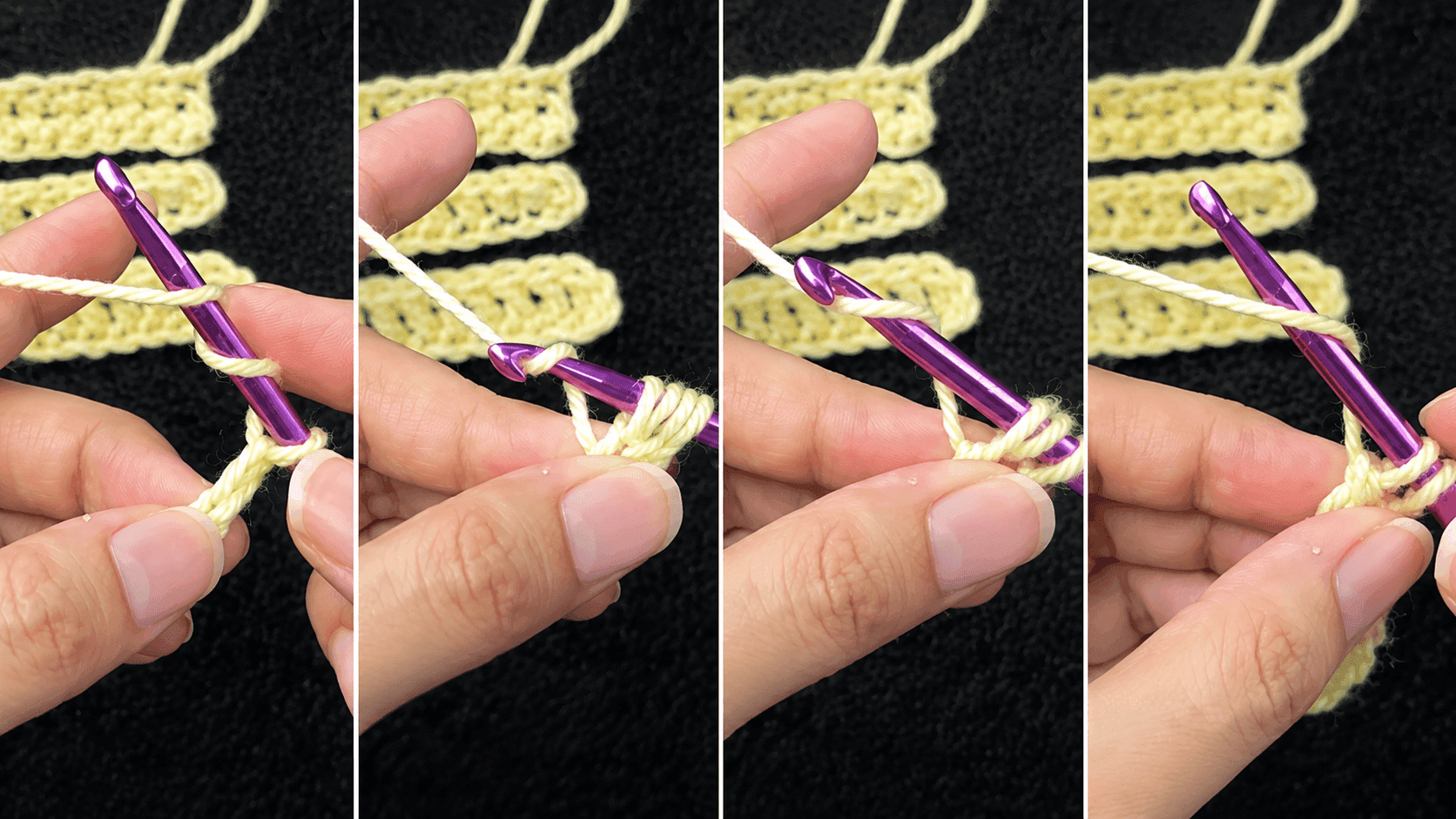
Step 1: Yarn over twice (two separate yarn overs)
Step 2: Insert hook into stitch
Step 3: Yarn over
Step 4: Pull through (4 loops on hook)
Step 5: Yarn over
Step 6: Pull through 2 loops (3 loops remain)
Step 7: Yarn over
Step 8: Pull through 2 loops (2 loops remain)
Step 9: Yarn over
Step 10: Pull through 2 loops
Step 11: Done, 1 treble crochet complete
The beginning is tricky, you yarn over TWICE before inserting the hook. Practice this part first.
What Treble Looks Like
From the front: Tall, elegant bumps with visible spaces between stitches.
From the side: Much taller than double, clearly the biggest stitch.
Finished fabric: Open, lacy, looks like openwork.
Why Treble Creates Lace
Treble stitches are tall (3 yarn overs = tall). They space far apart. This creates holes and open areas naturally. This is what gives treble its lacy appearance, not actual lace stitches, just spacing from height.
Best Uses for Treble Crochet
Summer garments: Breathable, cool, lightweight
Shawls and wraps: Elegant, open, beautiful drape
Lace blankets: Looks fancy, stays lightweight
Lightweight scarves: For warm weather
Doilies and decorative pieces: Classic look
Anything you want airy: Opens up projects
NOT for: Amigurumi (too loose), structured items (too open), warm projects (too airy)
Real-World Example
A simple lace shawl: "Ch 50, tr in 5th ch from hook, tr in each ch across." Rows of treble create a beautiful lace look without any special lace stitches, just the treble's natural spacing.
The Treble Advantage
Most crocheters don't use treble often. But when you need it, nothing else works as well. The open, airy look is unique. A treble project looks fancy without being complicated.
Treble Crochet Beginner Tips
1: Yarn over twice at the start. The hardest part. Count: one yarn over, two yarn over, THEN insert hook. Write it down.
2: Go slow the first time. Treble is complex. Slow, careful work is better than fast, messy work.
3: Practice on yarn that shows stitches well. Light-colored yarn shows treble stitches clearly. Dark yarn hides details.
4: Don't pull too tight. The 2 yarn overs at the start should be loose. Too tight = stiff fabric.
Treble vs Double: Comparison
| Factor | Double | Treble |
|---|---|---|
| Height | Medium | Tall |
| Speed | Normal | Slow |
| Drape | Good | Excellent |
| Airiness | Closed | Open |
| Finished look | Balanced | Elegant |
| Best for | Most projects | Summer items, lace |
6. Slip Stitch (sl st): The Joining Stitch
Slip stitch (sl st) is not a building stitch, it's a joining stitch. Slip stitch has zero height. It doesn't add to your fabric. Use slip stitch ONLY for joining rounds together or moving your yarn across stitches invisibly. Slip stitch is essential for round projects like hats, amigurumi, and circular blankets. At the end of each round, you slip stitch to the first stitch to connect the round and make it seamless. Slip stitch is also used when you need to move yarn across stitches without adding height or bulk. Beginners often think slip stitch is a regular stitch and crochet entire rows of it, never do this. Slip stitch is purely functional. It doesn't create fabric.
What Is Slip Stitch?
Slip stitch is the joining stitch. It connects the end of a round to the beginning.
Stitch height: Zero (no height at all).
Function: Joining only, not building.
When to use: End of rounds, moving yarn invisibly.
What it looks like: Flat, barely visible, looks like nothing.
How to Make Slip Stitch (Step-by-Step)
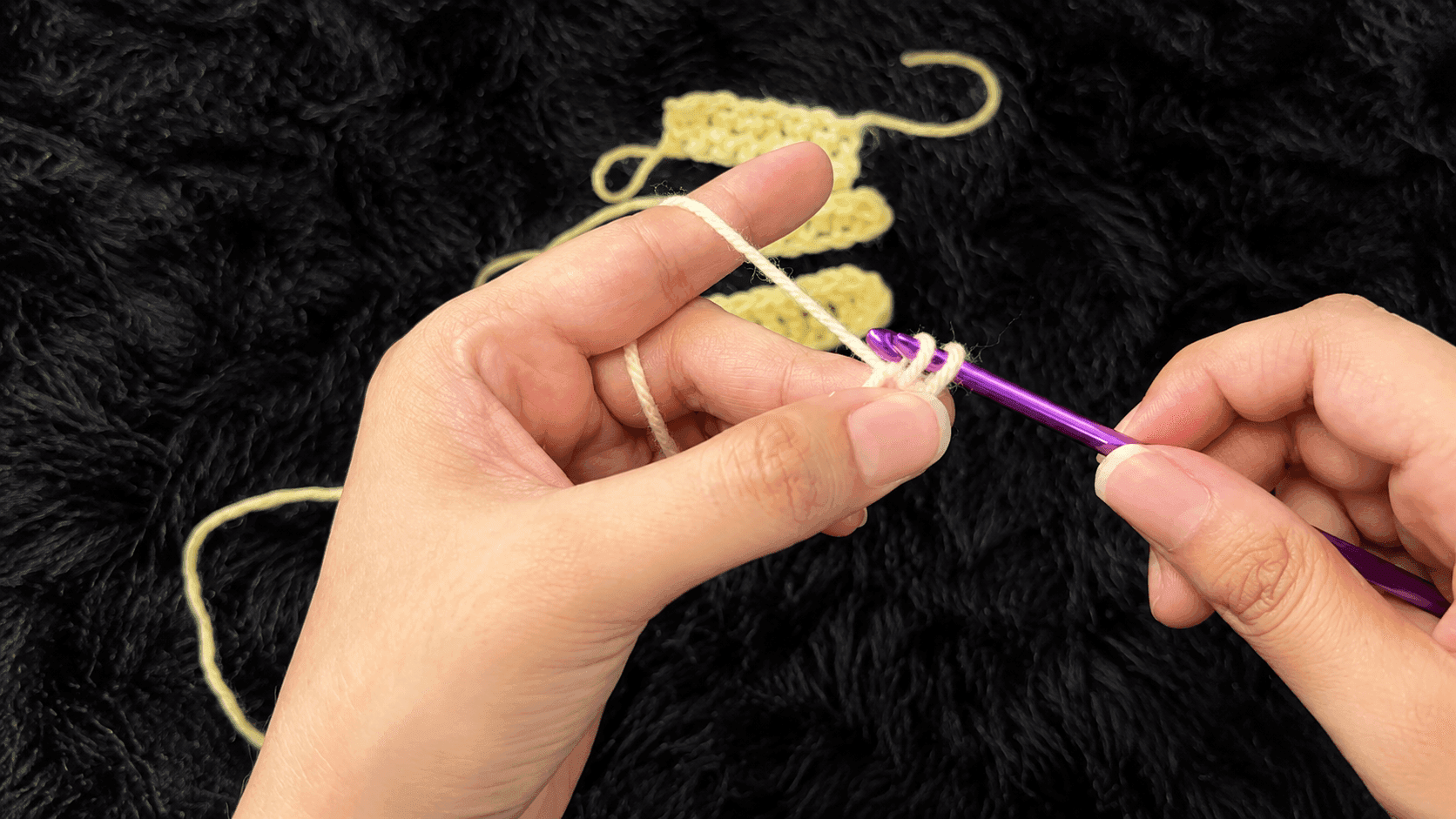
Step 1: Insert hook into stitch
Step 2: Yarn over
Step 3: Pull through both the stitch AND the loop on your hook at the same time That's it 1 slip stitch complete
No loops remain on your hook after slip stitch. This is what makes it different from other stitches.
What Slip Stitch Looks Like
From the front: Invisible. From the side: Flat, creates no height. Finished fabric: You barely see it.
Why "Slip"?
You "slip" the yarn through two things (the stitch and the loop on your hook) in one motion. Unlike other stitches where you leave a loop on the hook, slip stitch pulls through both things at once. This creates the "slip" effect.
Best Uses for Slip Stitch
Joining rounds: End of every round in circular projects (hats, amigurumi)
Closing gaps: Seamlessly connects beginning and end
Moving yarn: Getting yarn across stitches without height
Joining pieces: Connecting two pieces together invisibly
Finishing edges: Sometimes used for edge finishing
NEVER for: Building fabric, making rows, creating projects on its own
Real-World Example: Using Slip Stitch
Amigurumi pattern round: "Rnd 1: Ch 4, dc 8 in the first chain. Sl st to join (slip stitch connects the end back to the beginning)."
After the 8 double crochet stitches, you slip stitch to close the round into a circle.
The Golden Rule of Slip Stitch
Never, ever, EVER crochet an entire row or project of only slip stitches.
Slip stitch creates zero fabric. A piece made of only slip stitch is... nothing. Just yarn pinned together. Always use slip stitch ONLY for joining. Then move to actual stitches (single, double, etc.) for building.
Common Slip Stitch Mistake
Mistake: Treating slip stitch like a regular building stitch.
What beginners do: Crochet Row 1 all double crochet, then Row 2 all slip stitch thinking they're building the project.
What happens: Row 2 is invisible and adds nothing. The project doesn't grow.
Solution: Use slip stitch ONLY for joining rounds. Use actual stitches (sc, dc, etc.) for building.
Slip Stitch vs Other Stitches
| Stitch | Purpose | Height | Use When |
|---|---|---|---|
| Single/Double/Treble | Building | Yes | Making fabric |
| Slip Stitch | Joining | No | Connecting rounds |
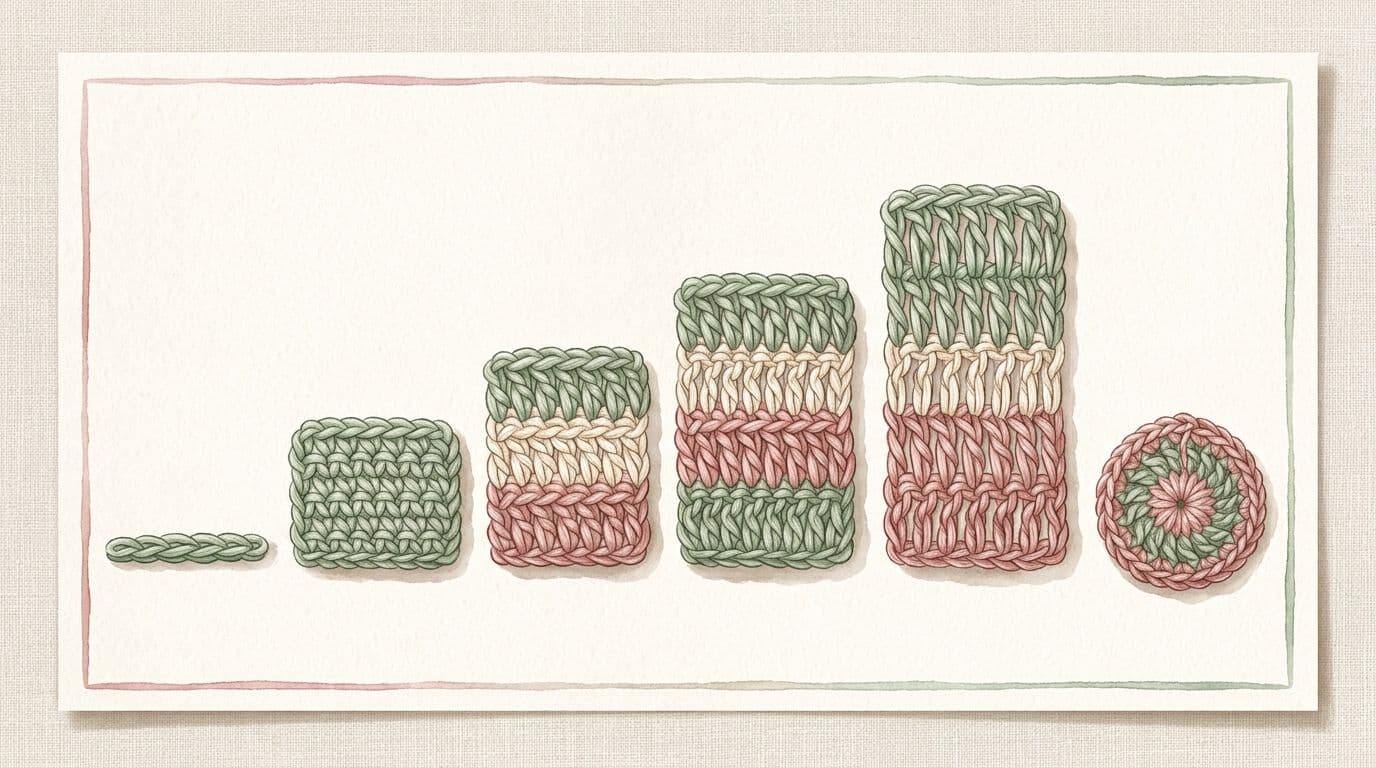
All 6 Essential Crochet Stitches at a Glance
Quick Reference Table
| Stitch | Abbreviation | Height | Yarn Overs | Best For | Look |
|---|---|---|---|---|---|
| Chain | ch | None | 0 | Foundation | Rope-like |
| Single Crochet | sc | Shortest | 1 | Structure, amigurumi | Bumpy, tight |
| Half Double | hdc | Medium-short | ~1 | Hats, balance | Medium bumps |
| Double Crochet | dc | Medium | 2 | Most projects | Professional |
| Treble | tr | Tall | 3 | Lace, summer | Open, elegant |
| Slip Stitch | sl st | None | 0 | Joining only | Invisible |
The Stitch Progression
Shortest: Single crochet (1 yarn over) Medium-short: Half double (1 yarn over, but with beginning yarn over) Medium: Double crochet (2 yarn overs) Tall: Treble crochet (3 yarn overs) Special: Slip stitch (joining, zero height)

Try Yarnzy's Stitch Calculator, Convert Your Gauge to Stitch Counts The free Yarnzy Stitch Calculator converts your gauge swatch measurements into perfect stitch counts for any project size.
How to Choose the Right Stitch
Need tight, structured fabric? Single crochet
Need balanced fabric? Half double or double crochet
Need airy, lacy fabric? Treble crochet
Need to join rounds? Slip stitch
Not sure? Double crochet (works for everything)
The Truth About Learning Stitches
You don't need to master all six immediately. Start with double crochet. Master it. Then learn the others. Most crocheters use double crochet 80% of the time. The others are for special situations.
Practice Project Ideas
Master single crochet: Make amigurumi (stuffed toy) Master double crochet: Make a blanket Master treble: Make a lacy shawl Master all together: Make an amigurumi with treble lace border and slip stitch join
Final Thought: Stitches Are Just Combinations
Here's the secret: crochet is just combining these six stitches over and over.
A beautiful blanket? Double crochet repeated 1,000 times. A lacy shawl? Treble repeated 5,000 times. An amigurumi? Single crochet in circles with slip stitch joins. A scarf? Half double crochet in long rows.
Master these six basics and the whole world of crochet opens up. It's not about knowing fancy techniques. It's about combining basics into new patterns.
Frequently Asked Questions
Chain stitch is the easiest to learn (just yarn over and pull through). Single crochet is the easiest to practice because it's simple and forgiving. But double crochet is what you'll actually use most. Start with chain + single crochet on practice swatches for 30 minutes. Then jump to double crochet. After 20 rows of double crochet, you'll have it down. Don't get stuck on a single crochet, double crochet is only slightly harder and way more useful.
Share this page
 X / Twitter
 Facebook
 Reddit
Related articles
Bernat Yarn Substitutes: What to Use Instead of Blanket, Maker, Pipsqueak & Bundle Up

How to Crochet a Pumpkin: Free Patterns for Fall & Halloween Decor
How to Read Crochet Patterns: A Beginner's Guide

Yarnzy: #1 Crochet & Knitting App
Track knitting and crochet projects with a timer & row counter, Import Patterns from Anywhere, Manage Stash & more all in one place.


Free to start · iOS, Android & Web
Scan to Download the App

Start your next project with confidence