
 Download the App
Crochet Hook Materials: Aluminum, Steel, Bamboo, Plastic, Ergonomic
23 Jul, 2026
Crochet hooks are made from different materials, including aluminum, steel, bamboo, plastic, and ergonomic materials. Each material offers a different grip, yarn control, and comfort level while crocheting.
Choosing the right crochet hook materials matters more than most beginners realize, the same size crochet hook can feel completely different in your hand depending on what it's made of. Aluminum, steel, bamboo, wood, plastic, and ergonomic hooks each glide, grip, and weigh differently, and that difference shows up in your stitches.Whether you're choosing your first hook or building a complete crochet toolkit, Yarnzy helps crocheters organize their projects and make better decisions with confidence.
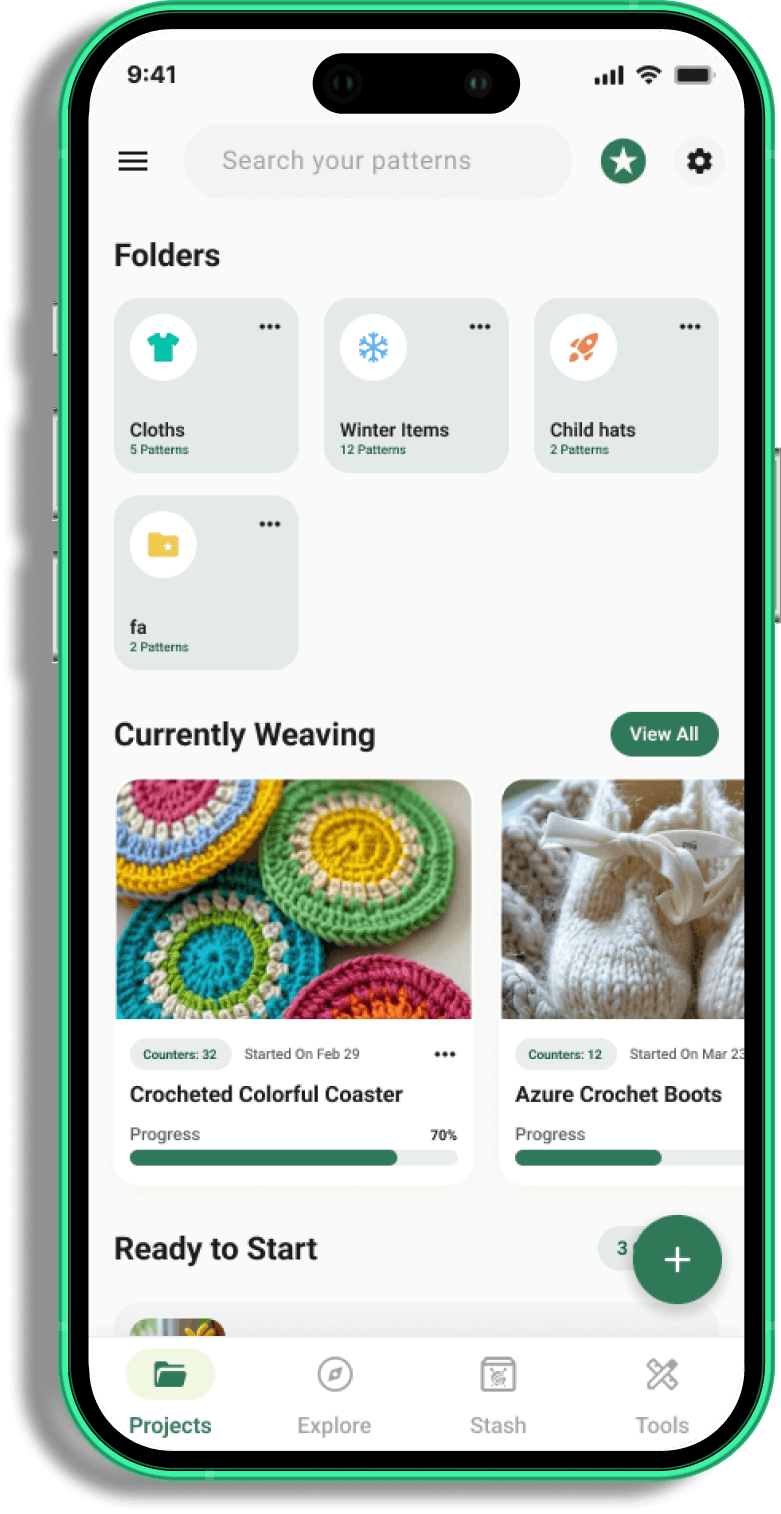
Not sure which size to grab once you've picked a material?
 Download Our Yarnzy App
What Are Crochet Hooks Made Of?
Crochet hooks are made from five main materials: aluminum, steel, bamboo or wood, plastic, and ergonomic-handled variations of those. Each material changes how yarn glides across the hook and how the hook feels during long stitching sessions, which is why the "right" material depends on your hands and your project, not a single universal answer.
At its core, a crochet hook is a small rod with a hooked tip used to pull yarn through loops to form stitches. Modern crochet materials fall into a handful of families: metal (aluminum and steel), natural wood or bamboo, plastic or acrylic, and ergonomic hooks built around a cushioned handle. Older pattern books and some regional terms still refer to hooks as crochet sticks, though the phrase has mostly fallen out of everyday use. Understanding these types of crochet hooks is the first step toward figuring out which one belongs in your project bag.
Aluminum & Steel Crochet Hooks (Metal)
Aluminum hooks are smooth, lightweight, and durable, making them the standard choice for everyday yarn-weight projects. Steel hooks are thinner and heavier for their size, built specifically for fine thread and lace work rather than regular yarn.
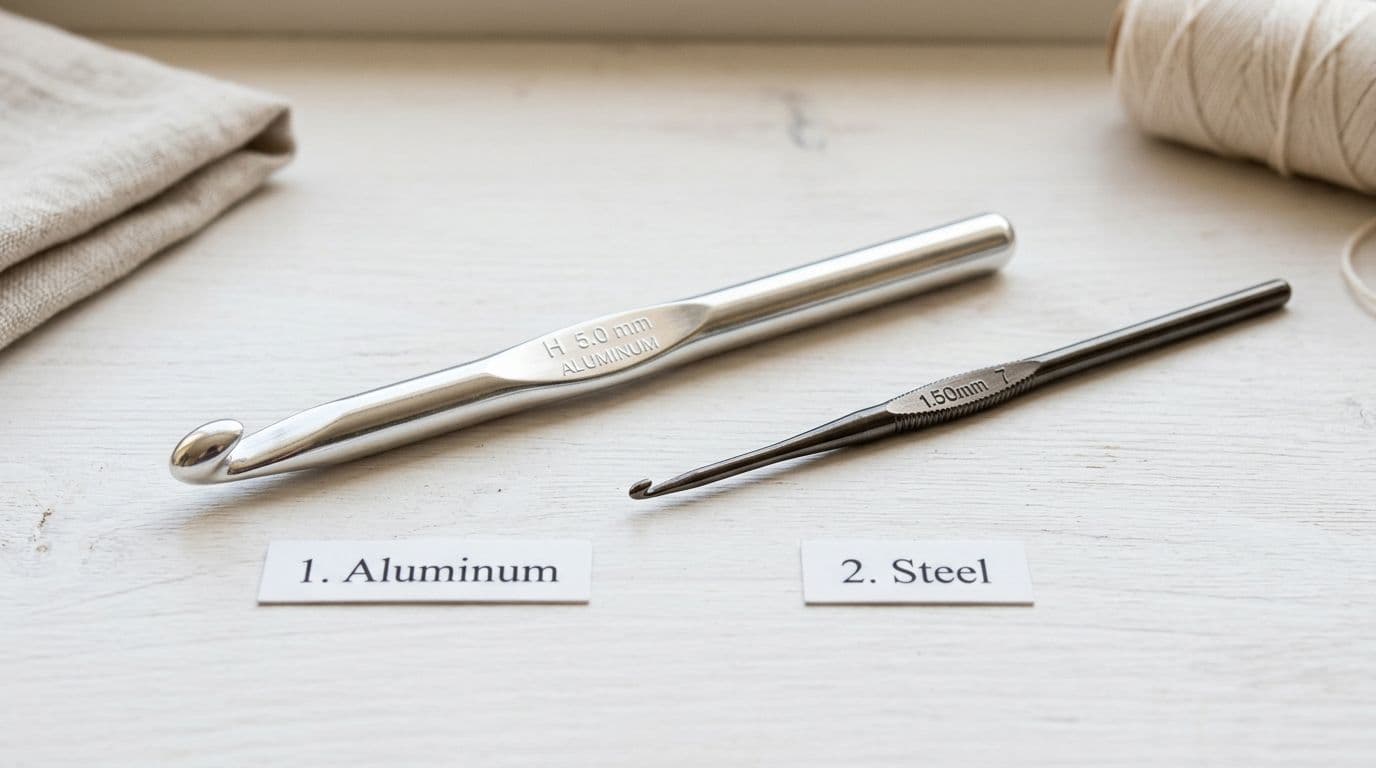
Metal hooks are the most common starting point for most crocheters, and they split into two distinct categories that get lumped together more than they should.
Aluminum hooks slide through yarn with very little resistance, which makes them fast for stitches like double crochet and treble crochet. They work well with most yarn weights, from worsted to bulky, and they're durable enough to last for years without wearing down. The tradeoff is that the same smoothness that makes them fast can also make them slippery for beginners who haven't built up tension control yet, and the metal can feel cold or hard on the hands during long sessions.
Steel hooks look similar but serve a different purpose entirely, they're typically thinner, heavier for their size, and designed for much finer work than standard aluminum hooks handle well.
Why Steel Hooks Are Different (Thread & Lace Work)
Steel hooks are sized on a separate numbering system from standard hooks, so a steel hook and an aluminum hook with a similar-looking label can be very different sizes. Use steel for crochet thread, lace, and doilies; use aluminum for regular yarn projects.
Steel hooks are built for thread crochet, lace, and doily-style projects where standard yarn-weight hooks are far too large. Because their numbering isn't consistent across brands, it's worth checking a conversion chart rather than assuming a labeled size matches what you'd expect from a regular hook. A steel hook is also the better tool when you need precision on very fine cotton thread, since the narrow shaft and sharper hook keep tiny stitches uniform in a way a bulkier aluminum hook can't.

See how steel, aluminum, and other materials actually measure up. Look up your exact size across US, UK, and metric with our Hook & Needle Chart tool.
Bamboo & Wood Crochet Hooks
Bamboo and wood hooks have a natural texture that grips yarn instead of letting it slide freely, making them a strong choice for slippery fibers like silk or certain acrylics. They're lighter and warmer than metal, though the added grip slows stitching down slightly.
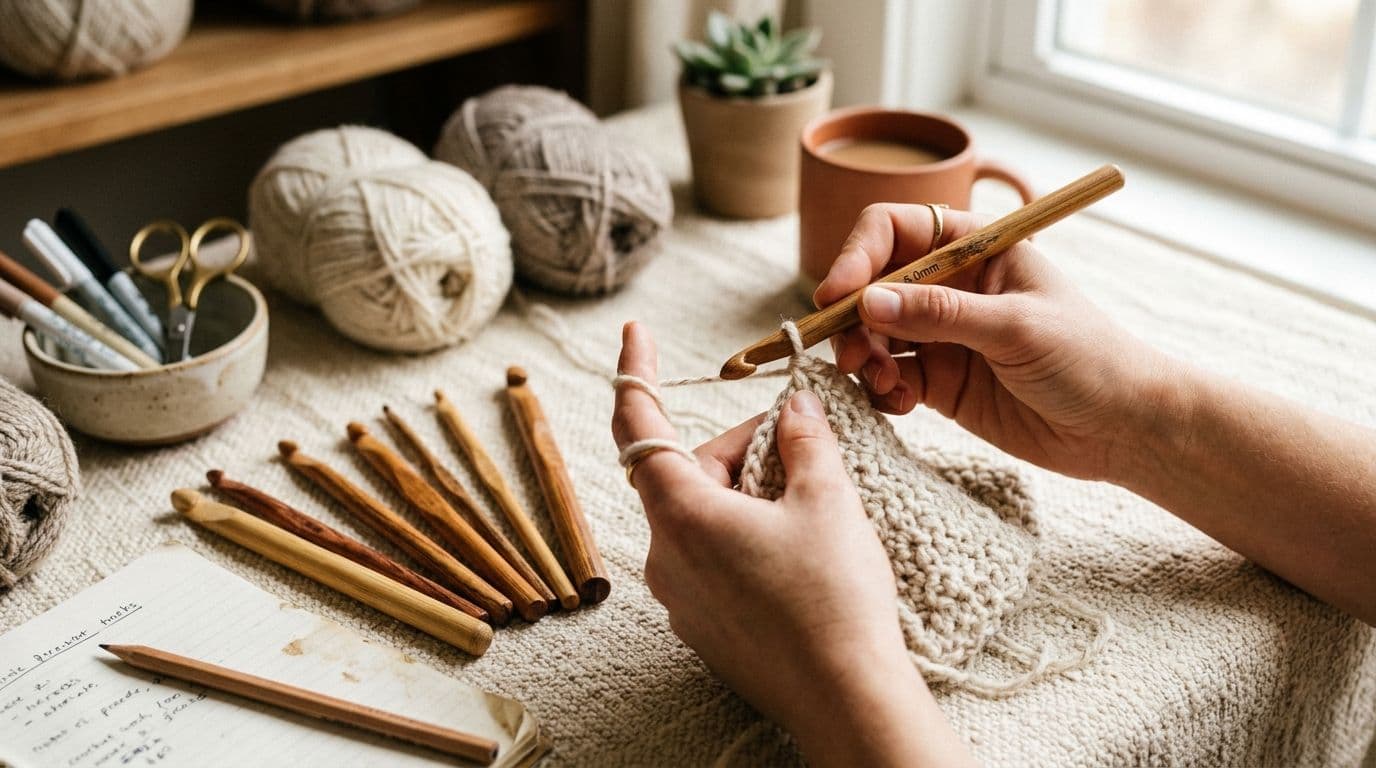
Bamboo and wood hooks bring a completely different feel to crochet. They're lighter than metal, warm to the touch, and their slight texture gives extra control over slippery fibers that tend to slip off smoother hooks. That same grip slows down the stitch-forming motion a little, which some crocheters find calming and others find frustrating if they're used to faster metal hooks.
Wood and bamboo hooks also tend to be gentler on the hands over long sessions, since they don't conduct cold or heat the way metal does, and many crocheters find the slightly flexible give of bamboo more comfortable during extended projects. On the care side, wood hooks benefit from occasional light oiling to prevent the wood from drying out or splintering at the tip, and they shouldn't be left in extreme heat or cold, which can warp or crack the material over time. They're a strong choice for anyone prioritizing comfort and quiet, controlled stitch work over raw speed.
Plastic & Acrylic Crochet Hooks
Plastic and acrylic hooks are lightweight and typically the most budget-friendly option, which makes them common in starter sets. They're best suited to bulky yarn and low-stakes beginner projects rather than fine, detailed stitching, since durability and consistency can vary between hooks.
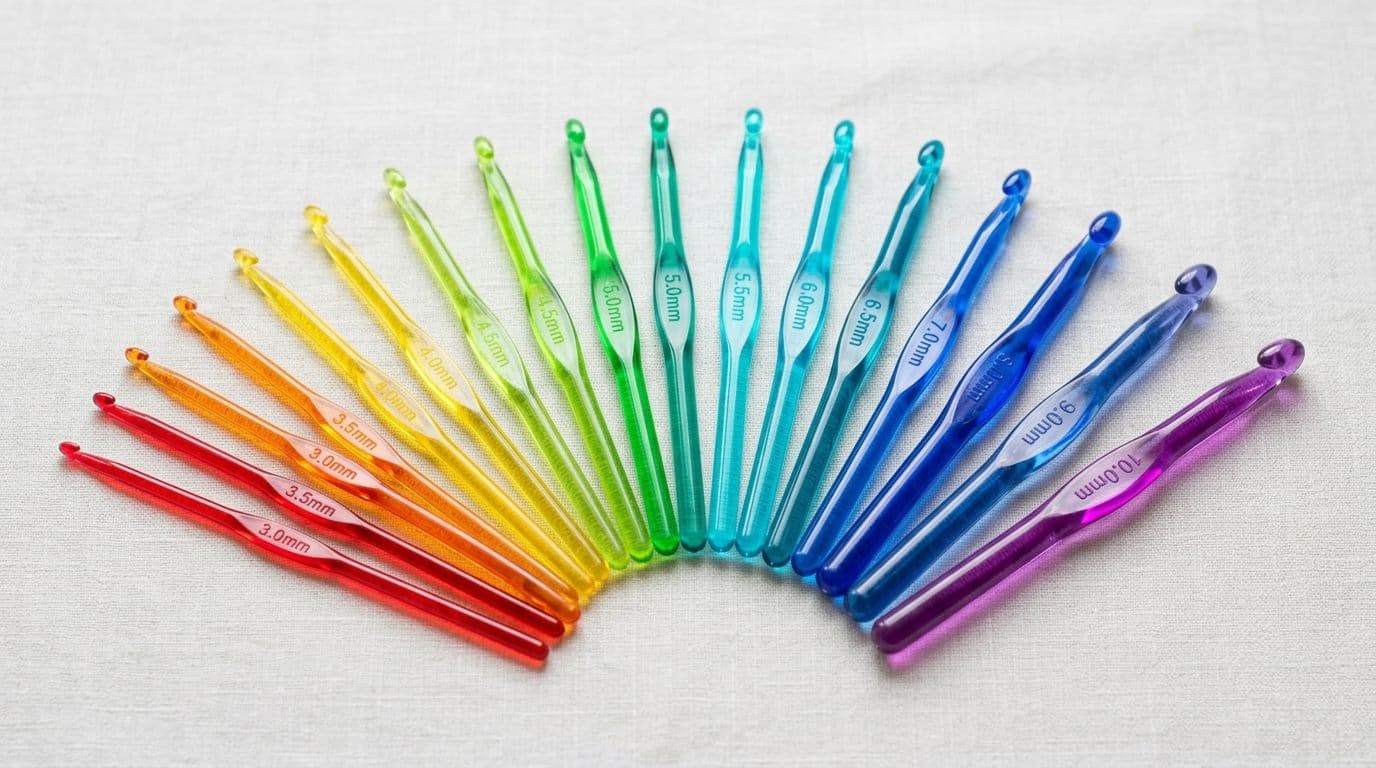
Plastic and acrylic hooks show up often in starter sets, and they come in a wide range of colors and sizes, often bundled together cheaply. Larger plastic hooks, in particular, are common for bulky yarn and beginner-friendly projects like scarves and blankets where speed and precision matter less than simply learning the motion.
The downside is durability and consistency. Cheaper plastic hooks can have rougher seams around the hook tip right out of the packaging, which snags yarn and makes stitches uneven until the hook is broken in or in some cases never smooths out. They're also more prone to flexing or even snapping under pressure compared to metal or wood, especially in smaller sizes used for tighter, denser stitching. Plastic hooks are best thought of as an accessible entry point rather than a long-term primary tool, though many crocheters do keep a few favorite plastic hooks in specific sizes permanently in their kit.
Ergonomic Crochet Hooks
An ergonomic hook pairs a standard aluminum, steel, or wood shaft with a wider, cushioned handle; it's a handle design, not a separate material. The wider grip distributes pressure across the whole hand, which is especially helpful for wrist pain, arthritis, or general hand fatigue.
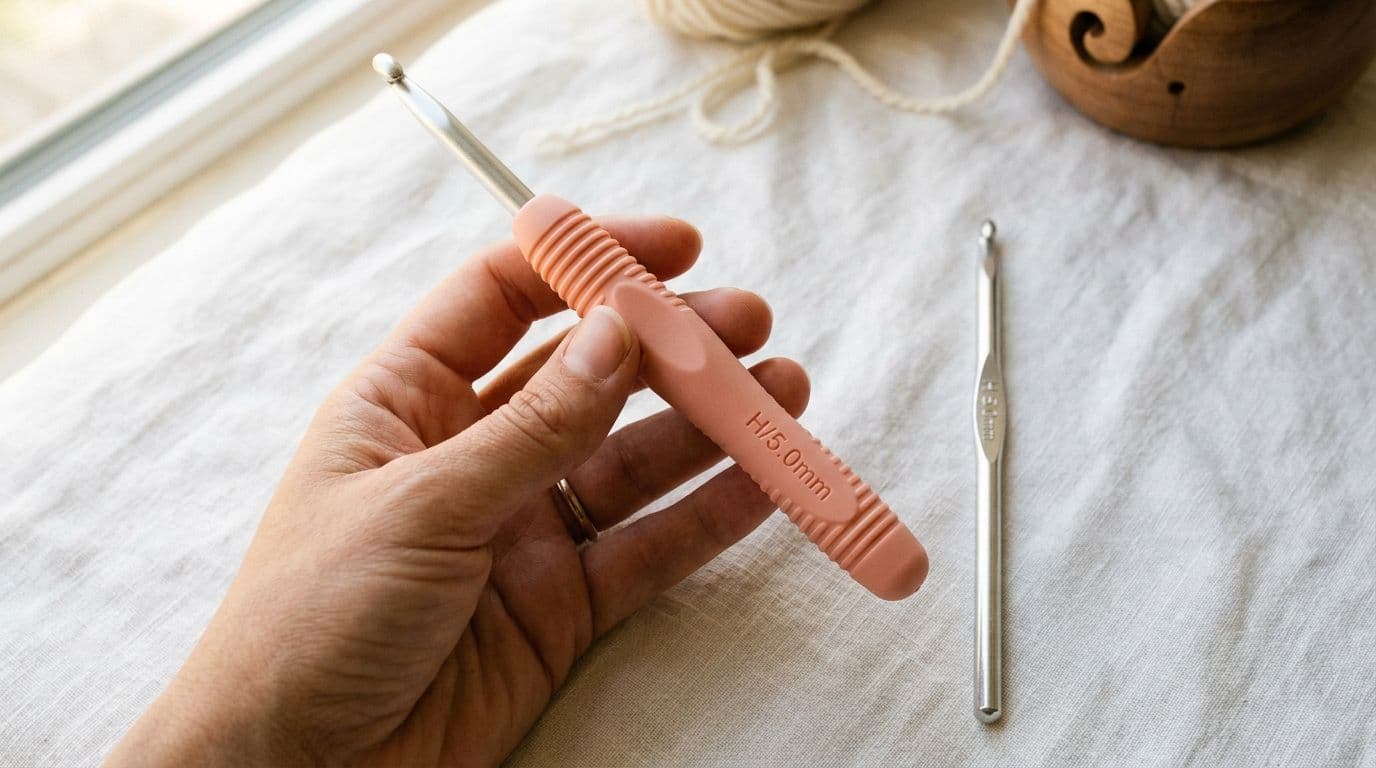
An ergonomic crochet hook isn't a separate material so much as a different handle design built around one most ergonomic hooks pair a standard aluminum, steel, or occasionally wood shaft with a wider, cushioned grip made from soft rubber, silicone, or molded resin. The hook itself works the same way; what changes is how it sits in your hand.
This design matters most for crocheters dealing with wrist pain, arthritis, or general hand fatigue from long stitching sessions. A wider, padded grip distributes pressure across the whole hand instead of concentrating it in the fingers, which reduces strain during repetitive motion. Some ergonomic hooks also use a slightly weighted or contoured handle that encourages a more relaxed hold, rather than the tighter pinch grip that thinner standard hooks tend to require. For anyone who's had to stop crocheting mid-project because of hand discomfort, switching to an ergonomic-handled hook regardless of the shaft material underneath is often the single biggest comfort upgrade available.
Inline vs. Tapered: Does Material Change the Shape?
Inline and tapered are head shapes, not materials, and they exist across every material on this list. Inline hooks have a flatter, more angular head that some crocheters find gives more uniform stitches; tapered hooks narrow gradually and tend to feel smoother and faster.
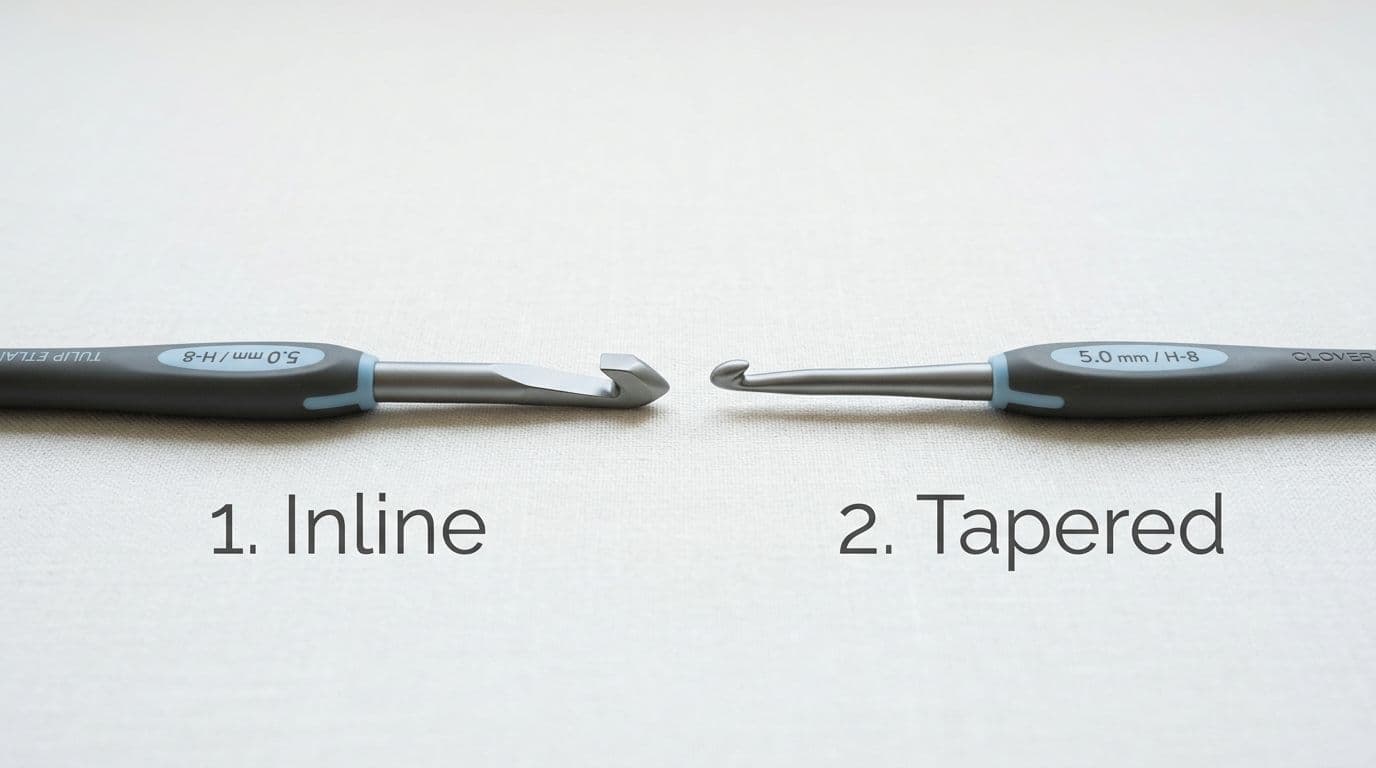
Separately from material, crochet hooks also come in two head shapes: inline and tapered and this distinction cuts across every material on this list. An inline hook has a hook and shaft that are roughly the same diameter, with a more angular, flatter head, while a tapered hook narrows gradually from the shaft down to a rounder hook tip. Different types of crochet hooks combine these shapes with different materials, so you can find an inline aluminum hook and a tapered aluminum hook that stitch noticeably differently, even though they're the same material and size.
This matters because head shape affects how consistent your stitches look, independent of what the hook is made from. Some crocheters find inline hooks give more uniform stitch height, since the flatter head limits how far the loop can stretch open, while tapered hooks tend to feel smoother and faster for pulling loops through tight stitches. Brands aren't consistent about which shape they use by default, so two hooks with the identical size label can behave differently depending on both material and shape, which is why testing a hook in hand often matters more than trusting the label alone.
Which Crochet Hook Material Is Best for Beginners?
Aluminum is the most common beginner recommendation because it's affordable, widely available, and predictable once you've built basic tension control. Bamboo is a strong alternative if yarn keeps slipping off a metal hook, and most beginners start in the mid-size range with worsted weight yarn.
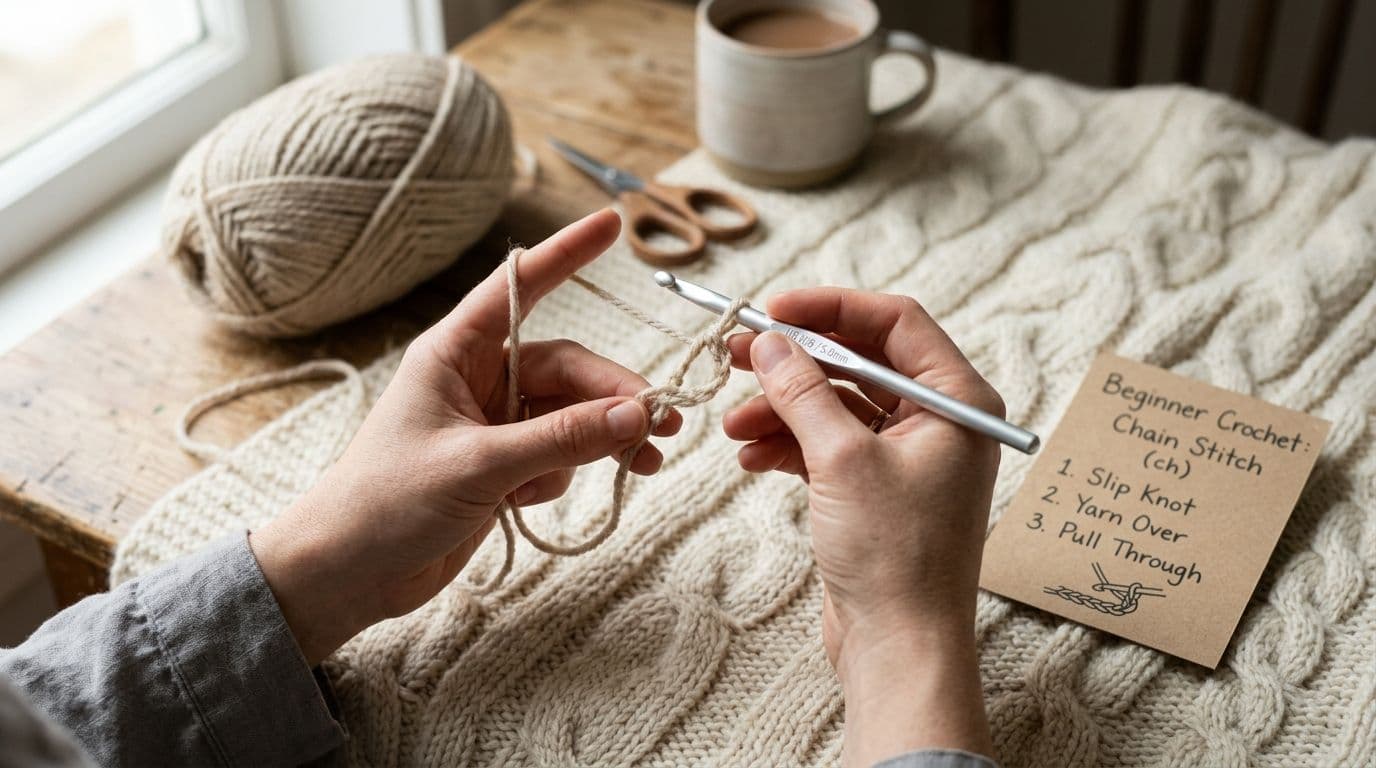
There's no single best crochet hook for beginners, the right material depends on what you're prioritizing while you're still building basic tension control. That said, a few general patterns hold up well for anyone just starting out.
Aluminum hooks are the most common beginner recommendation because they're affordable, widely available, and predictable. The smooth surface that can be tricky at first becomes an advantage once you've built consistent tension. Bamboo or wood hooks are a strong alternative for beginners who find their yarn slipping too easily off a metal hook, since the slight grip naturally slows things down and can make early stitches easier to control. Plastic hooks work fine for larger, low-stakes practice projects but tend to fall short once you're working smaller, more detailed stitches. As for the best size crochet hook for beginners, most new crocheters start in the middle range roughly a US H/8 to I/9 with worsted weight yarn, since it's forgiving enough to see and correct mistakes easily; for the full crochet hook size chart for beginners, our dedicated size guide covers every US, UK, and metric conversion in one place.
Matching Hook Material to Your Project
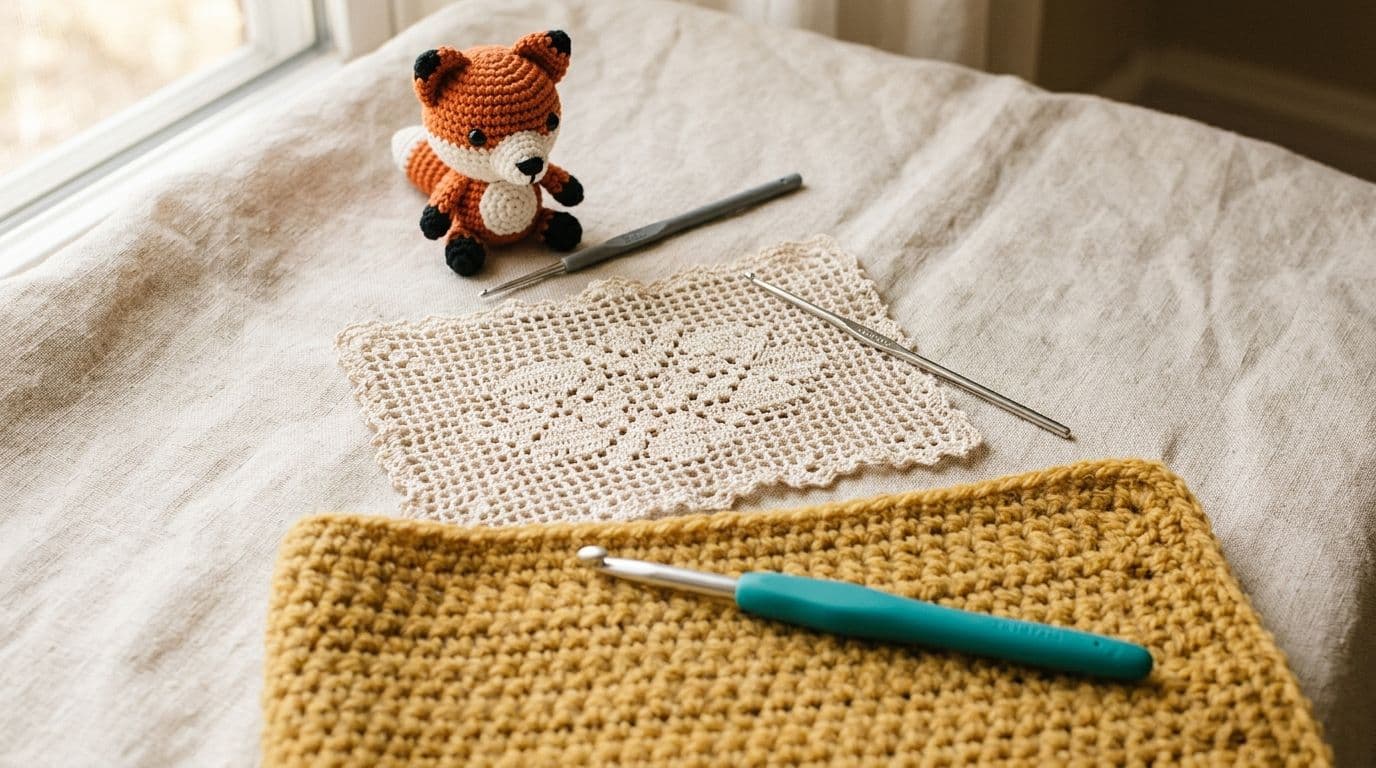
Amigurumi favors smaller, firmer hooks for tight, controlled stitches; worsted weight projects are forgiving enough that most materials work well; and filet crochet or thread work calls for steel hooks, since their precision at small sizes is hard to replicate elsewhere.
Once you've settled on a material family, the project you're making should guide the final decision, since certain materials genuinely perform better for certain kinds of stitching.
Amigurumi & Fine Detail Work
Amigurumi and other tight, detail-heavy projects usually call for a smaller crochet hook size for amigurumi, typically in the US B/1 to E/4 range depending on the yarn weight, paired with a hook material that offers precise, controlled movement. Many amigurumi crocheters prefer inline metal hooks here, since tight, consistent stitches matter more than speed, and the firmer head shape helps keep stitch height uniform across dozens of tiny rounds.
Worsted Weight & Everyday Projects
For everyday projects like blankets, scarves, and basic garments, the question of what size crochet hook for worsted weight yarn usually lands in the US H/8 to I/9 range, and this is where material choice comes down almost entirely to personal comfort. Aluminum, bamboo, and even quality plastic hooks all perform reasonably well here, since the stitches are larger and more forgiving than fine detail work.
Filet Crochet & Thread Work
Filet crochet and other thread-based lace work sit at the opposite end of the spectrum, calling for what size yarn for filet crochet projects to be much finer, often crochet thread rather than standard yarn, paired with the steel hooks discussed earlier. The precision steel offers at small sizes is difficult to replicate with any other material, which is why thread crocheters rarely substitute in aluminum or plastic for this kind of work.

Before committing to a hook size, check your gauge. Check your gauge before you commit to a hook with our Stitch Calculator tool.
Does Hook Material Really Affect Tension and Gauge?
Yes, Smoother materials like aluminum let yarn glide freely, which tends to produce looser, faster stitches, while grippier materials like bamboo or wood resist that slide and produce tighter, more controlled stitches, so switching material can shift your gauge even at the same hook size.
The material itself doesn't change the hook's dimensions, but it does change how the yarn moves across the hook, and that affects how consistently you pull each loop. A smoother material like aluminum lets yarn slide freely, which can lead to slightly looser, faster stitches once you're comfortable with the motion. A grippier material like bamboo or wood naturally resists that slide, which tends to produce slightly tighter, more controlled stitches, especially for newer crocheters still developing consistent hand tension.
This is also part of why swatching with your actual hook matters more than trusting a pattern's suggested gauge blindly. Two crocheters using the identical hook size in different materials can produce noticeably different gauge results on the same stitch, simply because the surface friction changes how much yarn each loop pulls through. If your gauge swatch is coming out looser or tighter than a pattern calls for, switching hook material not just size is often a faster fix than adjusting your grip.
Conclusion
There's no universal "best" crochet hook material, only the one that fits your hands, your yarn, and what you're making. Aluminum remains the most reliable all-around choice, especially for beginners still building tension control. Bamboo and wood earn their place with slippery fibers or longer sessions where grip and warmth matter more than speed. Plastic works as an accessible entry point, steel is non-negotiable once you move into thread and lace, and ergonomic handles solve a problem no shaft material can fix on its own: hand fatigue and strain. Apps like Yarnzy make the crochet journey easier by helping makers keep their patterns, projects, and yarn information organized in one place.
Frequently Asked Questions
Crochet hooks are commonly made from aluminum, steel, bamboo or wood, plastic, and ergonomic-handled variations of those materials. Aluminum is generally the most beginner-friendly starting point, with bamboo as a strong alternative for anyone whose yarn slips too easily off a smoother hook.
Share this page
 X / Twitter
 Facebook
 Reddit
Related articles
Bernat Yarn Substitutes: What to Use Instead of Blanket, Maker, Pipsqueak & Bundle Up

How to Crochet a Pumpkin: Free Patterns for Fall & Halloween Decor
How to Read Crochet Patterns: A Beginner's Guide

Yarnzy: #1 Crochet & Knitting App
Track knitting and crochet projects with a timer & row counter, Import Patterns from Anywhere, Manage Stash & more all in one place.


Free to start · iOS, Android & Web
Scan to Download the App

Start your next project with confidence